


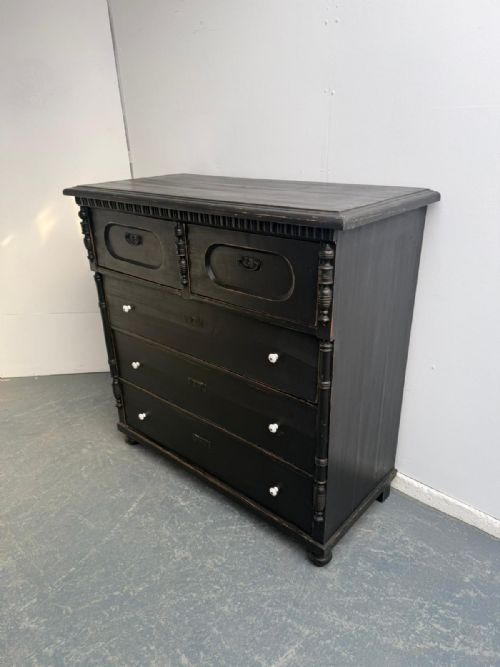

Large Commode
A large antique commode offers substantial storage and commanding presence, serving as a focal point in a traditional room.
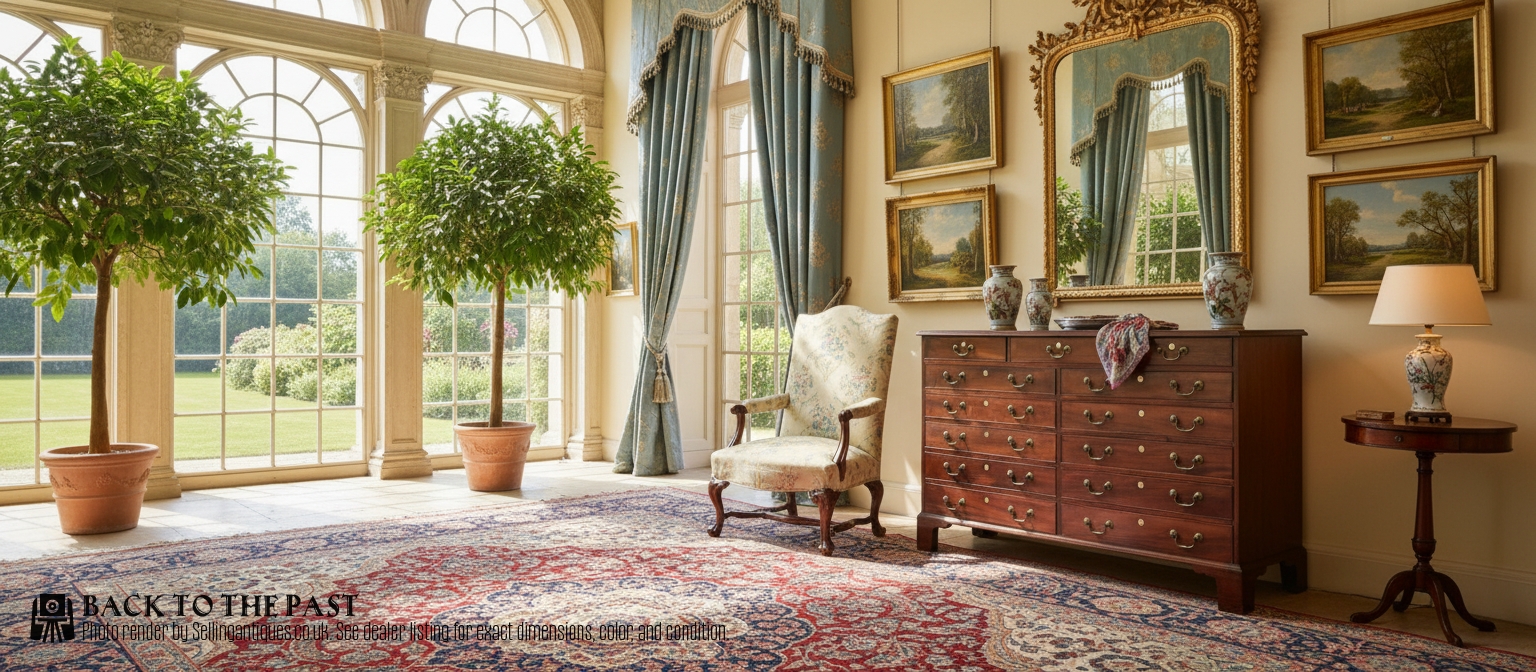
Large Commode
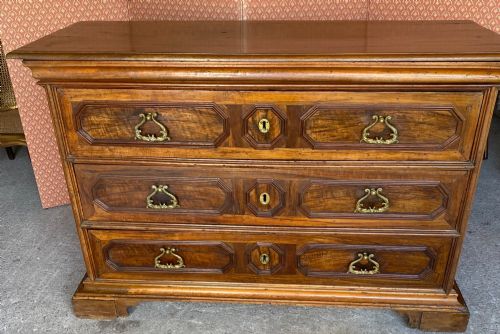
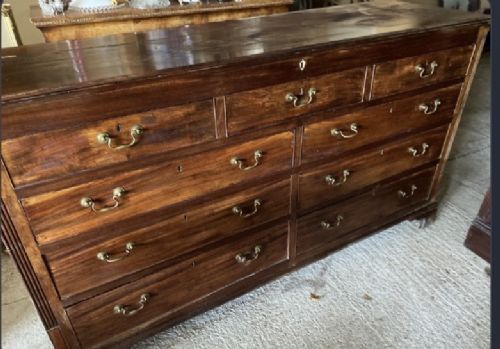
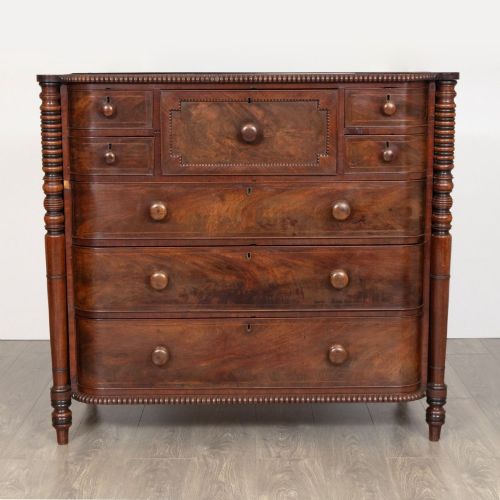
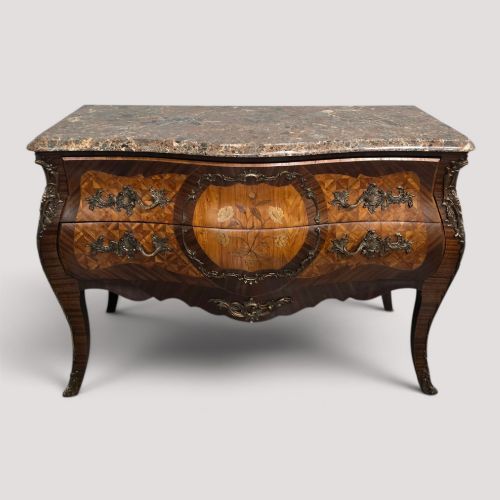
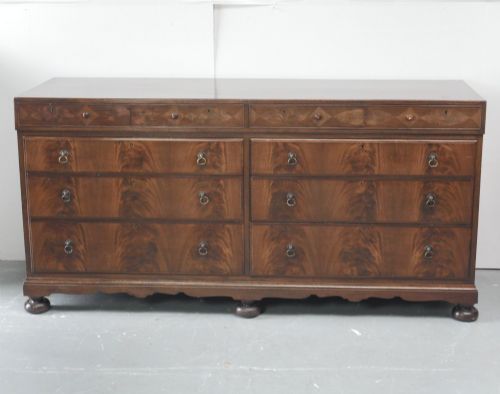
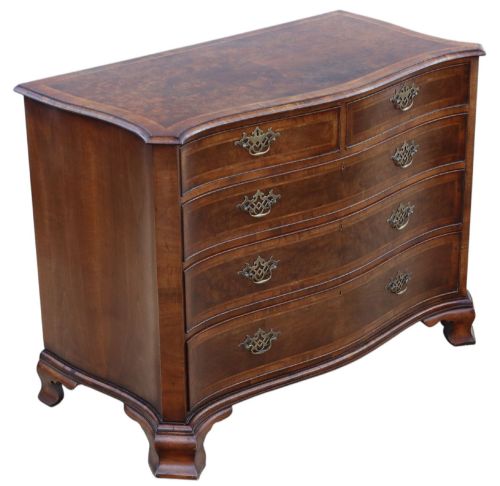
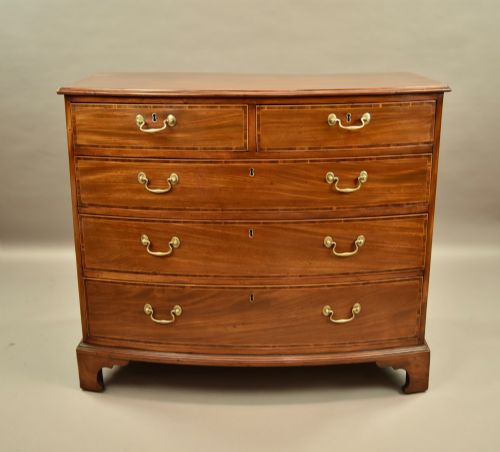
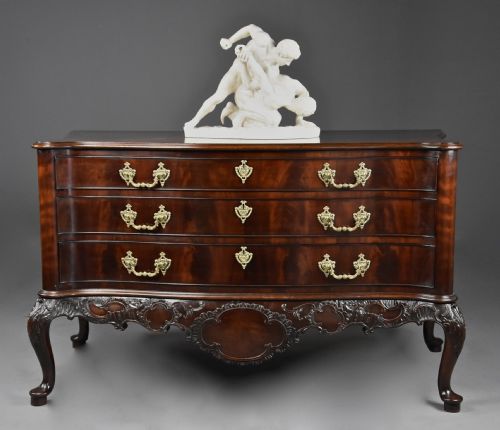
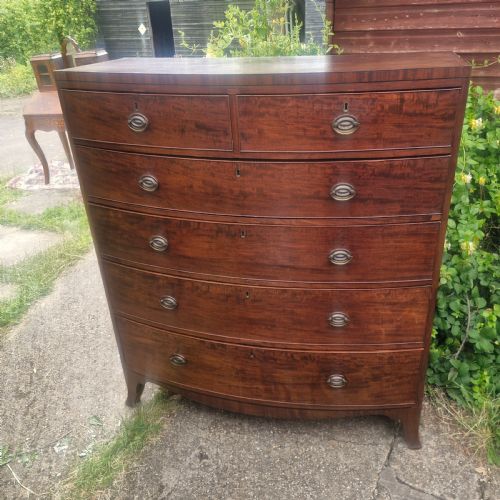
When searching for a large antique commode, buyers encounter substantial timber storage pieces primarily originating from the eighteenth and nineteenth centuries. These items appear frequently in forms such as serpentine chests of drawers, bowfront designs, and marble-topped Continental examples.
The selection on this page spans several stylistic traditions including Georgian, Victorian, Regency, and Louis XV style. Walnut, mahogany, and pine dominate the forms, reflecting domestic and continental production from distinct historical periods.
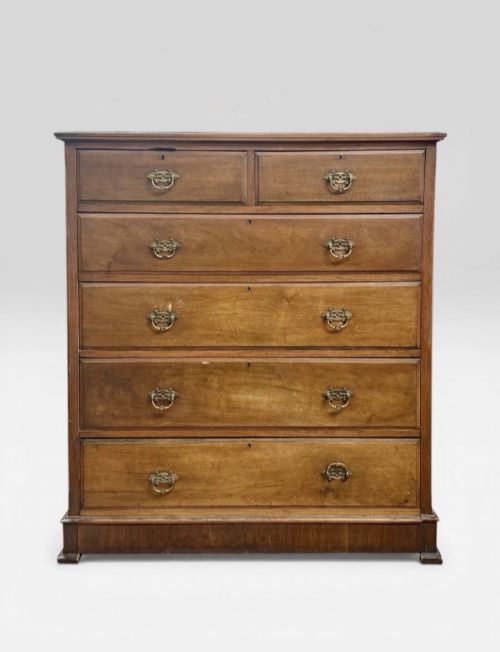
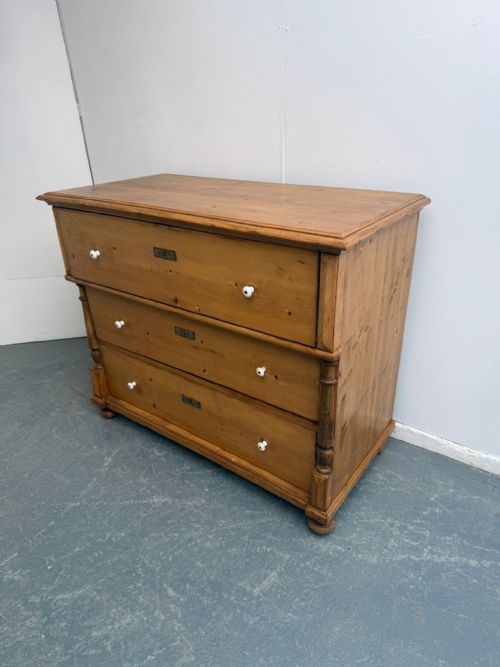
Most pieces function as chests of drawers or sideboards, providing deep storage capacities alongside pronounced decorative fronts. Regional variations range from English mahogany workshops to Hungarian painted pine pieces and Scottish walnut constructions.
Materials and construction
Cabinet makers utilised dense hardwoods such as mahogany, walnut, and oak alongside softer pine for carcass construction. Finer examples display figured veneers including burr walnut and flame mahogany across curved serpentine or bowfront surfaces.
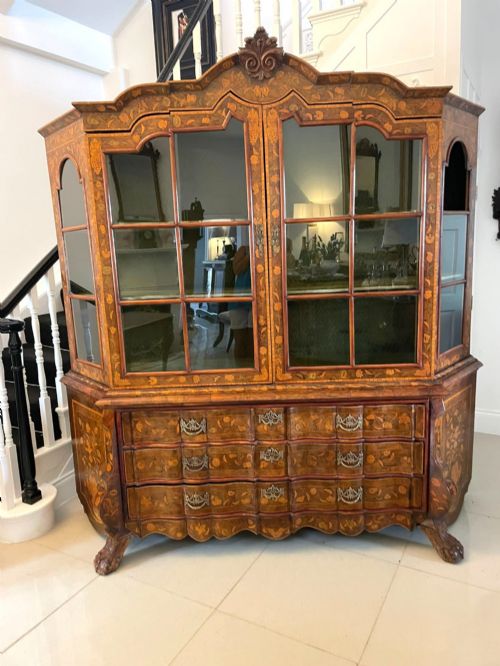
Decorative detailing relies on brass hardware, inlaid banding, crossbanding, and occasional ormolu mounts paired with marble tops on continental forms. Pine pieces frequently exhibit original paint treatments or wax finishes applied to soft timber surfaces.
Object types include serpentine commodes, bowfront chests of drawers, marble-topped sideboards, and tallboys.
Quality differences
The standard of execution separates standard utility storage from exceptional cabinet work, particularly in the handling of curved serpentine drawer fronts and matched veneer grains. Pieces featuring meticulous crossbanding, finely cast brass mounts, or integrated secret drawers represent superior workshop output.
Timber selection dictates overall character, with dense flame mahogany and figured burr walnut creating a striking visual depth absent in simpler pine or plain oak variants. The integrity of original surface finishes, whether polished wood or early painted schemes, defines the preservation state of each item.
Whytock & Reid
The Large Commode Glossary
- Serpentine
- A front shape curving outward in the centre and inward at the sides, creating a flowing undulating outline.
- Bowfront
- A convex curved cabinet front that swells outward from the corners toward the centre point.
- Ormolu
- Gilded bronze ornamentation applied as mounts to furniture, most frequently seen on continental commodes.
- Crossbanding
- A strip of veneer laid perpendicular to the grain of the main surface, framing drawer fronts or tabletops.
- Tallboy
- A tall chest of drawers traditionally constructed in two stacked sections, providing elevated storage capacity.
Large Commode: Frequently Asked Questions
Where should I place a large antique commode?
These substantial pieces anchor a high-ceilinged bedroom or living area where their depth and height do not crowd the surroundings.
Ensure adequate clearance for drawers to extend fully, particularly on serpentine or bowfront models that project further into the room.
How do I care for polished wood surfaces?
Maintain timber finishes by applying natural beeswax sparingly and buffing with a soft cloth to preserve the historical patina.
Avoid placing wooden furniture near direct heat sources or strong sunlight, which can dry out old veneers and cause splitting.
What is the difference between a commode and a chest of drawers?
In historical terminology, a commode often denotes a decorative low cabinet or chest with French stylistic influences, sometimes featuring marble tops and ormolu.
English cabinet makers used the terms interchangeably with chests of drawers, particularly for grander reception room storage pieces.
How can I tell a Georgian piece from a Victorian one?
Georgian furniture from the eighteenth century typically displays restrained proportions, finer bracket feet, and careful mahogany or walnut construction.
Victorian pieces from the nineteenth century frequently show heavier proportions, bolder brass hardware, and a wider variety of secondary timbers like pine.