

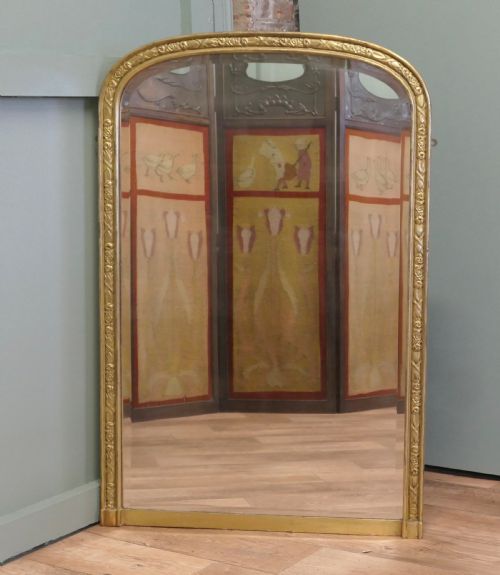


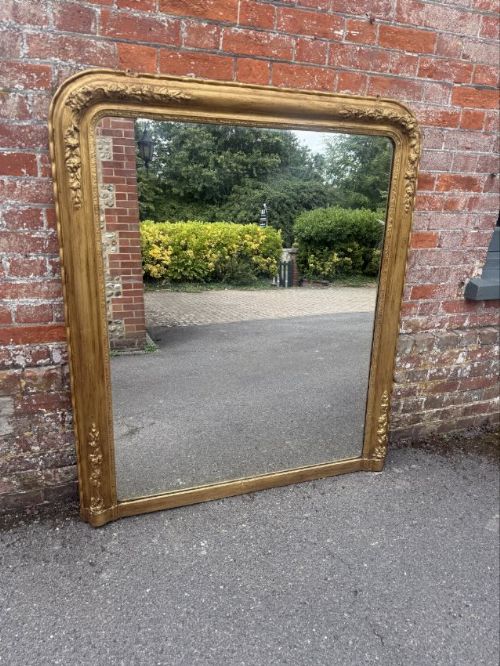
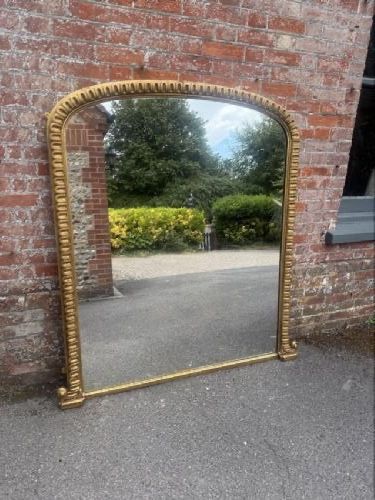
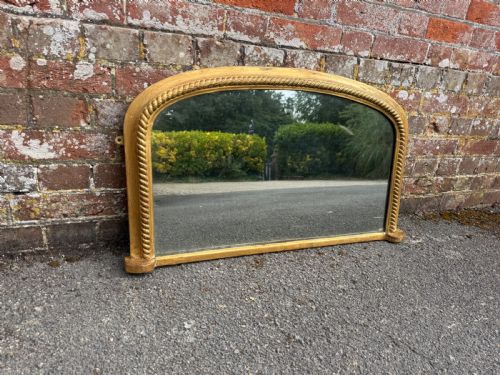
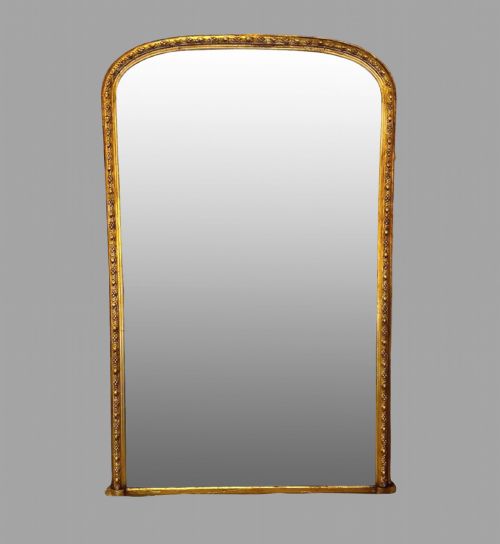
Large Arched Gilt Mirror
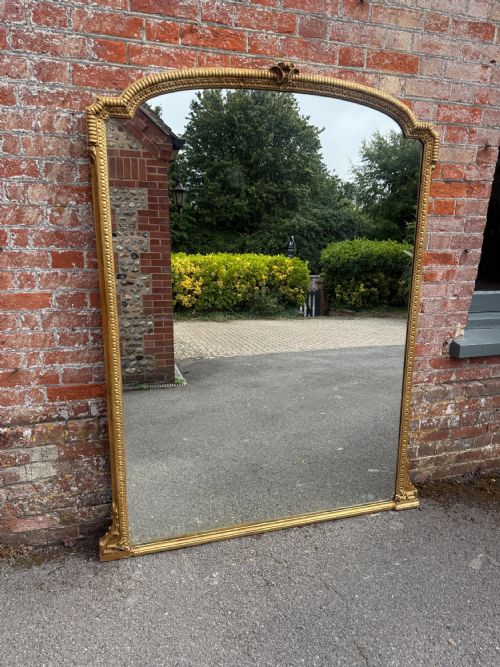
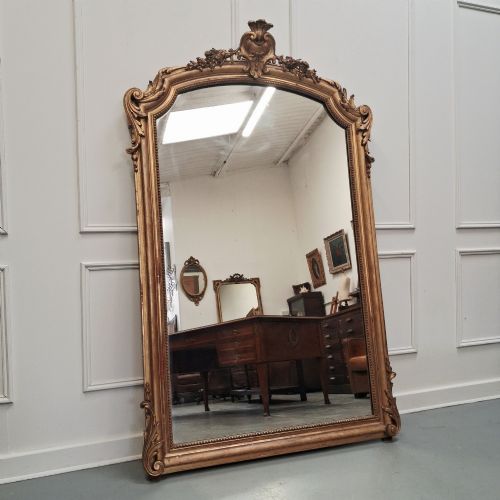
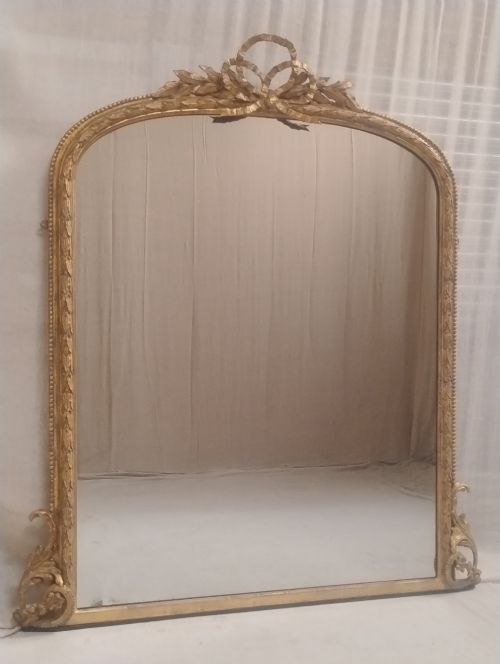
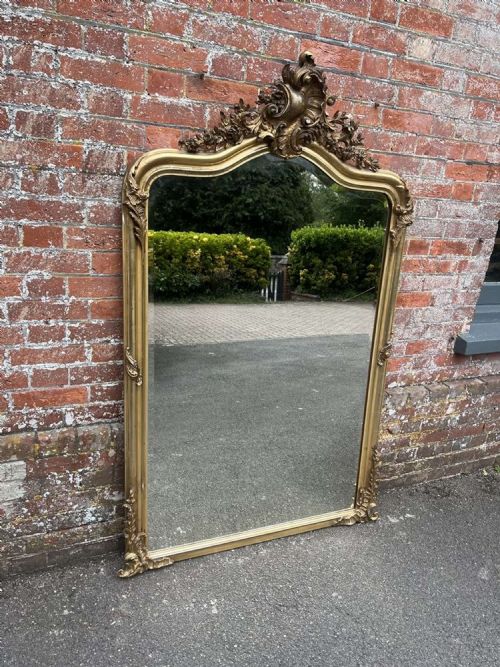
A large arched gilt mirror brings scale and reflected light into a room, framed in gleaming gold leaf across nineteenth-century styles.
Large Arched Gilt Mirror
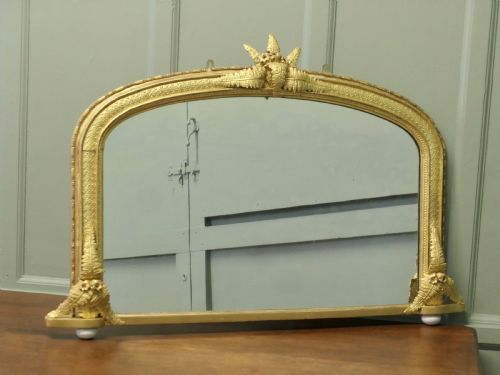
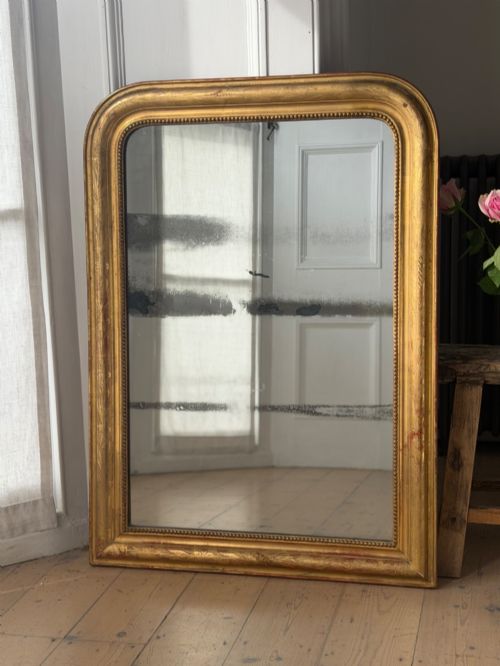
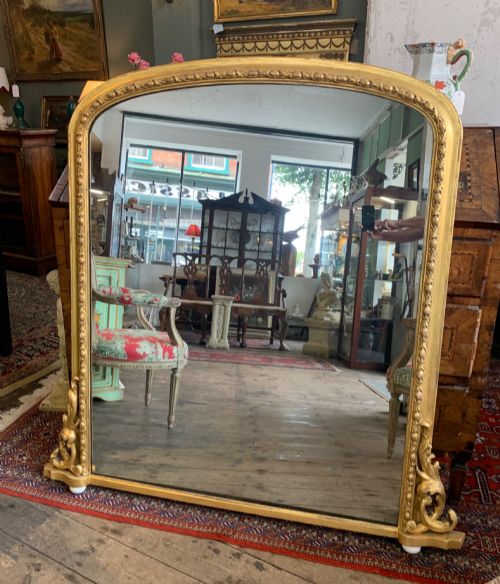
A large arched gilt mirror serves primarily as an overmantel piece, designed to sit above a fireplace or function as a grand wall mirror. These substantial objects date predominantly from the nineteenth century, encompassing Victorian, Georgian, and French Louis Philippe periods.
The inventory leans heavily towards English overmantel mirrors alongside French variants. Common formats include rectangular frames topped by graceful curves, often embellished with classical motifs or naturalistic rope twist and tulip framing.
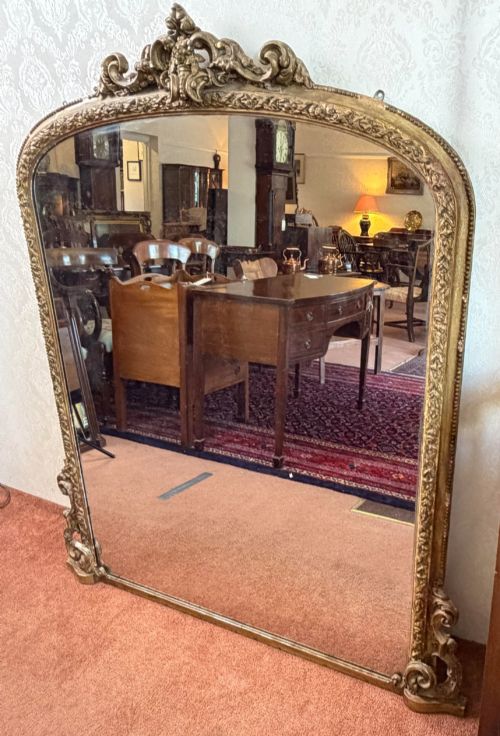
Buyers encounter heavy wooden structures built to command a chimney breast or anchor a main wall. Their arched profiles soften rectilinear interiors while amplifying natural daylight through expansive glass plates.
How they were made
Craftsmen built the underlying carcase from timber, employing carved wood to form the structural foundation of the frame. Plaster and gesso were then applied over the wood substrate to build up relief details, mouldings, and decorative crests.
Gold leaf or liquid gilt was laid over a prepared bole layer to achieve the characteristic metallic finish. Mirror glass of the era was set within the rebate, occasionally displaying age-related foxing from the silvering process behind the plate.
Current listings feature nineteenth-century English and French pieces utilising gesso, giltwood, and original mirror glass.
What varies in quality
The depth and crispness of the carved wooden ornament and gesso moulding separate standard production from finer examples. Hand-chiselled detailing retains sharp contours, whereas lower-tier pieces rely on softer, heavily moulded plaster ornamentation.
Original gilding surfaces preserved beneath light patina command greater respect than later repainted or heavily restored metallic coatings. The integrity of the original mirror glass plate and the structural soundness of the heavy timber joints also dictate overall worth.
The Large Arched Gilt Mirror Glossary
- Gesso
- A plaster-like mixture applied to wooden frames as a smooth base for gilding. It allows intricate low-relief ornamentation to be moulded directly onto the timber carcase.
- Giltwood
- Timber that has been coated with gold leaf or metallic powder. It provides the signature bright reflective surface seen on antique frames.
- Overmantel Mirror
- A wide mirror specifically proportioned to hang on the wall directly above a fireplace mantelpiece. These pieces frequently feature arched tops to fit architectural chimney spaces.
- Louis Philippe
- A French style from the nineteenth century characterised by restrained classical proportions and gentle arched corners. This design avoids excessive rococo flourishes in favour of clean, elegant curves.
- Foxing
- Small dark spots or cloudy patches that develop behind the glass plate over time. It results from the degradation of the reflective silver backing due to age and moisture.
Large Arched Gilt Mirror: Frequently Asked Questions
Where should I hang an overmantel mirror?
These mirrors traditionally anchor the wall directly above a fireplace mantelpiece, where their generous proportions balance the hearth below.
They also function effectively on main living room walls to reflect light and create an illusion of greater architectural space.
How do I identify a nineteenth-century frame?
Nineteenth-century examples rely on solid timber carcases coated in gesso and gold leaf rather than modern synthetic resins. Inspecting the construction joints and the weight of the piece usually reveals the traditional manufacturing methods.
French Louis Philippe and Victorian English styles carry distinct aesthetic markers from this period, including specific moulding profiles like rope twist or tulip designs.
Are these mirrors heavy to hang?
Due to the combination of thick timber frames, heavy gesso ornamentation, and large glass plates, these pieces possess significant weight. Proper wall fixings secured directly into structural studs or masonry are essential for safe installation.
What is mercury glass?
Older mirrors often utilised a backing technique that created a deep, slightly mottled reflection rather than a uniform modern shine. This historic silvering method contributes to the characteristic charm and authenticity of antique plates.