
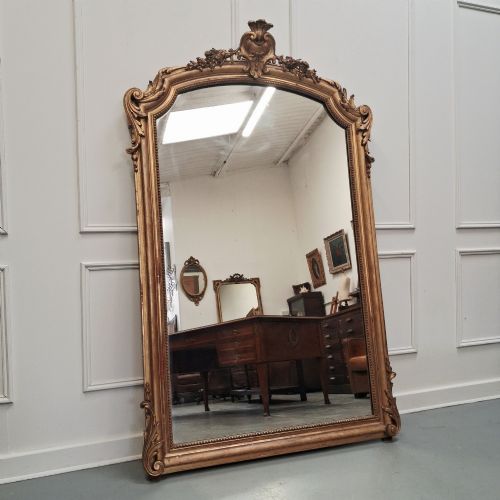
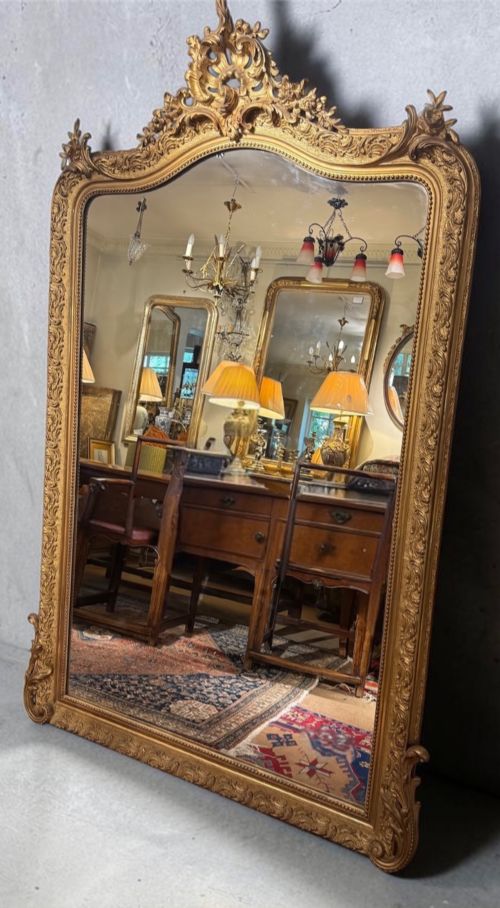
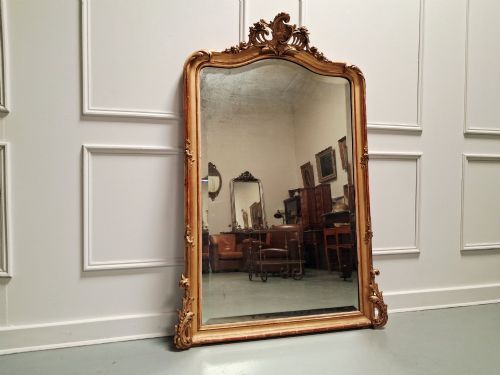
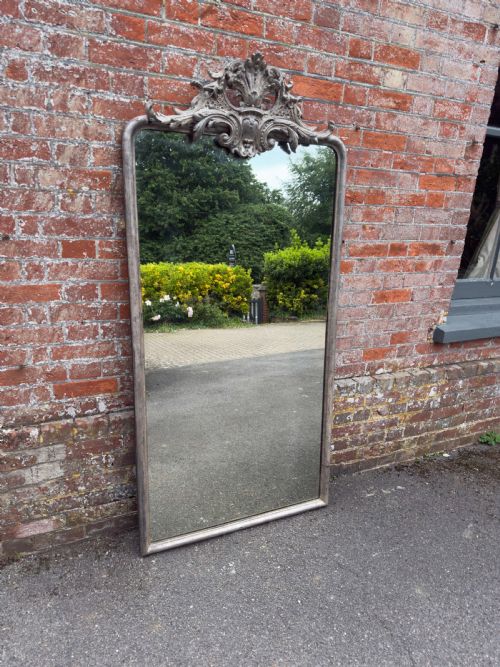

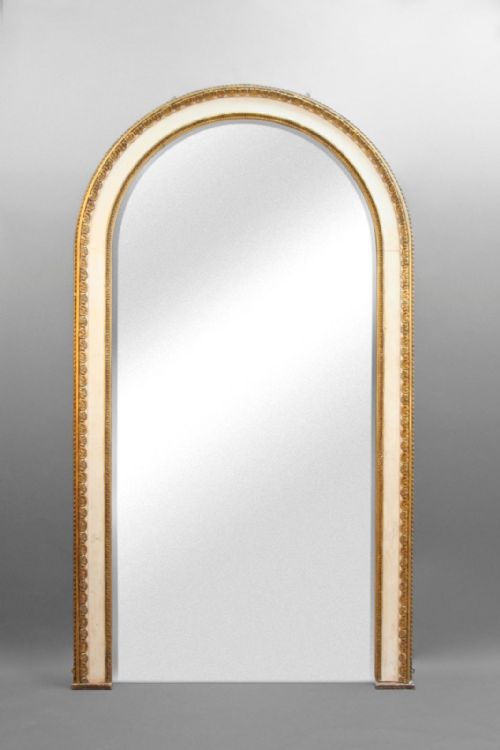


Large Arched Floor Mirror
A large arched floor mirror brings scale and reflected light into a room, drawing the eye upward with its curved apex.
Large Arched Floor Mirror
When searching for a large arched floor mirror, buyers encounter grand nineteenth-century pieces designed to stand on the floor or rest above a mantelpiece. These substantial items originate predominantly from English and French workshops spanning the Victorian, William IV, and Louis Philippe periods.
The inventory on this page consists heavily of tall overmantel and wall mirrors featuring curved or shaped tops. Many examples combine architectural presence with decorative frames suited to drawing rooms and hallways.
How they were made
Carved wood provides the structural foundation for these frames, often built from timber such as mahogany or walnut. Artisans applied layers of gesso over the wood substrate to build up crisp decorative mouldings and relief details.
Finishing techniques relied on gilding with gold leaf, silver leaf, or applying paint directly to the gesso surface. Mirror glass was then fitted into the rebate, held securely by wooden backing boards.
Listings span the periods from 1850 through to 1920, incorporating Victorian, William IV, and Louis Philippe aesthetic movements.
What varies in quality
The depth and crispness of the carved wood and gesso ornamentation separate standard pieces from superior examples. Hand-carved relief work exhibits sharper definition and greater intricacy than mass-produced or heavily restored mouldings.
The integrity of the original giltwood or silvered finish also dictates distinction. Surfaces retaining their initial layers of gold leaf or original paint show a more authentic aged patina than those subject to later re-gilding.
The Large Arched Floor Mirror Glossary
- Gesso
- A plaster-like mixture applied to wood frames to create a smooth surface for carving and gilding. It allows for intricate three-dimensional decorative details.
- Giltwood
- Timber coated with gold leaf or gold paint. This finish produces a luminous surface that catches and reflects ambient room light.
- Louis Philippe
- A mid-nineteenth-century French style characterised by restrained classical proportions and gentle curved arches. It avoids the heavy ornamentation of earlier rococo revivals.
- Overmantel mirror
- A large mirror specifically designed to hang or stand directly above a fireplace mantel. These pieces often feature wide horizontal or vertical formats to fill wall space.
Large Arched Floor Mirror: Frequently Asked Questions
How do I secure a large floor mirror?
Large mirrors of this scale require sturdy wall fixings to bear their considerable weight safely. Brackets attached to the upper frame anchor the piece securely against the wall.
Professional installation is recommended for heavy gesso and timber frames to prevent tipping. The floor beneath should also provide a stable, level surface for freestanding placement.
Where should I place an arched mirror?
An arched floor mirror works effectively in hallways, drawing rooms, or bedrooms where it can elongate the perception of space. Placing the piece opposite a window maximises natural light distribution.
Ensure the wall or floor space accommodates the grand proportions without obstruction. The curved top draws the eye upward, making high ceilings feel even more pronounced.
How do I clean antique mirror glass?
Clean antique mirror glass gently using a soft microfibre cloth and a mild, ammonia-free cleaning solution. Avoid spraying liquid directly onto the glass to prevent moisture seeping behind the silvering.
Take care around the edges of the plate where historical silvering can be particularly fragile. Regular dusting with a dry cloth helps maintain the surface without chemical exposure.
How do I identify a Victorian mirror?
Victorian mirrors often feature dense carved wood and gesso frames with distinct nineteenth-century stylistic influences like rococo revival. Construction methods typically involve older timber framing techniques and hand-applied finishes.
Examination of the backing boards and screw types can help confirm the period of manufacture. These pieces frequently display robust proportions designed for substantial domestic interiors.