




Large Wall Clock
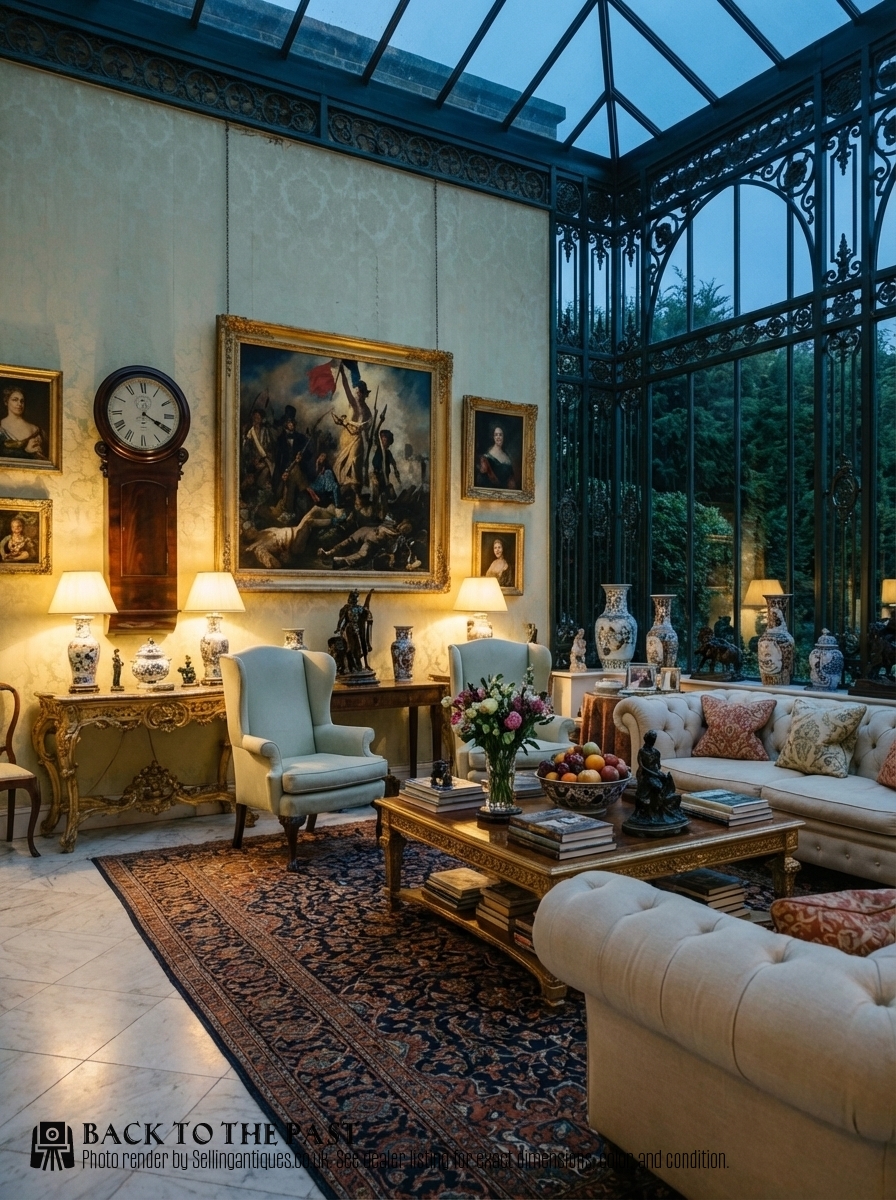
A large antique wall clock brings monumental presence to a room, offering the quiet authority of heavy timber, enamel, and brass.
Large Wall Clock
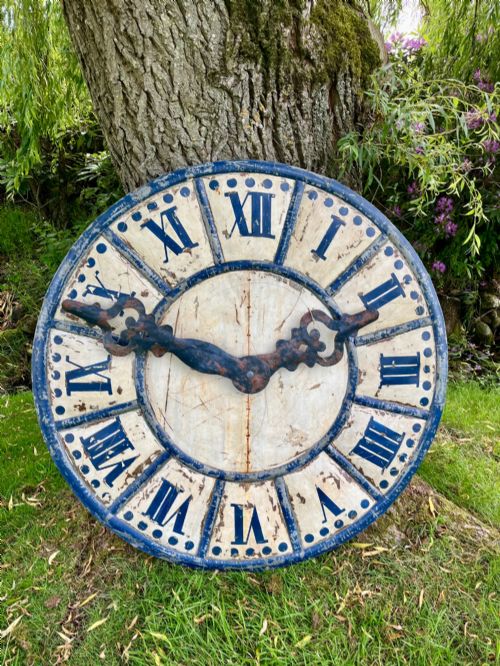
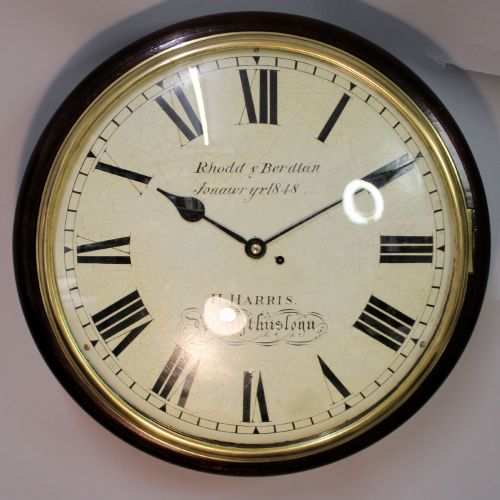
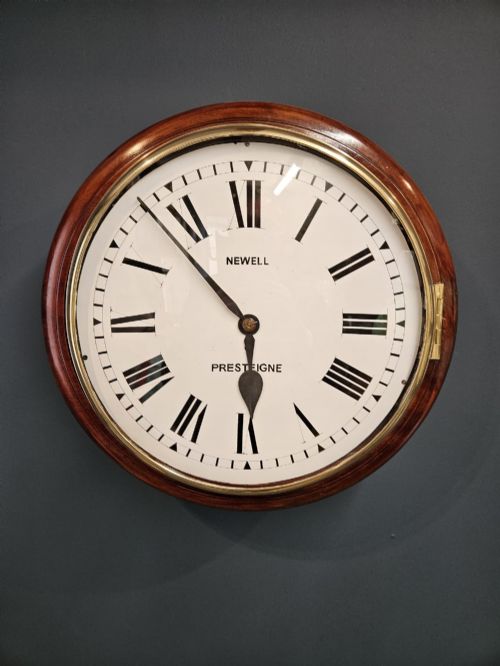
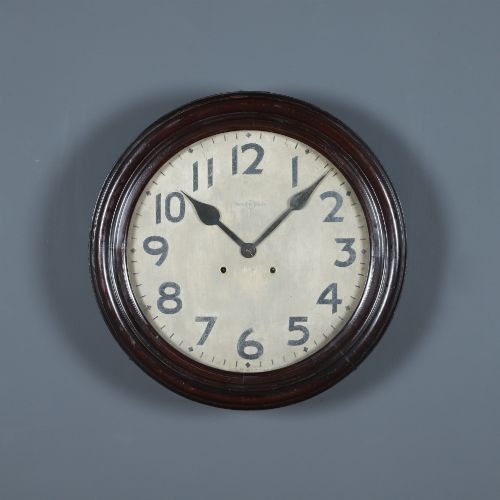
A large antique wall clock is a commanding timekeeper or dial designed for prominent display in public buildings, factories, and grand domestic spaces. When searching for a large antique wall clock, buyers encounter robust fusee dial clocks, industrial station clocks, and ornate French cartel clocks made from the nineteenth century onward.
The selection ranges from utilitarian railway and factory timepieces housed in mahogany, pine, or metal to elaborate gilt bronze and ormolu rococo wall pieces. These objects serve as both functional instruments and architectural focal points, reflecting the utilitarian or decorative demands of their original environments.
Materials and construction
Construction relies heavily on dense timbers such as mahogany, walnut, and pine, paired with durable metals like brass, copper, and iron for bezels, movements, and dials. Fusee movements provide steady tension to ensure reliable timekeeping across extended periods.
Enamel and painted metal form the large dials, often protected by heavy glass bezels, while decorative variants utilise gilt bronze and ormolu cast in elaborate French rococo or Louis XVI styles.
Some railway station clocks were built with double-sided dials so busy travellers could check the time from either end of the platform.
Markers of quality
Quality reveals itself in the crispness of the dial markings, the integrity of the original case timber, and the mechanical refinement of the movement within. Superior examples retain original painted or enamelled faces, unblemished brass bezels, and authentic fusee movements that demonstrate careful hand-finishing.
Lesser pieces often suffer from replaced dials, mismatched components, or compromised casework where moisture or heavy industrial use has degraded the timber and metal surfaces.
Henry Harris·Josef Herzog·John Walker·Palmer and Co·Japy Freres
The Large Wall Clock Glossary
- Fusee
- A conical pulley used in older clock movements to maintain an even pull as the mainspring unwinds. This mechanism helps the clock keep accurate time throughout its running cycle.
- Dial clock
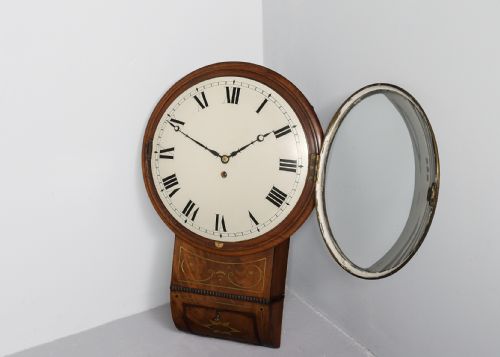
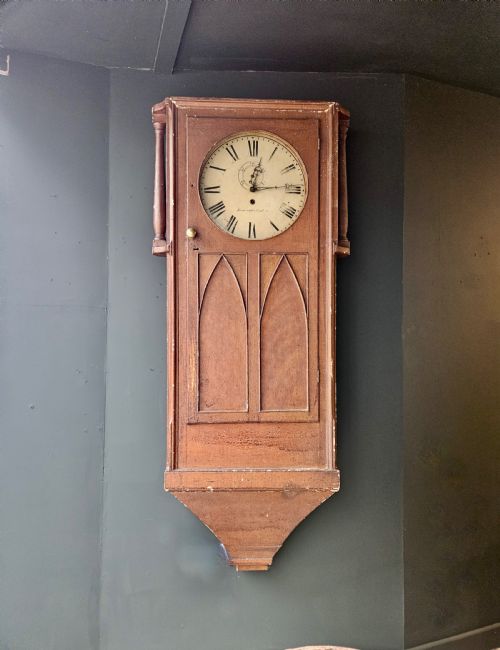
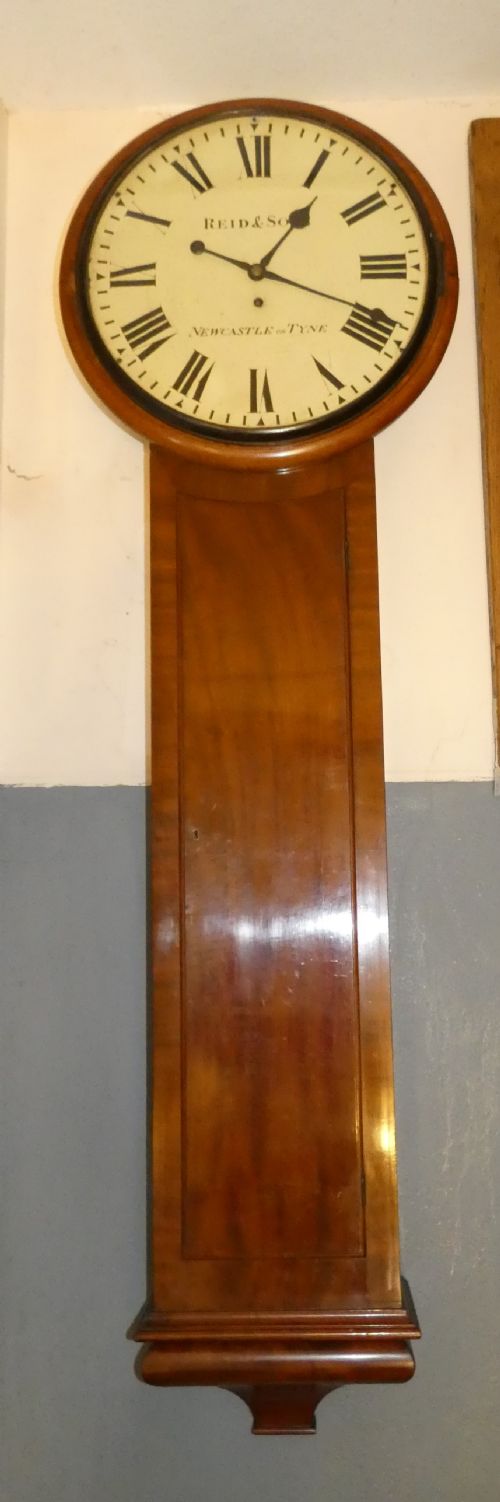
- A wall clock featuring a prominent circular face and a short wooden case underneath to house the pendulum. They were standard fixtures in offices, railway stations, and schools.
- Cartel clock
- An ornamental wall clock enclosed in a decorative metal or gilt bronze frame, often styled in French rococo or Louis XVI designs. These pieces functioned as high-status interior ornaments.
- Turret clock
- A large clock designed to be mounted on the exterior of a building or tower. Their expansive dials and heavy-duty iron or copper faces were built to withstand the elements.
- Drop dial
- A wall clock where the circular dial extends into a lower wooden box, accommodating a longer pendulum or providing visual balance. The case often incorporates side doors for easy access to the movement.
Large Wall Clock: Frequently Asked Questions
How do fusee movements work?
A fusee movement uses a specialised conical drum connected to the mainspring via a fine chain or cord. As the spring unwinds and loses strength, the chain moves to a wider part of the cone, providing greater leverage to keep the driving force constant.
This ingenious mechanical setup ensures the clock maintains steady accuracy throughout its running time before needing another wind.
How do I wind a wall clock?
Winding requires inserting the appropriate key into the winding hole on the dial and turning it gently until resistance is met. Take care not to over-wind the mechanism, as this can strain the mainspring or chain.
Consult the specific requirements of your clock's movement, as fusee and striking models often demand careful handling to keep the internal gears synchronized.
Are station clocks different from domestic clocks?
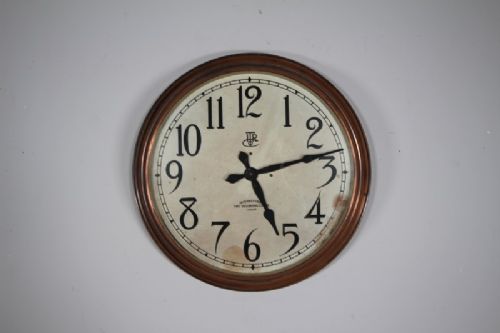
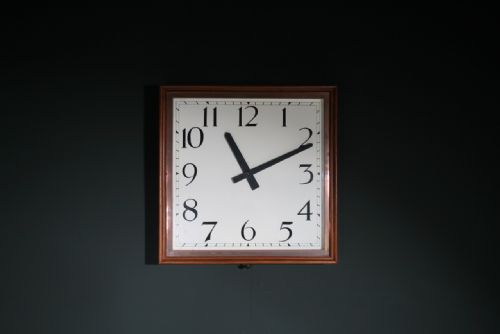
Station and factory clocks prioritize high legibility and durability, featuring bold painted dials, plain wooden or metal surrounds, and robust movements designed for heavy industrial use. Domestic wall clocks often showcase refined veneers, intricate carvings, or elaborate gilt bronze cases intended for formal interiors.
While both serve the same basic function, industrial pieces carry a starker, utilitarian aesthetic shaped by their original working environments.