
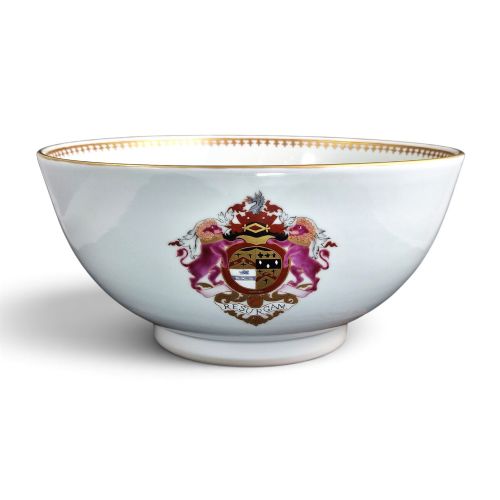

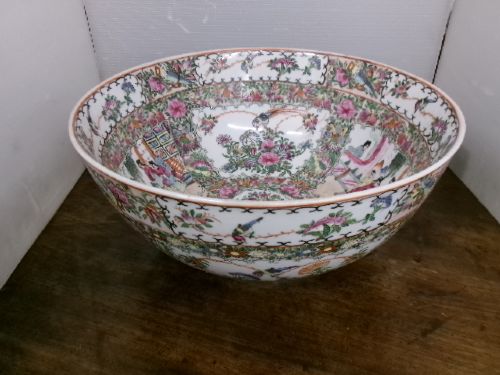
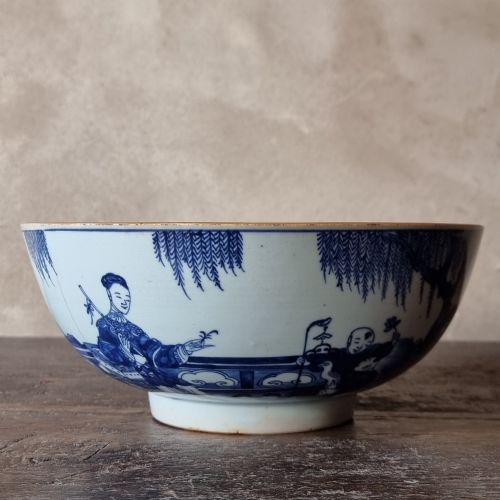
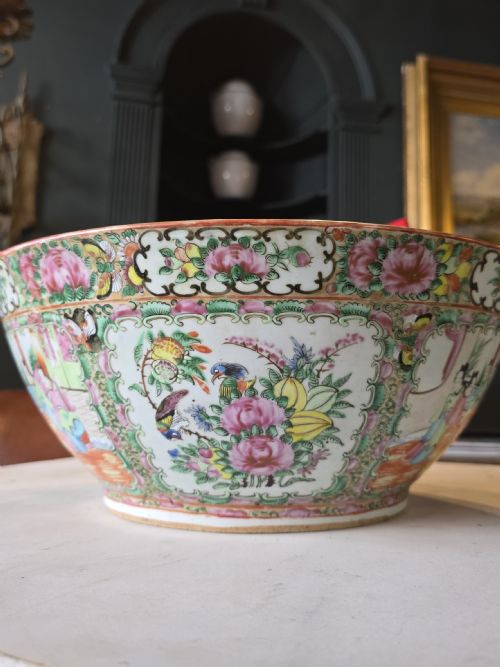
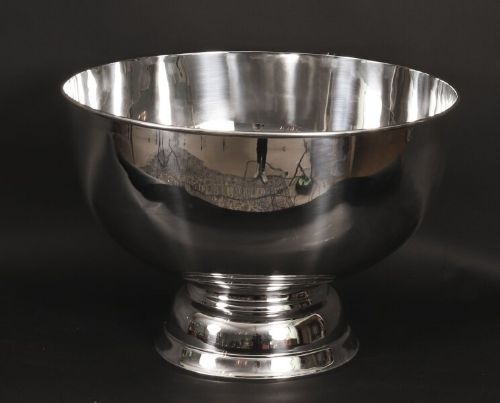


Large Punch Bowl
A large antique punch bowl brings a commanding presence to a dining table, holding generous quantities of drink or standing alone as a display piece.

Large Punch Bowl
A large antique punch bowl is a substantial vessel designed for communal gatherings, taking the form of deep porcelain basins or heavy silver and plated metal bowls. When searching for a large antique punch bowl, buyers encounter numerous Chinese export porcelains from the eighteenth and nineteenth centuries, alongside nineteenth-century Japanese Imari and Satsuma wares.
The inventory includes British silver plate and sterling silver examples from the Victorian and Edwardian eras, often configured as presentation pieces, wine coolers, or Monteith bowls. Earthenware iterations such as Sunderland sailors arms vessels also appear among the porcelain and metal options.
Forms span straightforward circular bowls with scalloped or straight rims to deep champagne coolers and centrepiece vessels measuring up to twenty inches across. The selection ranges from domestic British silver to intricate hand-painted wares exported from Qing dynasty China and Meiji period Japan.
How they were made
Ceramic vessels rely on high-fired porcelain or earthenware bodies, decorated with hand-painted cobalt blue or polychrome enamels such as the famille rose palette, sometimes enhanced with gold leaf and gilding. Chinese export and Japanese Satsuma pieces demonstrate meticulous brushwork across broad curved surfaces.
Metal versions utilise sterling silver or silver plate applied over copper or base metals, shaped via heavy casting, spinning, or hand-raising techniques. Silversmiths employed repoussé and chasing to create raised floral, bird, and scroll decorations across the exterior walls of Monteith bowls and presentation pieces.
Listings feature eighteenth-century Chinese porcelain alongside nineteenth-century Japanese Imari and Satsuma wares, complemented by Victorian and Edwardian British silver plate.
What varies in quality
Quality rests upon the crispness of the hand-painted detail on porcelain bowls or the depth and relief of repoussé work on silver vessels. Superior ceramic pieces display vibrant, intact enamel colours and precise brush control without blurring or firing flaws across large diameters.
In silver and plated items, the thickness of the metal and the integrity of the underlying plating determine durability, while maker attribution to established firms elevates the standing of a piece. Well-balanced proportions and heavy gauge silver indicate superior craftsmanship compared to lighter, mass-produced alternatives.
Mappin & Webb·Barker Ellis·Doulton Burslem·Ryuzan·Alexander Clarke & Co·Edm'e Samson
The Large Punch Bowl Glossary
- Famille Rose
- A palette of opaque overglaze enamel colours introduced in Chinese ceramics during the Qing dynasty, dominated by pink and rose shades. This technique allowed for nuanced shading of floral and figural motifs.
- Imari
- Japanese porcelain decorated in underglaze blue, iron red, and gilt, produced in Arita and exported in large quantities. The style is recognised by its dense, rich patterns.
- Monteith
- A bowl with a scalloped or notched removable rim, used in the seventeenth and eighteenth centuries to chill wine glasses by their stems. The glass bowls hung outward over the edge.
- Repoussé
- A metalworking technique where the artisan hammers the metal from the reverse side to create a raised design on the front. It requires considerable skill to maintain even thickness.
- Sunderland Lustre
- Earthenware featuring a distinctive pink or copper metallic splash glaze, frequently produced in North East England during the nineteenth century. These vessels often incorporate transfer-printed maritime scenes or verses.
Large Punch Bowl: Frequently Asked Questions
How were large antique punch bowls used historically?
These vessels sat centrally at large social gatherings and banquets, filled with mixed punches containing spirits, fruit, and spices ladled out to guests. Their generous capacity made them the focal point of hospitality during the eighteenth and nineteenth centuries.
In silver formats, similar large bowls functioned as Monteiths for cooling wine glasses or served as presentation pieces awarded for civic and sporting achievements. Porcelain examples demonstrated the host's wealth and access to imported luxury goods from Asia.
How do I clean an antique silver punch bowl?
Silver and silver-plated bowls require gentle cleaning with a specialised non-abrasive silver polish and a soft cloth to remove tarnish without scratching the metal surface. Avoid harsh chemical dips, which strip away the darker patina accumulated in recessed details.
After polishing, wash the vessel in warm soapy water and dry it thoroughly with a lint-free cloth. Regular gentle dusting prevents heavy tarnish buildup on repoussé and chased decoration.
Can I use an antique porcelain bowl for serving food?
Most antique porcelain bowls are structurally sound for serving dry foods or room-temperature punch, provided they lack hairline cracks or structural repairs. Historic glazes and hand-painted enamels, however, can be sensitive to acidic liquids, harsh dishwashing detergents, and modern machine washing.
Hand washing in lukewarm water with mild soap is essential to preserve fragile overglaze enamels and gilding. Fragile export porcelain with extensive wear is best reserved for display rather than active dining use.
How do I distinguish silver plate from solid sterling silver?
Sterling silver items carry hallmarks indicating the standard of purity, such as a lion passant for British silver, alongside town marks and maker's stamps. These assay marks provide official proof of precious metal content.
Silver-plated bowls show a base metal like copper or white metal where wear has occurred on high points, and they usually bear maker stamps denoting plating marks rather than silver assay standards.