
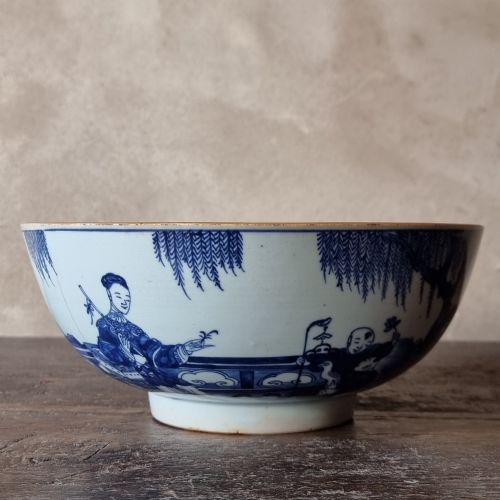


Antique Chinese Display Bowl
An antique chinese display bowl brings rich cobalt blue and vibrant famille rose enamel into a room, offering both history and decorative presence.

Antique Chinese Display Bowl
When you search for an antique chinese display bowl, you are looking at substantial vessels designed for presentation rather than daily service. The pieces on this page span from the eighteenth century through the nineteenth century, encompassing export wares and traditional forms.
You will encounter large punch bowls, conical vessels with incised motifs, and decorative bowls paired with stands. These items originate from periods such as the Qing dynasty, alongside European interpretations in the Chinese export taste.
The forms range from deep bronze vessels to delicate porcelain bowls featuring famille rose palettes. Each item serves as a focal point, whether displayed on a carved hardwood stand or set directly upon a surface.
Materials and construction
These pieces rely primarily on fine porcelain shaped by hand and fired with cobalt underglaze or colourful enamel pigments. Artisans applied gold leaf and lustre glazes to specific surfaces to catch the light and enhance the decorative motifs.
Alternative materials include cast bronze and carved hardwood, often utilised for associated stands or complementary tazza dishes. Skilled makers incised designs directly into the body before glazing, as seen in the phoenix and peony motifs on qingbai-glazed pieces.
One notably heavy contender on the page is a Chinese bronze bowl weighing two and a half kilograms.
Judging quality and execution
Quality rests in the crispness of the painted enamel and the depth of the cobalt blue beneath the glaze. Superior examples display precise brushwork on complex scenes, whereas lesser pieces show hurried execution.
The integrity of the body and the condition of the surface finish dictate the standing of a vessel. Items that retain their original carved hardwood stands or show harmonious integration of materials command greater attention.
Daisy Makeig-Jones Wedgwood·Samson Of Paris
The Antique Chinese Display Bowl Glossary
- Famille Rose
- A palette of opaque enamel colours dominated by pink, introduced during the Qing dynasty. This technique allowed artists to paint detailed floral and figural scenes with subtle tonal gradations.
- Qingbai
- A bluish-white porcelain glaze originating from China, notable for its translucent quality and subtle greenish-blue tint in the recesses of carved designs.
- Punch Bowl
- A large, deep vessel originally intended for mixing and serving alcoholic punch during communal gatherings. These bowls often feature expansive interior and exterior decoration.
- Cobalt Underglaze
- Pigment applied to the raw clay body before glazing and firing, producing deep blue designs protected by a clear glossy finish.
Antique Chinese Display Bowl: Frequently Asked Questions
How were antique chinese display bowls used?
Historically, large punch bowls served communal drinks at gatherings, while other vessels functioned purely as decorative centrepieces in grand rooms.
Today, they are placed on tables, sideboards, or dedicated stands to showcase their craftsmanship and historical artistic motifs.
How do I style a bowl at home?
Place a large porcelain or bronze bowl centrally on a dining table or heavy wooden sideboard to draw the eye. Many pieces pair effectively with carved hardwood stands that elevate the vessel and protect the surface below.
Keep surrounding decor simple to allow the intricate enamel colours and painted motifs of the bowl to remain the primary focus.
How do I date an antique bowl?
Dating relies on identifying specific stylistic markers, such as the distinct palette of the Qing dynasty or the characteristics of eighteenth-century export porcelain. Material composition, glaze types, and any associated maker marks also provide clear indications of age.
Comparing the potting style and decorative motifs to documented historical pieces helps narrow down the period of manufacture.