








Large Imari Dish
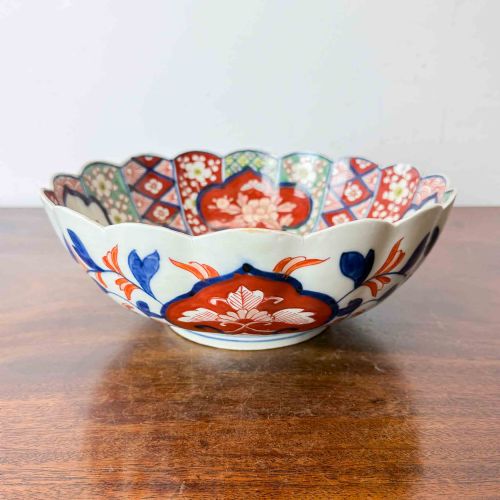
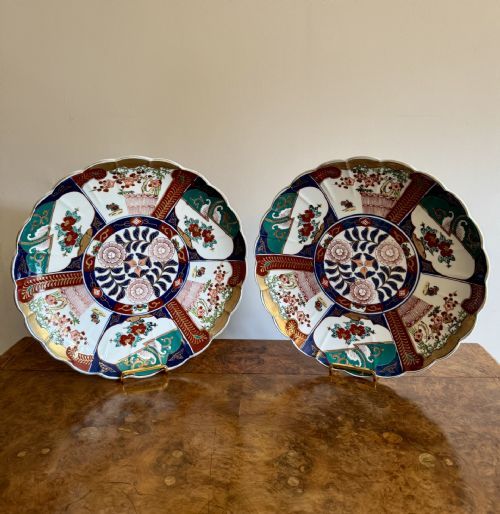
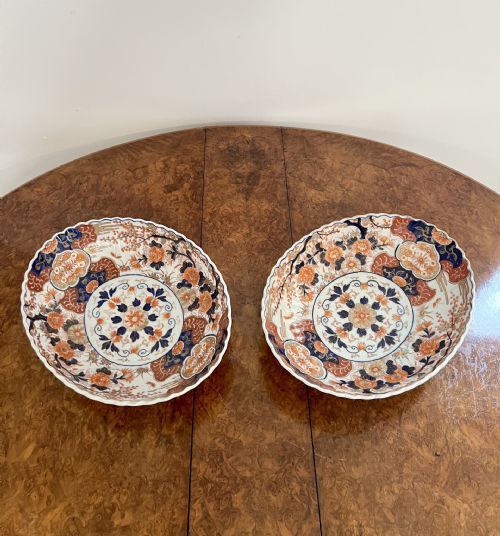
A large antique imari dish brings rich blue and burnt orange colour to a room, offering bold pattern and centuries of ceramic history.
Large Imari Dish
A large antique imari dish stands as a substantial focal point, typically encountered as a wide charger, decorative plate, or deep bowl. These pieces emerge primarily from Japanese traditions such as the Edo and Meiji periods, alongside nineteenth-century English interpretations.
Buyers seek these items for their complex hand-painted surfaces and generous proportions, which range from scalloped serving platters to broad wall plates. The selection spans centuries of craft, featuring characteristic forms designed for display or service.
How they were made
Potters shaped these objects from porcelain, ironstone, ceramic, and earthenware before applying dense underglaze blue and overglaze enamel colours. Many examples incorporate intricate detailing in gold leaf and gilt to heighten the visual contrast.
The firing process demanded precise kiln control to set the signature palette of cobalt blue, iron red, and complementary pigments across large surface areas. Artisans executed each motif by hand, resulting in varied compositions tailored to chargers and bowls.
What varies in quality
Division in quality rests upon the crispness of the hand-painted decoration and the complexity of the narrative or geometric motifs. Pieces featuring finely rendered figures like the Seven Lucky Gods or detailed koi carp display superior artistic control.
The purity of the porcelain body and the vibrancy of the enamel pigments distinguish finer examples from standard production ware. Balanced proportions and crisp moulding on scalloped or square edges further elevate the standing of a dish.
The Large Imari Dish Glossary
- Imari
- A style of Japanese porcelain originating from the port of Arita, traditionally decorated in underglaze blue, iron red, and gold. This palette creates a vibrant contrast that defines the aesthetic.
- Charger
- A large decorative plate utilised for ceremonial display or serving during formal meals. These wide pieces dominate a table or wall through sheer scale.
- Arita
- The Japanese town and surrounding region renowned as the birthplace of Japanese porcelain production. Kilns here supplied domestic and export markets for centuries.
- Ironstone
- A type of durable heavy earthenware developed in Britain as a robust alternative to porcelain. It frequently accommodated transfer-printed and hand-painted Chinoiserie patterns.
- Meiji Period
- An era in Japanese history spanning from eighteen sixty-eight to nineteen twelve, marked by extensive international trade and export of decorative arts.
Large Imari Dish: Frequently Asked Questions
How do I hang a large charger?
Displaying a large charger securely requires a coated wire wall hanger designed to distribute weight evenly across the rim. Ensure the mounting fixings anchor directly into solid walling to support the porcelain safely.
Position the piece at eye level to appreciate the hand-painted details and rich enamel colours properly. Keep the dish away from direct sunlight and high-traffic hallways to protect the surface.
Were these dishes used for food?
Many large antique imari dishes served practical functions as platters or fruit display plates in formal settings. Over time, their decorative impact led owners to transition them primarily into wall plates and cabinet showpieces.
Modern owners generally reserve these items for display rather than daily dining use. Hand-washing in lukewarm water without harsh detergents remains essential if an owner chooses to use them for serving.
How do I date an imari dish?
Dating relies on examining the characteristics of the paste, the tone of the cobalt blue, and the style of the overglaze enamels. Nineteenth-century and Meiji period examples often feature denser, more ornate compositions than earlier Edo pieces.
Backstamps, where present, provide clues to the factory or export period. Comparing the weight and glaze texture against known reference pieces helps narrow the decade of production.
What is the Seven Lucky Gods motif?
The Seven Lucky Gods represent a group of deities from Japanese folklore associated with good fortune, longevity, and prosperity. Artisans frequently painted these figures onto chargers to imbue the piece with auspicious meaning.
Identifying individual gods involves spotting their traditional attributes, such as treasure sacks, scrolls, or sacred instruments. This narrative detail adds both cultural depth and visual interest to the ceramic surface.