



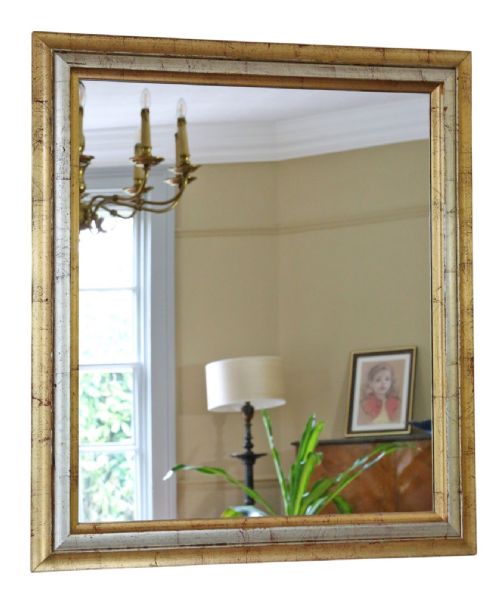
Large Accent Mirror
When you want a large accent mirror, you are looking for a statement piece that anchors a room using period scale and reflective depth.
Large Accent Mirror
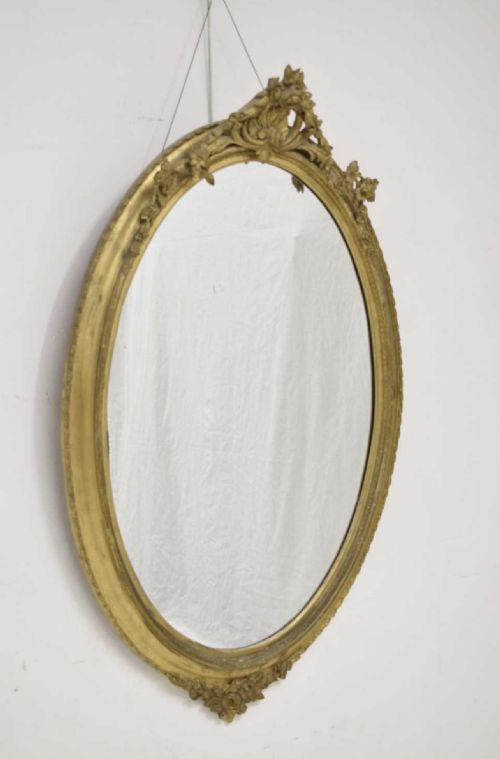
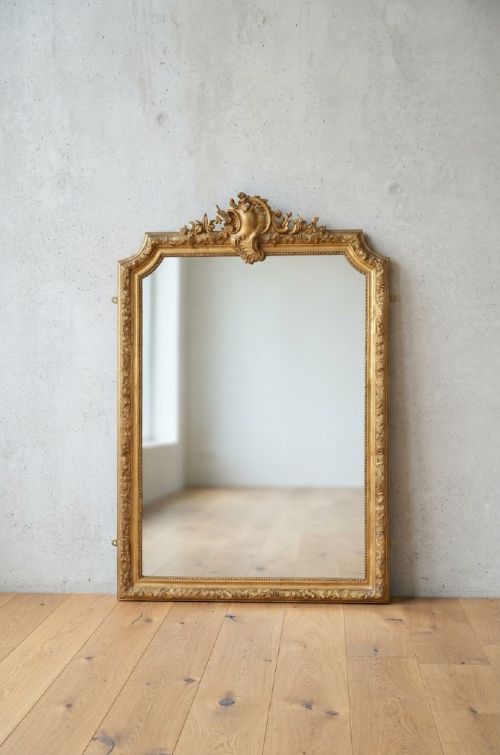
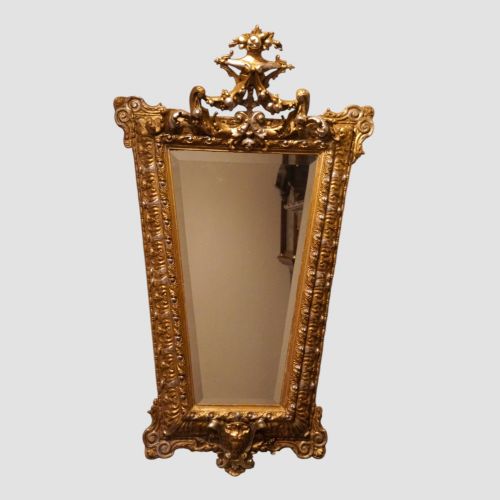
A large accent mirror functions as a primary visual focus within a room, drawing the eye through generous proportions and decorative framing. These items span various historical periods, most notably the nineteenth century, alongside later mid-twentieth-century examples.
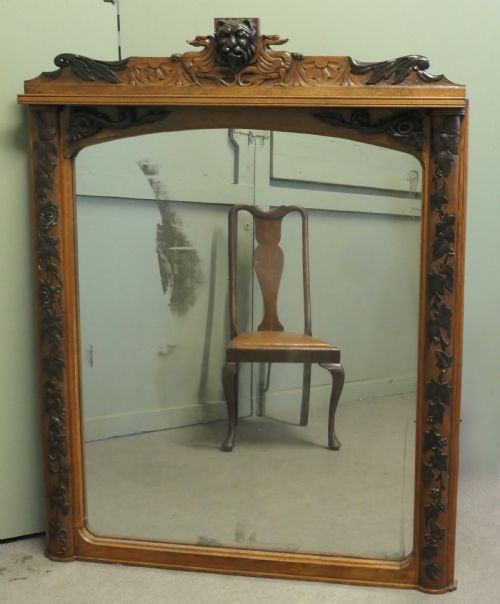
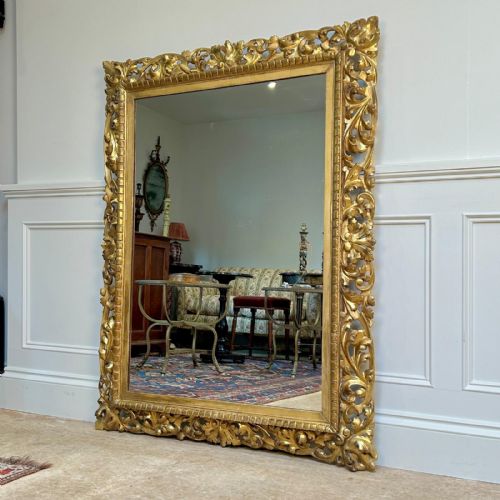
Giltwood and carved wood constructions appear frequently alongside painted finishes and wood types such as oak and burr walnut. Buyers encounter both ornate revival styles and cleaner geometric shapes from the Art Deco period.
Materials and construction
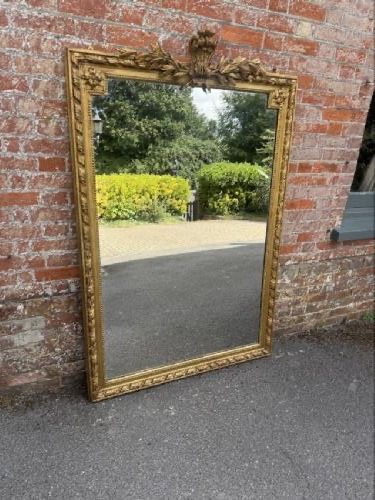
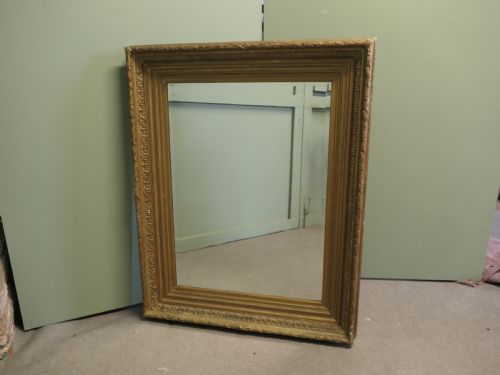
Frame construction relies heavily on carved wood, gesso and applied gold leaf or silver-gilt, creating reflective metallic surfaces that catch ambient light. Artisans shaped soft woods and applied layers of gesso to build up intricate relief ornaments, shell motifs and rope twist details before gilding or painting.
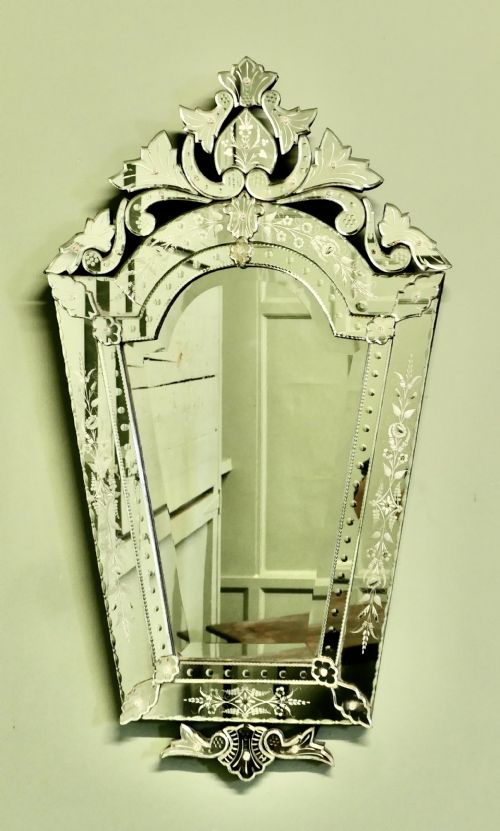
Mirror glass panels are set within these heavy wooden structures, sometimes featuring engraved cushion designs, marginal plates or trapezoidal cuts. Oak, burr walnut and faux bois finishes provide alternative tactile surfaces that highlight natural grain patterns alongside metallic treatments.
Materials represented across the selection include mirror glass, giltwood, gesso, carved oak, burr walnut and paint.
Judging quality and finish
The standard of a frame depends on the depth and crispness of the hand-carving within the wood and gesso layers. Superior examples display sharply defined relief ornament and smooth, even gilding that ages gracefully without crude repairs.
The integrity of the mirror glass contributes significantly to the overall merit of the piece. Original glass plates with authentic foxing and clear bevels hold more character than later replacements, while sturdy structural joinery ensures the heavy frame safely supports its own weight on the wall.
The Large Accent Mirror Glossary
- Giltwood
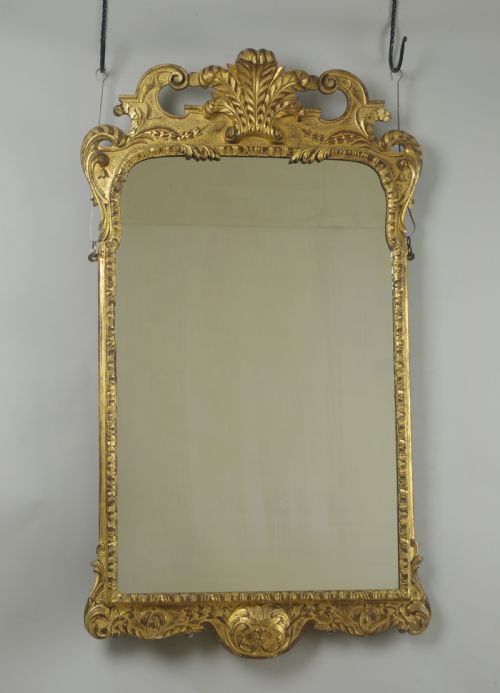
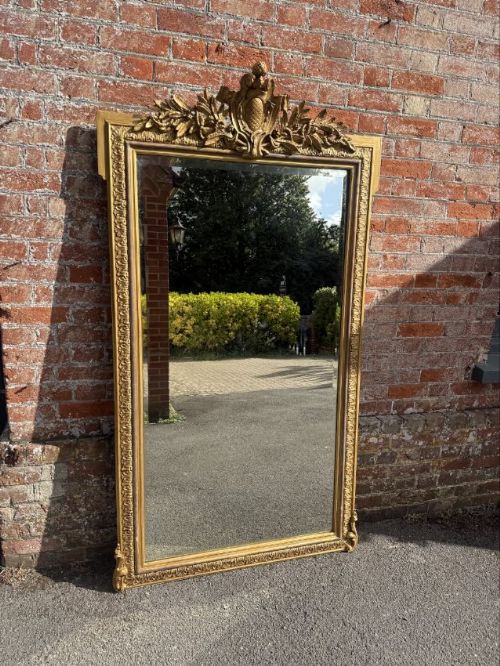
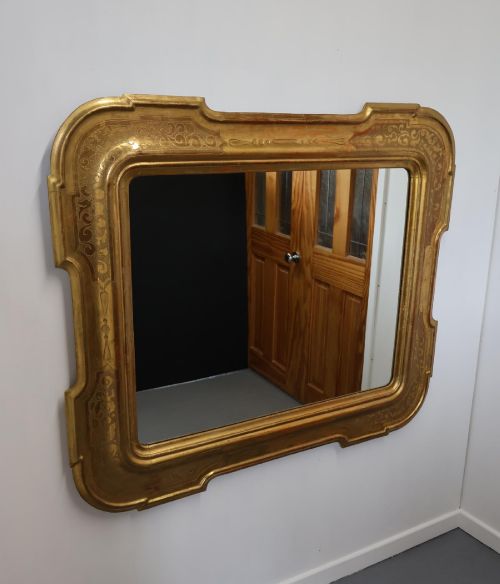
- Wood that has been coated with gold leaf or metal leaf over a prepared gesso ground. This finish provides a bright reflective surface common in nineteenth-century decorative frames.
- Overmantel mirror
- A large horizontal mirror specifically proportioned to hang above a fireplace mantelpiece. These pieces often feature arched tops or elaborate crestings.
- Gesso
- A plaster-like mixture applied to wood frames to create a smooth surface for carving and gilding. Artisans model intricate relief details directly into this compound.
- Trumeau mirror
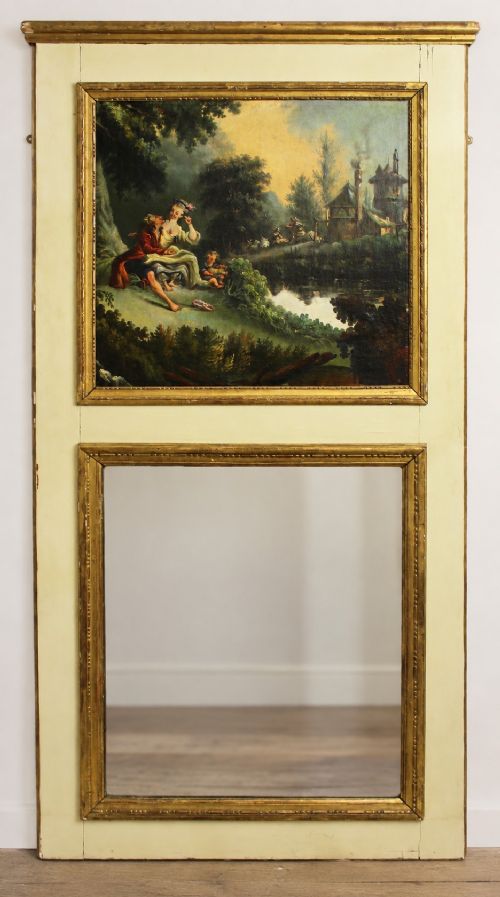
- A tall wall mirror that incorporates a painted panel or artwork directly above the glass. Originating in French interior design, these pieces fill vertical wall spaces between windows.
- Cushion mirror
- A mirror featuring a convex or bevelled outer frame section that slopes inward toward the central glass plate. This profile creates multiple angles for reflecting light around a room.
Large Accent Mirror: Frequently Asked Questions
Where should I hang a large accent mirror?
These pieces suit positions above fireplaces, along primary hallway walls or opposite windows to maximise natural light.
Ensure the wall structure securely supports the considerable weight of heavy wood and gesso frames.
How do I identify a nineteenth-century mirror?
Examine the backboards, frame construction methods and the characteristics of the glass plate.
Nineteenth-century examples frequently utilise hand-carved wood, layered gesso and traditional gilding techniques unique to that era.
What is an overmantel mirror?
An overmantel mirror is a wide format mirror built to sit directly above a fireplace surround.
These pieces were traditionally proportioned to match the width of the mantel shelf and draw light into the hearth area.
How do I care for antique giltwood?
Dust the carved surfaces gently with a soft, dry brush and avoid using liquid cleaners or chemical polishes.
Moisture can damage the underlying gesso and lift the delicate gold leaf application.