





Ladies Writing Slope
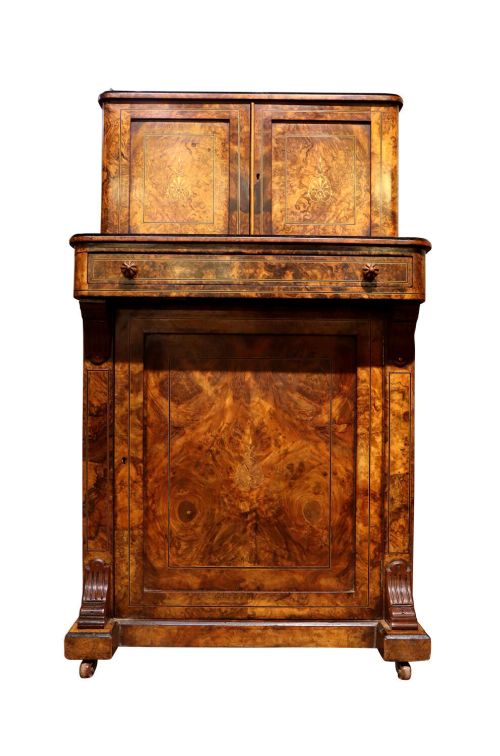
These ladies writing slope pieces are compact writing desks and slope boxes designed for correspondence, most frequently seen here in Victorian burr walnut.
Ladies Writing Slope
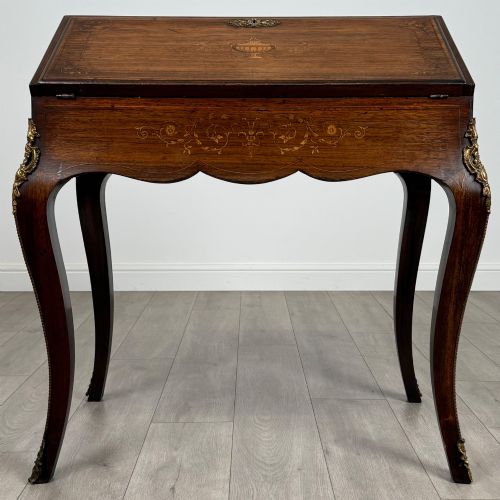
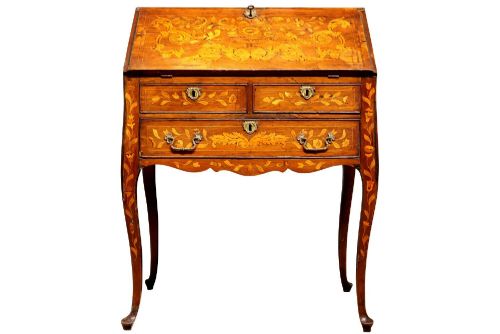
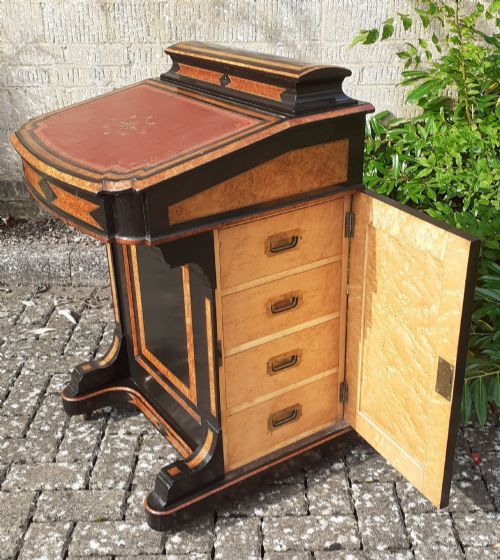
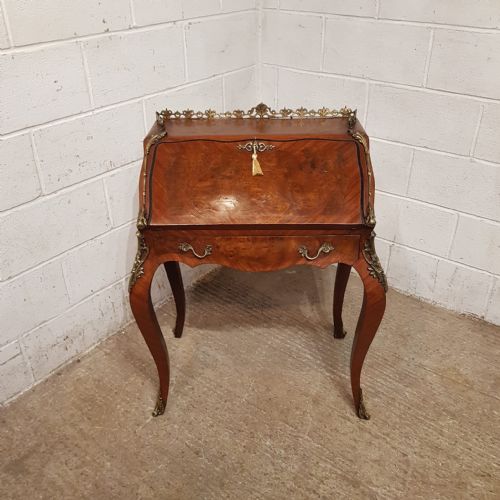
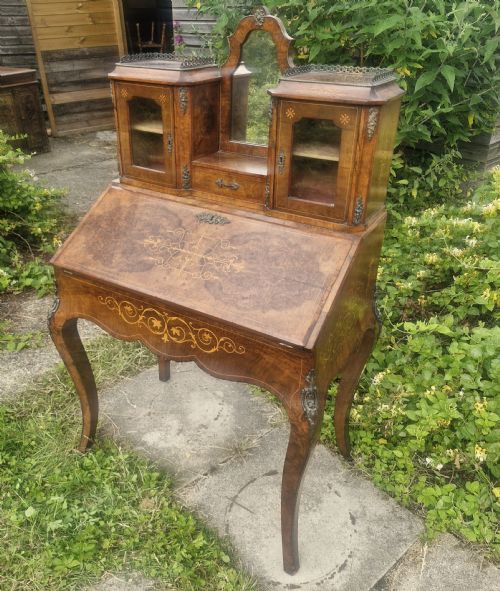
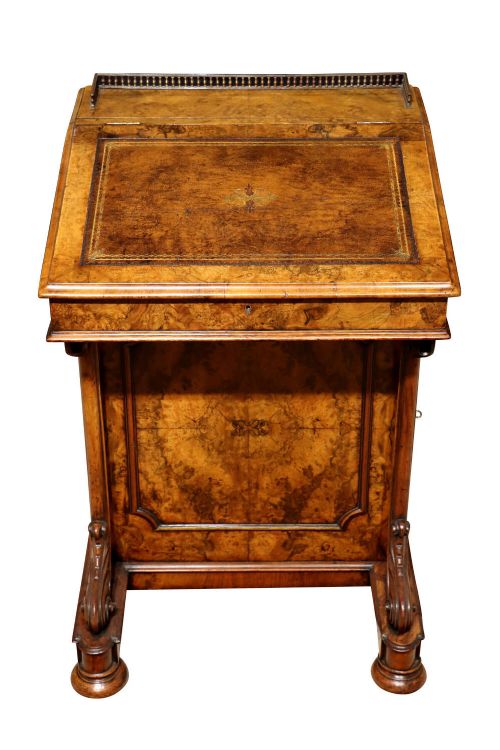
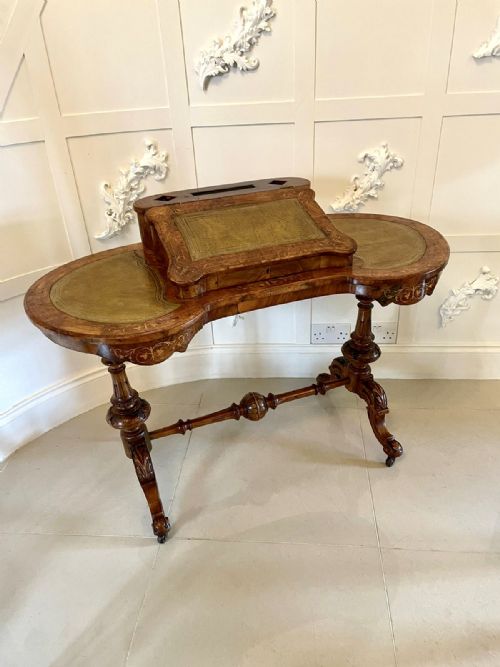
A ladies writing slope encompasses compact writing desks, bureau de dame forms, and portable boxes designed for personal correspondence and paperwork. Buyers examining this category encounter a range of nineteenth-century formats, from travelling slope boxes to freestanding Davenport desks and bonheur du jour tables.
Victorian burr walnut examples dominate the selection, often featuring inlaid marquetry, brass details, and satinwood interiors. Alongside these, French Louis XV revival pieces and Edwardian mahogany desks appear regularly, reflecting both portable box construction and more substantial boudoir furniture.
How they were made
Cabinet makers utilised dense hardwoods such as mahogany, rosewood, and walnut as structural carcases, frequently applying decorative veneers of burr walnut, satinwood, and amboyna. Surfaces were often enhanced with floral marquetry, brass inlay, or ormolu and gilt metal mounts.
Interiors reveal fitted compartments for writing equipment, with sloping writing surfaces lined in leather. More complex forms incorporate pop-up mechanisms, cylinder fronts, or integrated storage drawers set beneath the writing bed.
Pop-up mechanisms inside Victorian desks allow secret compartments to rise automatically as the primary lid opens.
What varies in quality
The degree of refinement in the cabinet work distinguishes finer examples from standard production pieces, particularly in the precision of the marquetry and the choice of burl veneers. Superior pieces display harmonious timber selection across all visible surfaces and retain well-fitted original interiors.
Hardware and metal mounts also indicate the tier of the piece, with finely chased ormolu and quality brass stringing marking out exhibition or high-grade workshop commissions compared to simpler commercial manufacture.
Gillows·BVRB
The Ladies Writing Slope Glossary
- Writing slope
- A portable box with an angled lid that opens to reveal a slanted surface for writing and storage compartments for stationery. These pieces were designed for travel or use on tabletops.
- Davenport desk
- A compact pedestal desk featuring a sloping writing surface above a bank of drawers. The design became widely popular during the nineteenth century for domestic writing tasks.
- Bureau de dame
- A small French ladies desk, often with a cylinder front or sloping flap and delicate cabriole legs. These pieces frequently incorporate marquetry and gilt metal mounts.
- Bonheur du jour
- A light ladies writing desk featuring a small cabinet or superstructure with shelves and drawers above the main writing surface. They emerged during the eighteenth century and remained popular through the Victorian era.
- Marquetry
- The art of applying decorative veneer pieces in wood, metal, or other materials to form geometric or floral patterns on a furniture surface. This technique requires precise cutting and fitting by skilled craftsmen.
Ladies Writing Slope: Frequently Asked Questions
What is a ladies writing slope?
A ladies writing slope is a portable or compact desk designed for personal correspondence, typically featuring an angled writing lid that lifts to reveal storage compartments for paper and ink.
These pieces range from wooden boxes placed on tables to small freestanding desks such as Davenports and bureau de dame forms.
How were these desks used?
Owners used these pieces to write letters, store stationery, and keep personal papers organised in private rooms or while travelling. The slanted lid provided a comfortable surface for handwriting before the widespread use of flat-topped stationery desks.
Many examples include dedicated slots for pens, inkwells, and compartments hidden beneath the writing flap for confidential documents.
How do I date a writing slope?
Dating relies on timber choices, decorative styles, and construction methods associated with specific periods like the Regency, Victorian, or Edwardian eras. Mahogany and rosewood are more common in earlier pieces, while burr walnut and marquetry frequently point to mid-to-late nineteenth-century production.
Interior fittings, brass hardware, and secondary woods inside the drawers also provide clues to the approximate decade of manufacture.
Where should I place one at home?
These compact pieces fit easily into sitting rooms, studies, or bedrooms where a large desk would overwhelm the floor space. Freestanding forms like Davenports and bonheur du jour tables function well against walls or as standalone accent pieces.
Portable slope boxes can sit on top of sideboards, chests of drawers, or larger tables, ready to be opened when writing letters.