



Ladies Slant Front Desk
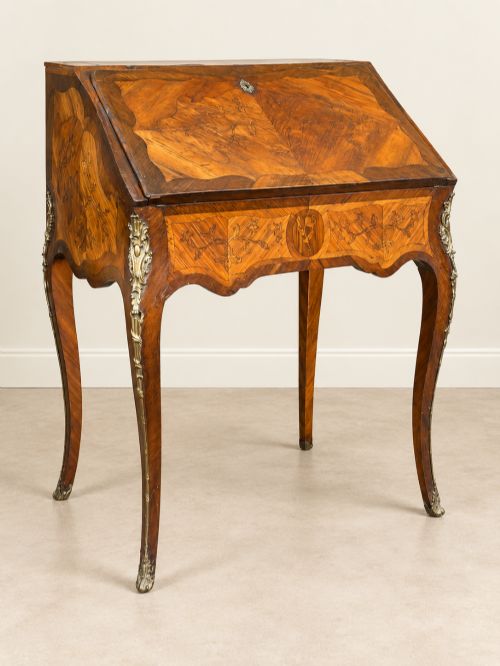
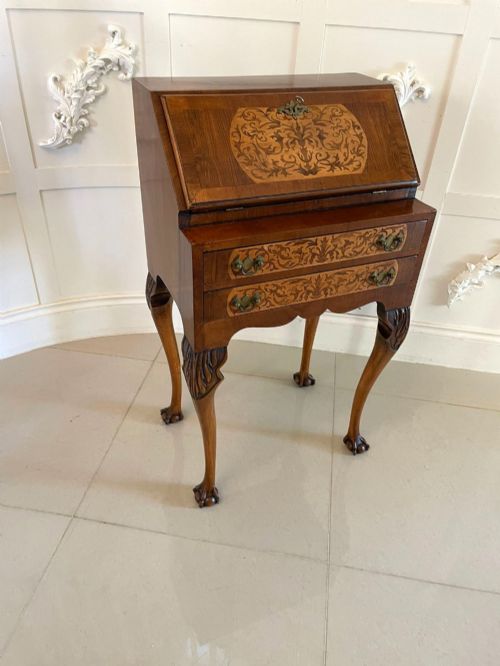
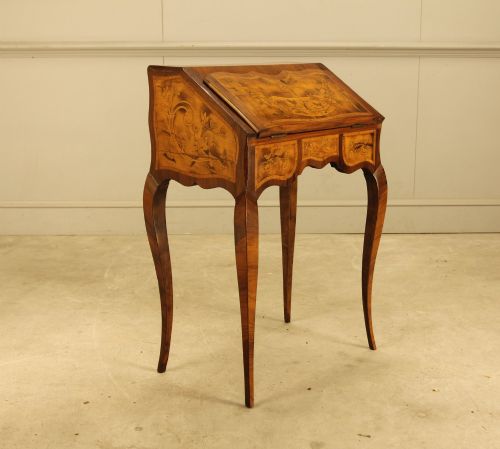
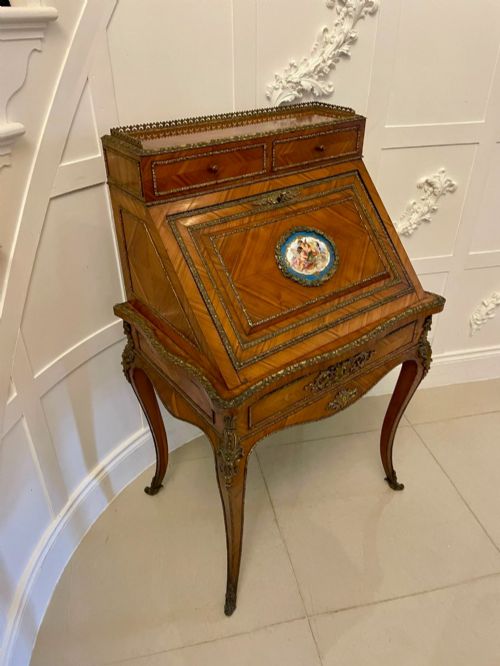
These ladies slant front desk examples offer compact writing surfaces, combining clever compartment layouts with decorative French and Victorian revival aesthetics.
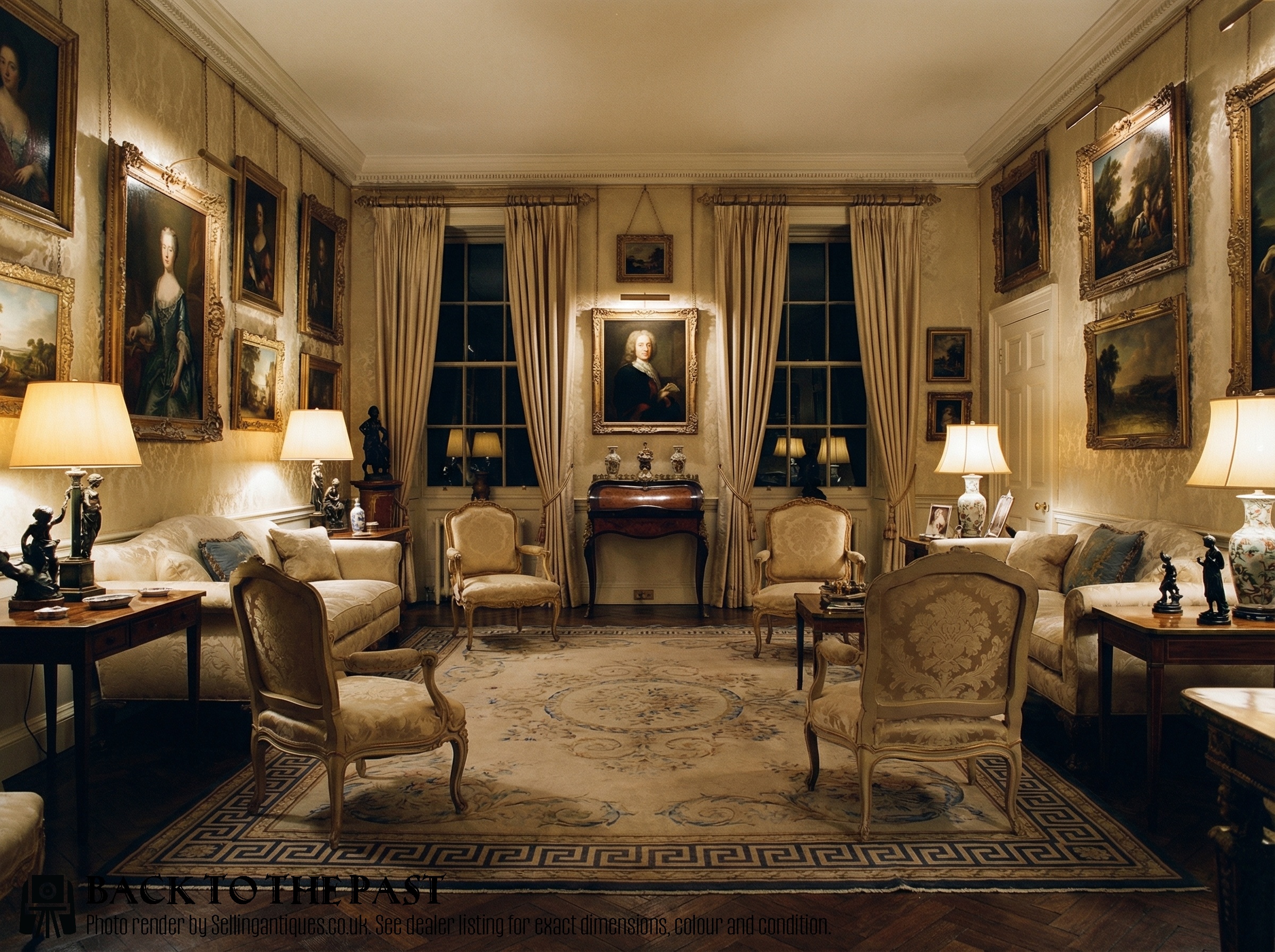
Ladies Slant Front Desk
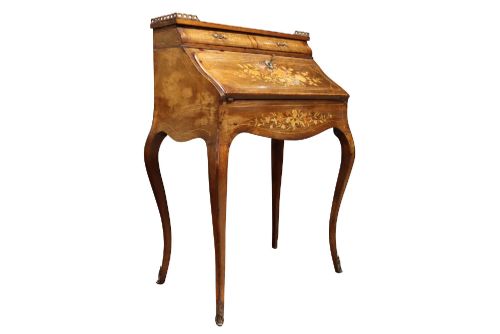
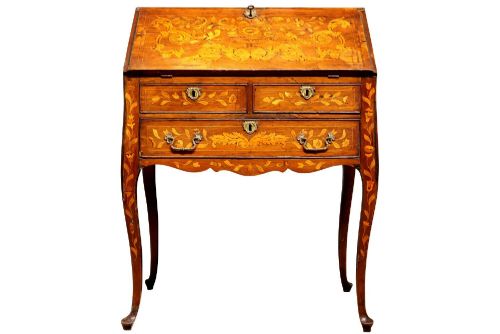
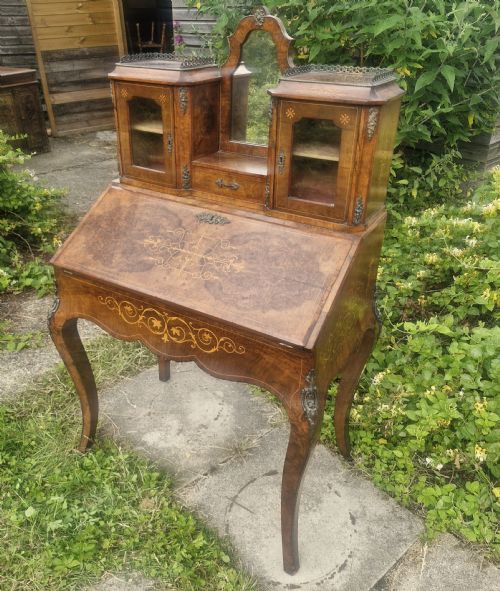
A ladies slant front desk provides a compact personal writing surface, often referred to in listings as a bureau de dame, bonheur-du-jour, or davenport. These pieces emerge predominantly from nineteenth-century Victorian and continental workshops, reflecting a period of refined domestic writing habits.
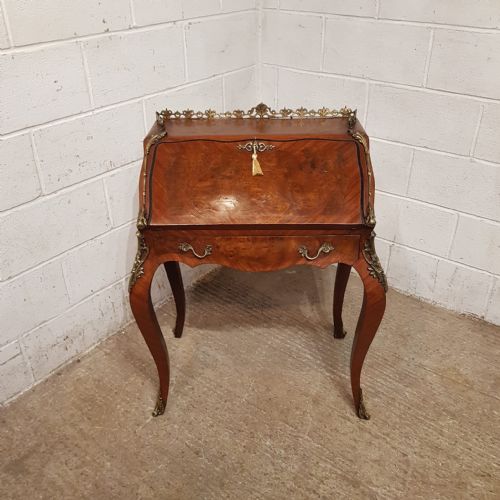
Most examples encountered here are French or Victorian creations, frequently adopting Louis XV revival styling with curved cabriole legs and elaborate surface ornamentation. They balance practical stationery storage with decorative presence suited to boudoirs or private reception rooms.
How they were made
Cabinet makers utilised dense hardwoods such as walnut, kingwood, rosewood, and tulipwood as foundational timbers, often applying intricate burr walnut or floral marquetry veneers across the sloping falls and writing surfaces. These timber choices provided stable canvases for detailed diagonal grain arrangements and contrasting inlay work.
Metal embellishment played a central structural and decorative role, incorporating cast ormolu mounts, brass stringing, and gilt-metal hardware to accent corners, edges, and cabriole knees. Interior compartments frequently housed small drawers, leather-lined writing slopes, and secret locking mechanisms operated by small keys.
Several desks conceal tiny interior compartments behind secret panels, designed for hiding private letters and hidden keys.
What varies in quality
The sophistication of the marquetry and the choice of veneer dictate the visual distinction of a piece, with finely cut floral motifs and symmetrical burr walnut figuring marking superior execution. Lesser examples rely on simpler timber grains and minimal stringing without pictorial inlay.
Hardware integration and internal carpentry distinguish workshop tiers, where cast ormolu mounts fit seamlessly against contoured timber profiles rather than appearing stiff or poorly cast. Superior writing slopes feature well-fitted internal stationery wells and smoothly operating drop-front hinges.
Paul Sormani
The Ladies Slant Front Desk Glossary
- Bureau de dame
- A small ladies writing desk, usually featuring a sloping fall-front or cylinder lid enclosing fitted interior compartments. These compact writing desks were popular in nineteenth-century French and English domestic interiors.
- Bonheur-du-jour
- A light ladies writing table featuring a small cabinet, drawers, or pigeonholes arranged on top of the main writing surface. The term translates from French as day-happiness.
- Ormolu
- Gilt-bronze decorative mounts applied to furniture edges, feet, and corners. This technique involves coating bronze elements with a mercury and gold amalgam before firing.
- Marquetry
- The art of applying decorative veneer pieces in wood, brass, or shell to form pictorial or geometric patterns. Craftsmen carefully cut contrasting veneers to create detailed floral designs across desk falls.
- Davenport
- A compact pedestal desk featuring a sloping writing top and side drawers. This specific form combines a small writing bureau with enclosed storage drawers beneath.
Ladies Slant Front Desk: Frequently Asked Questions
What is a bureau de dame?
A bureau de dame is a small, elegant ladies desk featuring a sloping front or lid that opens to reveal internal drawers and pigeonholes. These pieces were designed for personal correspondence and private record keeping in nineteenth-century homes.
They generally occupy a smaller footprint than standard partners or pedestal desks, making them adaptable to residential rooms where space is limited.
How do I identify a bonheur-du-jour?
A bonheur-du-jour is distinguished by an upper superstructure of small drawers or shelves sitting directly upon the writing table surface. This style emerged in France during the eighteenth century and saw a widespread revival during the Victorian era.
Unlike standard slant-front desks, they often feature open display space or small cupboards above the main writing platform alongside slim cabriole legs.
Were these desks used for writing?
These desks served primarily for writing letters, managing household accounts, and reading correspondence rather than heavy administrative work. The compact proportions and integrated stationery compartments reflect lighter daily administrative duties.
Many incorporate leather or velvet writing inserts on the sloping fall to provide a comfortable surface for quill or pen work.
How do I care for antique veneer?
Antique veneers require stable humidity and temperature conditions to prevent the underlying glues from drying and causing lifting. Regular dusting with a soft, dry cloth preserves the polished timber finish without introducing moisture.
Avoid placing these desks in direct sunlight or near active heat sources, as extreme temperature shifts can cause rosewood, walnut, and kingwood surfaces to fade or split.