





Lacquered Tilt Top Table
A lacquered tilt top table combines a clever folding mechanism with decorative surfaces that transform a room.
Lacquered Tilt Top Table
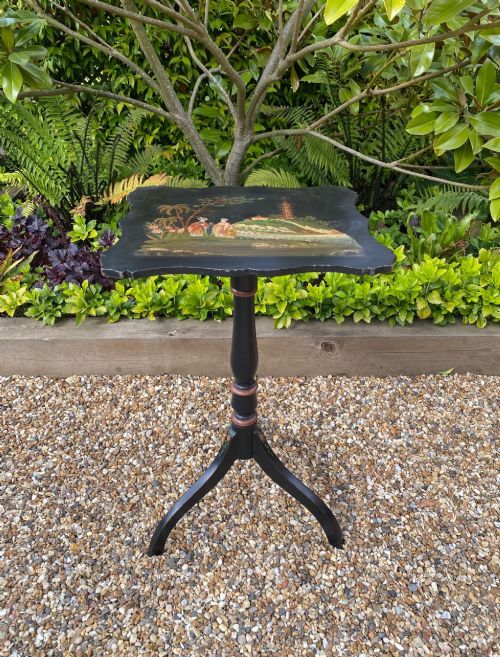
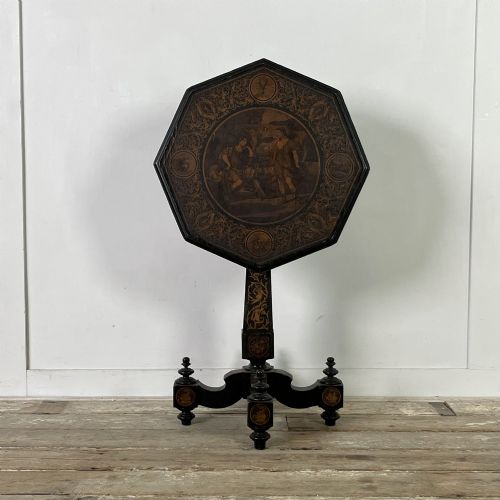
A lacquered tilt top table provides a dual-purpose surface that drops flat for use and tilts vertically for storage against a wall when not needed. These pieces take the form of occasional tables, wine tables, side tables, and tray tables designed for easy movement around a drawing room or parlour.
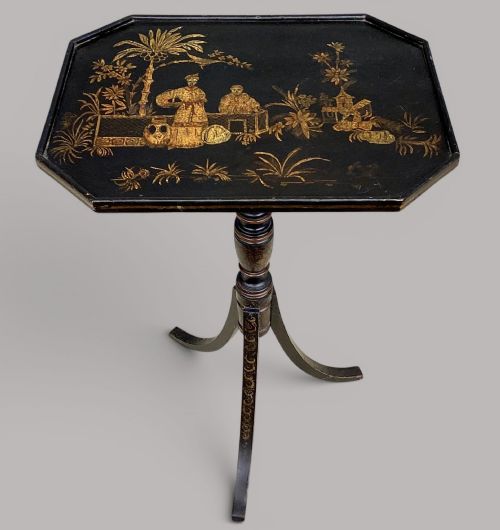
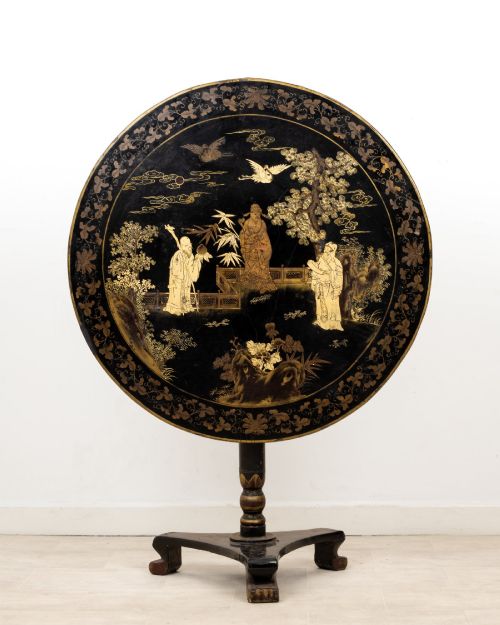
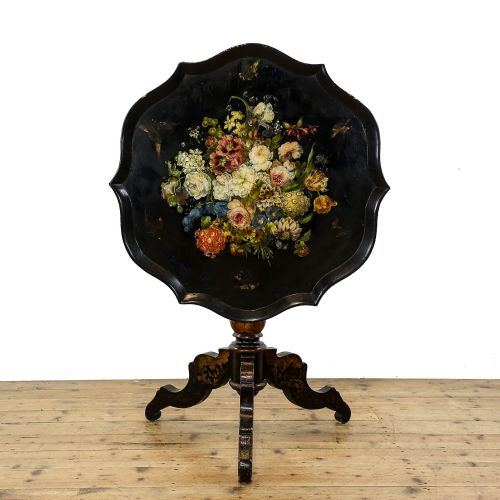
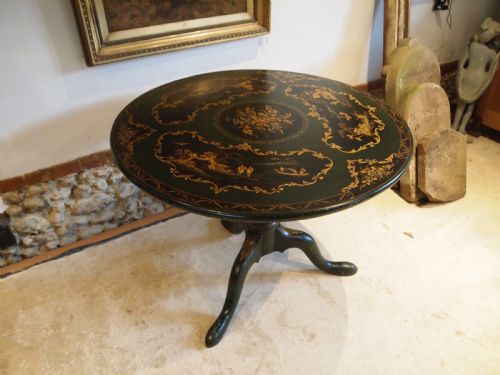
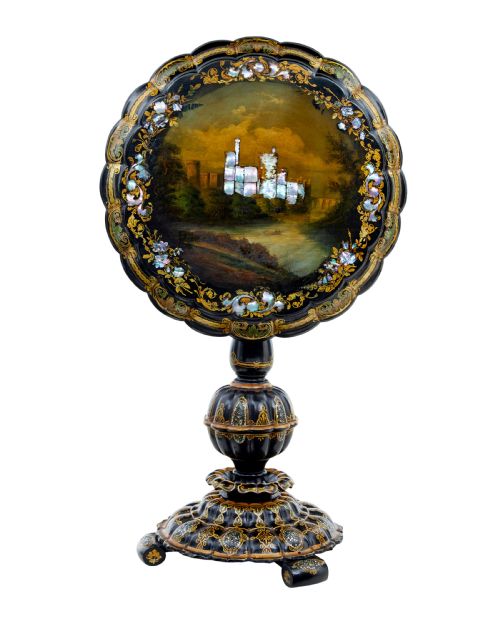
The versions most commonly met on this page span the Georgian, Regency, and Victorian periods, often decorated with Chinoiserie motifs, ink work, or hand painting. Papier-mâché examples from the mid-nineteenth century sit alongside timber pieces finished in black lacquer, gold leaf, and gilt.
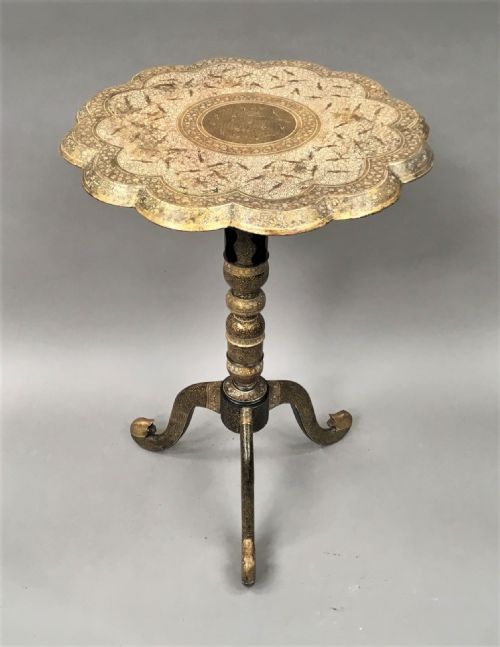
Regional variations include Anglo-Indian and Kashmir pieces that bring distinct decorative traditions to the tripod base and tilting mechanism. Buyers select these tables for their compact footprint and the visual weight of their decorated surfaces.
How they were made
Construction relies on wood or papier-mâché as a substrate, shaped into circular or tray-style tops supported by a central pillar and tripod legs. The tilting mechanism uses a catch or block beneath the top to secure the surface in either the horizontal or vertical position.
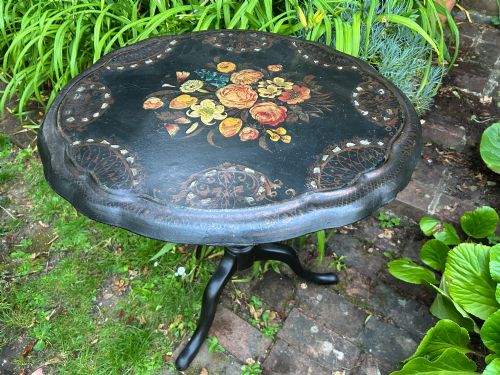
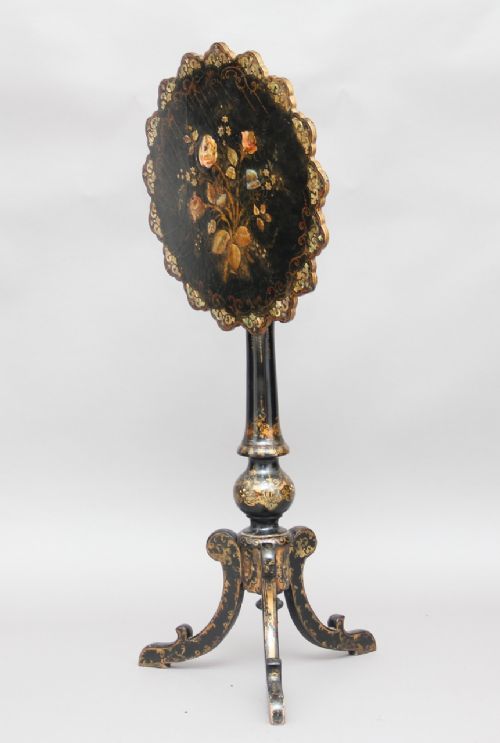
Surfaces receive layers of lacquer, paint, or black finishes, ornamented with hand painting, gold leaf, and parcel gilt details. Some Victorian and later pieces incorporate inlaid mother of pearl to catch the light against dark backgrounds.
Some Victorian tables include inlaid mother of pearl that glows like moonlight from the depths of a black lacquer tray.
What varies in quality
Quality rests in the crispness of the hand-painted detail and the depth of the lacquer layers. Finer examples show delicate brushwork and secure inlay work that has endured decades of tilting and use.
The stability of the tripod base and the precision of the tilt mechanism distinguish better pieces from simpler utility items. A well-balanced pillar and tight hinge mechanism ensure the top remains steady when lowered.
The Lacquered Tilt Top Table Glossary
- Tilt top
- A table mechanism allowing the surface to hinge upright into a vertical position for storage. This clever design saved floor space in period rooms.
- Chinoiserie
- European decorative art imitating Chinese and East Asian artistic styles. It frequently appears on lacquer furniture with figures, pagodas, and landscapes.
- Papier-mâché
- A composite material made from paper pulp or layers of paper bound with glue, then pressed and lacquered. It provided a smooth, durable surface for Victorian tray tables.
- Japanned
- European imitation of East Asian lacquerwork, using layered finishes and paint. This technique achieved the dark, glossy surfaces seen on Georgian and Regency tables.
- Tripod base
- A pedestal support resting on three feet. This arrangement prevents wobbling on uneven floors.
Lacquered Tilt Top Table: Frequently Asked Questions
How do you use a tilt top table?
These tables function as standard occasional surfaces when locked into the horizontal position. Release the catch beneath the top to fold the surface flat against the pillar for compact storage.
Position the table beside a chair or in a corner where the decorative top remains visible when upright.
What is Chinoiserie lacquer?
Chinoiserie lacquer refers to European interpretations of Asian decorative styles applied to wood or papier-mâché. Artisans built up dark glossy finishes using paint, gold leaf, and detailed brushwork.
These designs depict landscapes, figures, and architectural motifs characteristic of eighteenth and nineteenth-century taste.
How do I care for papier-mâché tables?
Dust these delicate surfaces regularly with a soft, dry cloth to prevent abrasion. Avoid exposure to direct sunlight, moisture, and excessive heat, which can damage the lacquer and paint.
Keep liquids away from the surface and lift the table rather than dragging it across the floor.
Are these tables sturdy enough for daily use?
Most pieces serve well for holding light items such as books, cups, or decorative objects. The tripod base distributes weight evenly, though the pivoting mechanism requires gentle handling.
Avoid placing heavy loads on the edges when the top is locked in the horizontal position.
How do I identify a Regency lacquered table?
Regency pieces often feature black backgrounds enriched with parcel gilt or Chinoiserie motifs. Look for classical proportions in the tripod base and crisp detailing in the paintwork.
Materials from this era typically combine turned wooden pillars with circular tops designed for wine service.