




Black Japanned Tea Table
A black japanned tea table brings hand-painted Chinoiserie and rich lacquer work into a room, offering a functional surface steeped in decorative history.
Black Japanned Tea Table
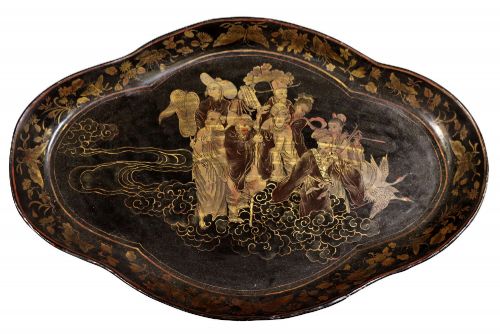
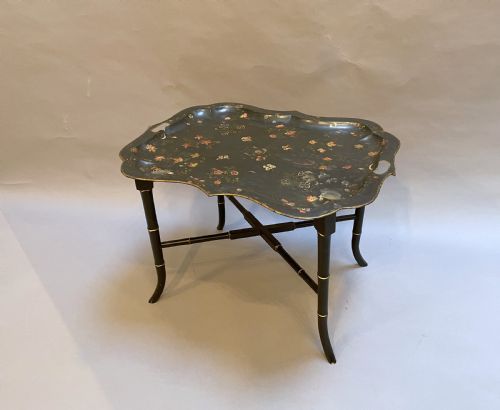
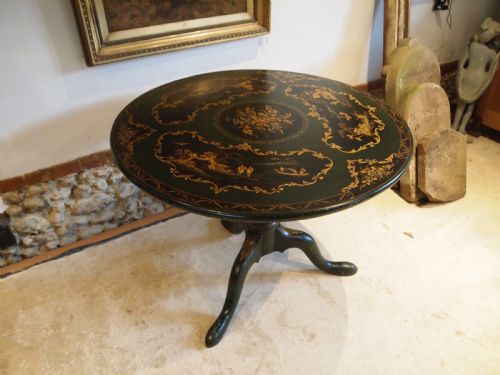
A black japanned tea table combines rich lacquer work and painted Chinoiserie motifs to create a striking surface for daily use. When exploring a black japanned tea table, buyers encounter forms ranging from occasional and side tables to tilt-top designs and clever tray tables resting upon stands.
The pieces on this page span several distinct periods, including the Georgian, Regency, and Victorian eras, alongside Edwardian and early twentieth-century examples. Originating largely from English workshops, these items incorporate traditional Asian-inspired scenes executed in gold leaf and fine pigments over dark grounds.
How they were made
Craftsmen utilised wood, papier-mâché, and toleware as the primary substrates for these surfaces, applying layers of dark lacquer to achieve a deep sheen. Artisans then built up the decorative schemes using gold leaf and hand-painted pigments to render intricate landscapes and figures.
Many portable trays from the eighteenth and nineteenth centuries were later mounted onto custom stands, creating functional tables. Structural elements such as brass hinges or tilt mechanisms frequently accompany these lacquered tops.
Listings feature items spanning the eighteenth, nineteenth, and early twentieth centuries, constructed from lacquered wood, papier-mâché, and toleware.
What varies in quality
The refinement of the hand-painted detailing and the depth of the lacquer finish distinguish simpler utility pieces from finer works. Superior examples display crisp gilding and delicate brushwork that remain clear across the entire surface.
The integrity of the underlying material, whether solid wood, papier-mâché, or metal toleware, also dictates the overall standard. Original combinations of tray and stand carry greater cohesion than later adaptations where a historic tray sits on a replacement base.
Jennens & Bettridge·Henry Clay
The Black Japanned Tea Table Glossary
- Japanning
- European imitation of East Asian lacquer work, produced by applying successive coats of varnish and heat-drying them. This technique created the glossy dark surfaces seen on many historic serving and tea tables.
- Chinoiserie
- European decorative style reflecting Chinese artistic influences, characterised by painted scenes of figures, pavilions, and landscapes. It appears frequently in the gold and coloured artwork on these lacquered tables.
- Papier-mâché
- Composite material made from paper pulp or layers of paper bound with glue, pressed and dried to form a rigid surface. It provided a smooth, lightweight base for detailed painting on trays and tilt-top tables.
- Toleware
- Enamelled or lacquered metalware, typically iron or tinplate, shaped into domestic items such as trays. These metal surfaces were often painted and integrated into table stands.
- Tilt-top table
- Table featuring a hinged mechanism that allows the top to pivot to a vertical position when not in use. This clever design saved space in period parlours and drawing rooms.
Black Japanned Tea Table: Frequently Asked Questions
What is a black japanned tea table?
A black japanned tea table is a decorative furniture piece featuring European lacquer work designed to emulate Asian export lacquer. These tables often incorporate hand-painted gold motifs depicting traditional scenes.
They function as versatile occasional or side surfaces that bring historic character and a dark, glossy finish to interior spaces.
How do I care for lacquer surfaces?
Lacquered and japanned surfaces require gentle treatment to preserve the delicate hand-painted details and gold leaf. Dusting with a soft, dry cloth is usually sufficient for routine maintenance.
Avoid placing these tables in direct sunlight or near heat sources, as extreme temperature changes can affect the aged varnish.
How can I tell the period?
Dating relies on examining the materials, the construction of the base, and the style of the hand-painted decoration. Georgian and Regency pieces often show different framing techniques and motifs compared to Victorian or Edwardian interpretations.
Maker signatures, where present on papier-mâché trays, also help pinpoint the era of production.