


Lacquered Jewellery Box
Lacquered jewellery box designs bring together rich surface finishes and intricate detail, offering both practical storage and striking decorative presence for any dressing table.
Lacquered Jewellery Box
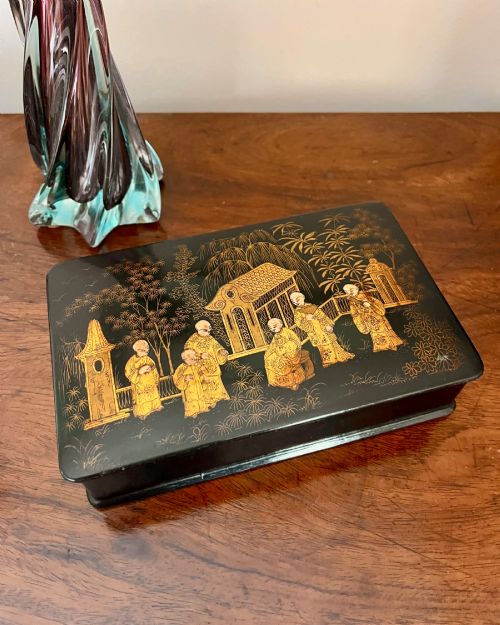
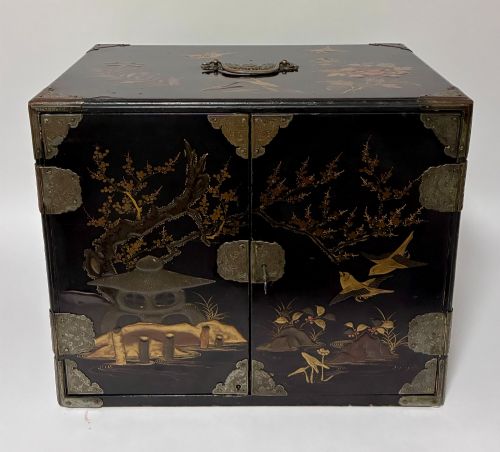
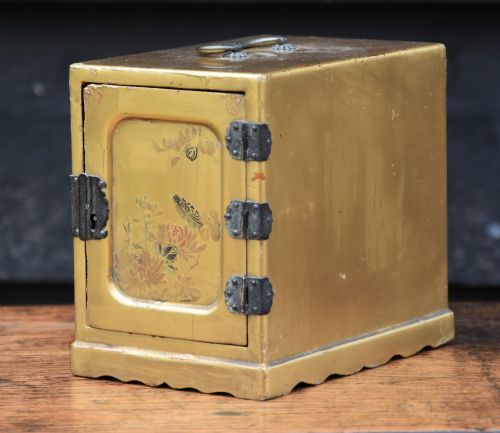
When you search for a lacquered jewellery box, you are looking at portable caskets and table cabinets designed to hold precious items, spanning eras from the Georgian period through the Victorian age and into the early twentieth century. These pieces originate from diverse workshops in Britain, Russia, China, and Japan, reflecting varied cultural aesthetic traditions.
On this page, you will most frequently encounter nineteenth-century Japanese table cabinets, Chinese export pieces, and English papier-mâché or penwork caskets. The forms range from small sharing boxes and trinket cases to larger multi-drawer table cabinets and travelling campaign boxes.
The styles encompass British Chinoiserie interpretations, Italian Rococo Revival motifs, and authentic Meiji period Japanese craftsmanship. Each style dictates the specific surface decoration, whether through raised gold leaf, hand-painted portraits, or intricate penwork on wood.
How they were made
Maker's workshops built these structures using timber, papier-mâché, or metal as a foundational substrate before applying successive coats of lacquer. Artisans built up the smooth, glossy surfaces through meticulous application and drying processes.
Surface ornamentation relied on specialised techniques such as gilding with gold leaf, hand-painting with fine ink, and inlaying mother of pearl. Penwork details involved precise ink drawing directly onto treated wooden grounds, often finished with protective varnish layers.
Listings feature materials including lacquer, wood, gold leaf, brass, papier-mâché, metal, ink, and mother of pearl.
What varies in quality
The refinement of the surface finish and the depth of the lacquer layers determine the distinction between standard production and exceptional work. Superior pieces display smooth, unblemished grounds where decorative elements like gold leaf or hand-painted portraits retain crisp definition.
The structural integrity of the core material and the precision of internal compartments also separate the grades of execution. Higher quality examples feature tightly fitted drawers, sturdy brass or metal hardware, and intact mother of pearl inlay without missing segments.
Jennens & Bettridge
The Lacquered Jewellery Box Glossary
- Chinoiserie
- European decorative style reflecting Chinese artistic influences, frequently featuring figures, pagodas, and landscapes painted in gold on dark lacquer grounds.
- Kodansu
- Traditional Japanese small cabinet featuring multiple internal drawers for storing valuables, often decorated with intricate lacquer and metal fittings.
- Penwork
- Decorative technique using fine ink lines drawn on wood to create detailed geometric, architectural, or pictorial scenes, popular during the Regency period.
- Japanned
- European imitation of East Asian lacquerwork, created by applying multiple coats of varnish and paint to wooden objects.
- Papier-mâché
- Composite material made from paper pulp or layers of paper bound with glue, pressed into moulds, and dried to form rigid boxes suitable for lacquering.
Lacquered Jewellery Box: Frequently Asked Questions
How do I care for a lacquered jewellery box?
Keep the box away from direct sunlight and extreme temperature fluctuations to prevent the lacquer from cracking or warping.
Dust gently with a dry, soft cloth and avoid using chemical cleaning products or polishes that might damage the historical surface.
What is the difference between Chinoiserie and Japanese lacquer?
Chinoiserie describes European interpretations of Chinese motifs, typically executed by British or continental craftsmen on wood or papier-mâché.
Japanese lacquer pieces originate from East Asian workshops, utilising native techniques and natural sap formulas characteristic of periods like the Meiji era.
Were these boxes used for travel?
Certain designated travelling cases and campaign boxes feature secure lids and compact dimensions intended for moving jewellery safely.
Most table cabinets and delicate papier-mâché caskets were designed primarily for stationary display and storage on dressing tables or desks.
How can I tell a Regency penwork box from a Victorian piece?
Regency penwork boxes often date from around eighteen hundred to eighteen twenty, displaying intricate monochrome ink line drawings on light or dark wood.
Victorian examples frequently utilise heavier papier-mâché substrates, bolder colours, mother of pearl inlay, and more varied revival styles.