


Hand Painted Casket
A hand painted casket is a small, decorated box for keepsakes, combining intricate artwork with functional storage.
Hand Painted Casket
A hand painted casket is a decorative vessel intended for jewellery, trinkets, tea, or correspondence. The search phrase brings together varied forms such as jewellery caskets, tea caddies, and cashier boxes.
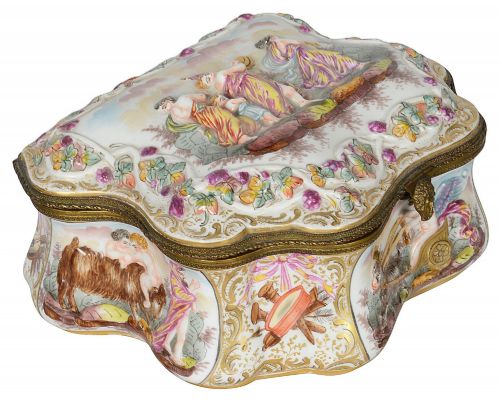
The most common examples on this page are porcelain and lacquer boxes from the nineteenth century, often mounted in ormolu or brass. These pieces range from Georgian tea caddies to Victorian porcelain table caskets.
Origins span Britain, France, Italy, Scandinavia, Russia, and Persia, reflecting diverse regional decorative traditions. Buyers encounter everything from French Sevres porcelain to Scandinavian folk art boxes.
How they were made
Makers utilised materials like porcelain, wood, papier mâché, brass, ormolu, and glass, applying paint and gold leaf by hand. Lacquer boxes required multiple layers of resin, polished to a smooth finish before decoration.
Porcelain bodies were glazed, painted with ceramic pigments, and fired, often receiving gilt detailing to accentuate raised mouldings. Ormolu mounts were cast in bronze and fire-gilded, then fitted precisely to house porcelain panels.
Listings feature items from the Georgian period through to the early twentieth century, spanning porcelain, lacquer, wood, and enamel.
What varies in quality
The finesse of the brushwork largely defines the standard of a hand painted casket, distinguishing hurried factory decoration from skilled artistic execution. Crisp details in the gilding and well-fitted ormolu mounts indicate superior craftsmanship.
The integrity of the underlying material, whether seasoned mahogany, heavy porcelain, or stable papier mâché, dictates durability. Well-preserved original hinges, clasps, and locks retain the intended function of the box.
Jennens and Bettridge
The Hand Painted Casket Glossary
- Ormolu
- Gilt-bronze mounts used extensively on nineteenth-century French furniture and decorative boxes. This technique involves applying a mercury and gold amalgam to bronze.
- Tea caddy
- A box designed specifically for storing dry tea leaves, often featuring internal compartments and a lock. Georgian examples frequently utilise mahogany or lacquer.
- Faience
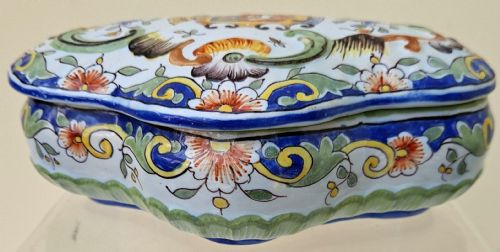
- Tin-glazed earthenware produced across Europe, particularly in France and Italy. Pieces show opaque white glazes painted with coloured pigments.
- Chinoiserie
- European artistic styles reflecting Chinese motifs and decorative schemes, popular during the Georgian and Regency periods. Designs often appear on lacquered or painted wooden boxes.
- Capodimonte
- Italian porcelain produced originally in Naples, known for relief figures and sculptural detail. Table caskets from this tradition feature ornate moulded scenes.
Hand Painted Casket: Frequently Asked Questions
What is a hand painted casket used for?
These boxes served to store valuable items such as jewellery, trinkets, letters, or loose tea leaves. They sat upon dressing tables, writing desks, or drawing room surfaces as both functional storage and decorative objects.
Today, owners utilise them in much the same way, placing small treasures inside while displaying the painted artistry within a room.
How do I date a hand painted casket?
Dating relies on identifying stylistic markers, materials, and construction techniques specific to periods like the Georgian era or the nineteenth century. Porcelain marks, hardware styles, and wood types provide reliable clues.
Comparing the decorative motifs, such as Rococo Revival curves or Neoclassical symmetry, helps narrow the decade of manufacture.
Are these caskets made of porcelain or wood?
The evidence shows both materials, along with papier mâché, glass, and metal. Porcelain caskets often feature brass or ormolu mounts framing painted panels.
Wooden boxes utilise mahogany, burr walnut, or pine, sometimes finished with lacquer and hand-painted decoration.
How should I care for a painted box?
Keep wooden and lacquer boxes away from direct sunlight and extreme humidity to prevent warping or cracking of the surface. Dust porcelain and ormolu gently with a dry, soft cloth.
Avoid using liquid cleaners on painted or gilt surfaces, as moisture can damage delicate pigments and gold leaf.