

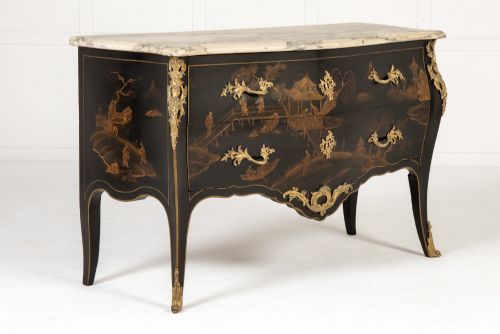


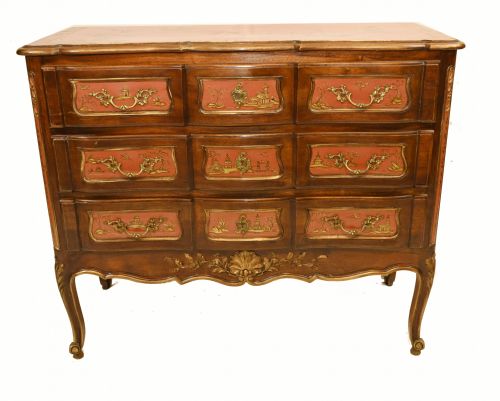
Lacquer Commode
A lacquer commode brings dramatic Chinoiserie and Japanned surface depth to a room through centuries of decorative cabinetmaking.
Lacquer Commode
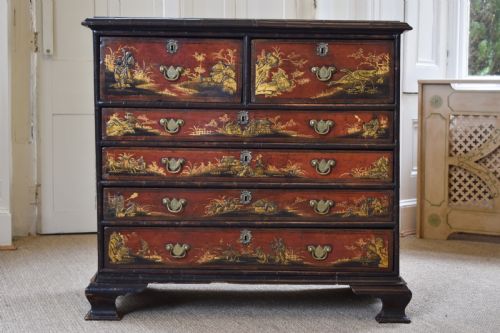
When you search for a lacquer commode, you are looking at substantial case furniture that combines European storage forms with Asian-inspired decorative surfaces. These pieces function as chests of drawers, side cabinets, and commodes, offering both display surfaces and enclosed storage.
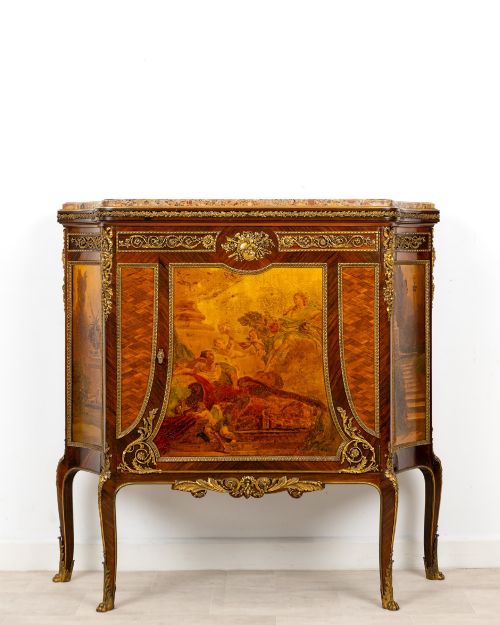
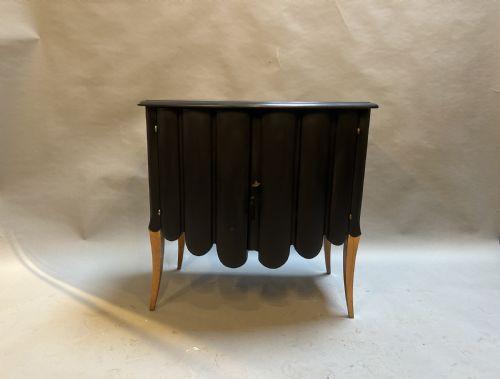
The examples gathered here span from the eighteenth century through the Art Deco period of nineteen thirty, drawing on diverse regional traditions including French, English, and North European workshops. Stylistic expressions range from Regency and French Rococo revivals to clean-lined twentieth-century designs.
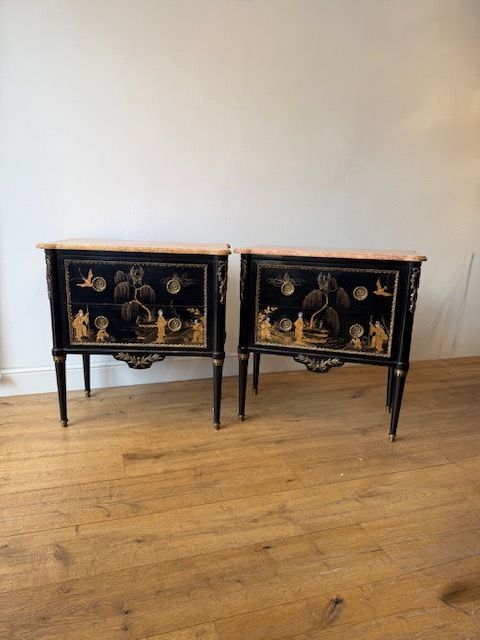
You will encounter pieces finished in pale cream, deep black, and intricate gilt motifs, often housing multiple drawers or cupboard doors. Each item reflects the enduring European fascination with decorative lacquerwork applied to domestic timber carcases.
Materials and Construction
Cabinetmakers built these carcases from timber, applying layered lacquer or japanning to create glossy, durable decorated surfaces. Many examples incorporate painted details alongside applied metallic ornamentation.
Mounts and hardware fashioned from brass, ormolu, and silver accent the lacquered timber bodies, defining structural edges and drawer fronts. Marble tops frequently complete the upper surface of French and continental models.
Lacquer Commode Retail Price Guide 2026
Typical asking prices for lacquer commode among the pieces listed under this phrase on Sellingantiques today, from the lower quarter to the upper quarter. They describe what is for sale here now, not the wider market.
Listings feature periods from the eighteenth century through nineteen thirty, incorporating materials such as marble, brass, ormolu, and lacquered wood.
Judging Quality and Execution
The distinction between standard production and exceptional work lies in the depth of the lacquer finish and the crispness of the painted Chinoiserie scenes. Superior pieces display intricate layering and hand-rendered detail that withstand close inspection.
Hardware execution also marks the tier of a piece, with finely chased ormolu and substantial brass mounts indicating high workshop standards. The integration of the decorative surface with the underlying timber carcase determines the overall stability and presence of the furniture.
François Linke·Gaudreaux
The Lacquer Commode Glossary
- Commode
- A low chest of drawers or cabinet developed in France during the seventeenth century. It typically stands on short legs and provides principal storage within a grand interior.
- Chinoiserie
- The European interpretation and imitation of Chinese and East Asian artistic traditions. This style dominated decorative arts during revival periods and eighteenth-century design.
- Japanning
- A European technique for finishing wood to imitate East Asian lacquerwork using varnishes and heat drying. It became especially popular in English and continental cabinetmaking.
- Ormolu
- Gilt-bronze ornamentation applied to furniture and decorative objects. It provides bright metallic contrast against dark timber and lacquer surfaces.
- Vernis Martin
- A simulated lacquer finish developed in France during the eighteenth century by the Martin brothers. It achieved great popularity for its translucent depth and colour.
Lacquer Commode: Frequently Asked Questions
What is a lacquer commode?
A lacquer commode is a decorative chest of drawers or cabinet finished with glossy Asian-inspired lacquer or European japanning. These pieces combine practical storage with elaborate painted scenes and metallic mounts.
They serve as focal points in reception rooms and bedrooms, bringing rich texture and historic design to domestic interiors.
How do I date a lacquer commode?
Dating relies on examining the construction methods of the timber carcase, the style of the mounts, and the specific characteristics of the lacquer finish. Eighteenth-century models differ significantly in proportion and decorative technique from nineteenth-century revivals or nineteen-thirties Art Deco pieces.
Hardware styles, timber preparation, and regional cabinetmaking traits all contribute to establishing the correct period for each individual item.
Where should I place a lacquer commode?
These cabinets suit principal reception rooms, hallways, and formal bedrooms where their decorative surfaces can be appreciated. Because lacquer can be sensitive to direct sunlight and extreme humidity changes, positioning them away from heat sources and windows is essential.
Allowing sufficient space around the piece ensures the painted details and metallic mounts remain the visual focus of the room.
How do I care for a lacquer surface?
Maintenance requires gentle dusting with a soft, dry cloth to prevent micro-abrasions on the glossy finish. Avoid chemical polishes, abrasive cleaners, and excessive moisture, which can damage historic varnish and paint layers.
Maintaining stable room temperatures and humidity levels protects both the wooden carcase and the delicate surface decoration from cracking or lifting.