

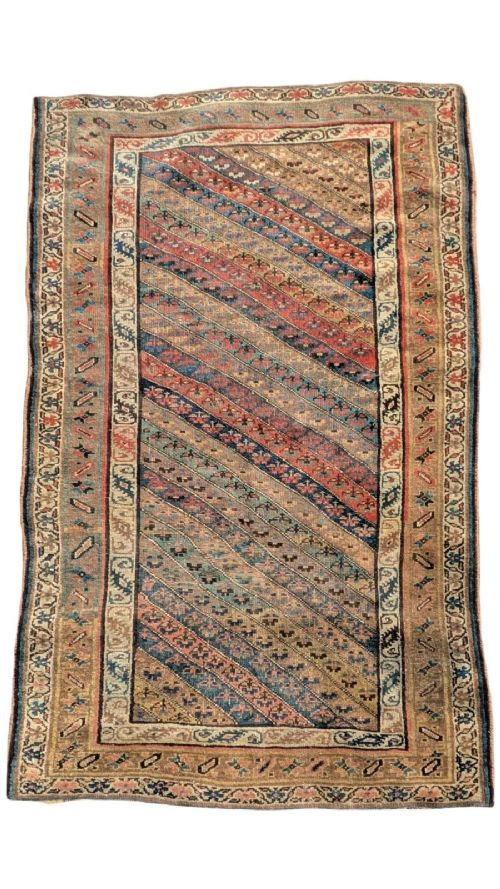
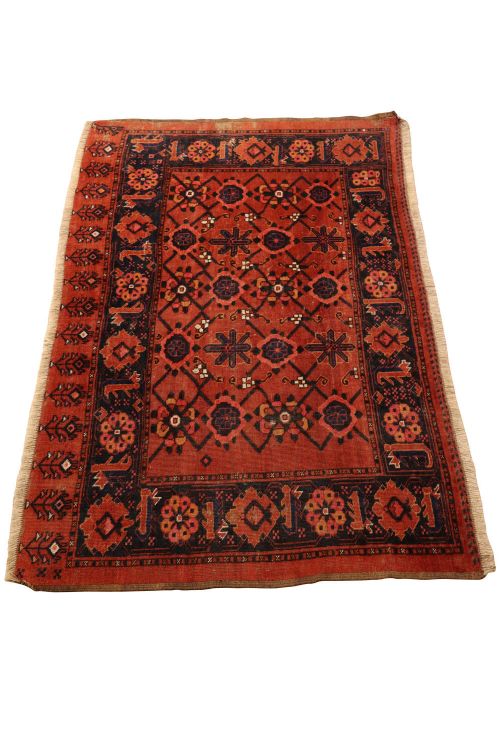


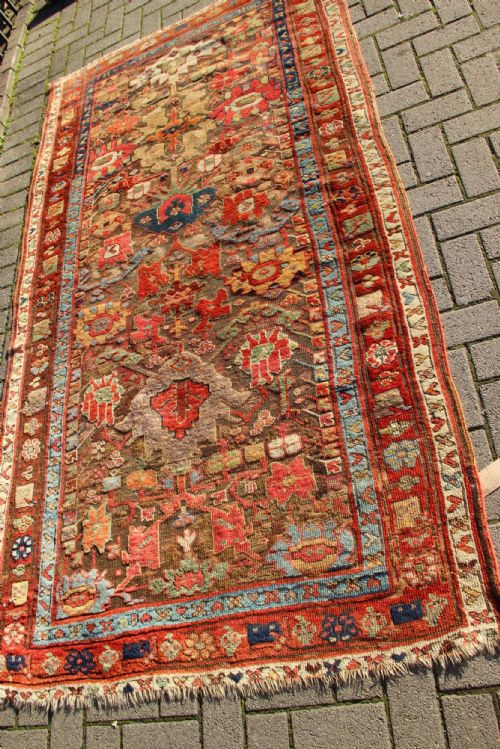
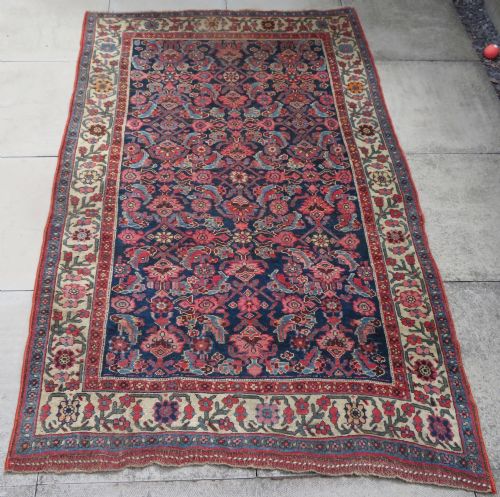

Kurdish Woven Floor Rug
These heavy, characterful pieces are a kurdish woven floor rug, prized for their dense pile and tribal geometry.
Kurdish Woven Floor Rug
A kurdish woven floor rug brings robust tribal character into a room through dense wool construction and geometric designs. The selection spans the nineteenth century up to the early twentieth century, showing Persian, Caucasian, and regional village origins.
Buyers most frequently encounter runners, long rugs, and area rugs tied to specific groups such as the Bidjar, Jaf, Quchan, and Senneh. These textiles function as durable floor coverings with strong motifs like latch-hook medallions and all-over shrub patterns.
How They Were Made
Weavers constructed these pieces using hand-knotted wool pile on a cotton or wool foundation. This combination yielded a heavy, resilient structure designed for heavy everyday use in domestic and country house settings.
Dyers utilised natural materials to achieve deep, saturated colour palettes on ivory grounds, dark fields, and elaborate borders. The resulting handle is stiff and dense, characteristic of traditional village workshops.
Nomadic weavers sometimes smuggled secret tribal amulets directly into the wool knotting.
What Varies in Quality
The fineness of the knotting and the tightness of the weave dictate the structural grade of each carpet. Tightly packed wool creates a rigid, heavy handle that resists wear better than looser structures.
Artistic execution distinguishes exceptional village examples, where intricate borders, balanced medallion placement, and clear drawing elevate the visual impact of the piece.
The Kurdish Woven Floor Rug Glossary
- Bidjar
- A Persian town known for producing exceptionally heavy, durable rugs with dense wool piles. These pieces often feature geometric formats and robust foundations.
- Senneh
- A regional weaving centre associated with finely knotted rugs and distinctive boteh or lattice designs. They display a lighter structure than heavy village carpets.
- Jaf
- A Kurdish nomadic tribe producing small rugs with repeating geometric patterns and vibrant tribal colouring. Their work relies on traditional field motifs.
- Kelleh
- A large format carpet traditionally used in Persian rooms as a room-size runner. These elongated rectangular pieces suit corridors and wide hallways.
- Latch hook
- A geometric design element featuring stepped or jagged edges along diamond and medallion outlines. This motif appears frequently in tribal weaving.
Kurdish Woven Floor Rug: Frequently Asked Questions
Where do these rugs originate?
These pieces originate from tribal and village regions across Persia and the Caucasus, woven by Kurdish communities including the Bidjar, Jaf, and Quchan groups during the nineteenth and early twentieth centuries.
Production centres like Senneh and Sauj Bulagh also contributed distinct regional formats, ranging from long corridor carpets to compact area rugs.
How do I care for a heavy pile rug?
Protect the dense wool pile by placing a suitable non-slip underlay beneath the carpet to prevent shifting and friction on hard floors.
Vacuum gently using a suction-only attachment without a rotating brush bar to preserve the hand-knotted foundation over time.
What styles of design should I expect?
Designs feature traditional tribal geometry, including latch-hook medallions, all-over shrub patterns, and elaborate multi-strand borders.
Palettes range from ivory ground field compositions to darker saturated tones characteristic of nineteenth-century village weaving.
How are runners different from long rugs?
Runners are narrow, elongated carpets specifically proportioned for corridors, hallways, and narrow spaces.
Long rugs offer a broader rectangular format suited for placement in larger rooms alongside furniture arrangements.