






Knopped Stem Wine Glasses
Knopped stem wine glasses are drinking vessels featuring thickened nodes along their stems, prized for tactile grip and historical character.
Knopped Stem Wine Glasses
When you search for knopped stem wine glasses, you are looking at drinking vessels defined by distinct thickened nodes along their stems. These stems provide both structural heft and a tactile grip that distinguished early English tablewares. The examples you encounter span from the heavy baluster forms of the early eighteenth century to later nineteenth-century coloured variants.
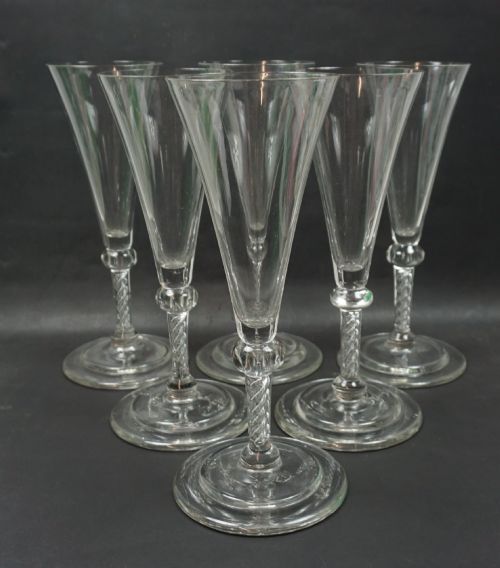
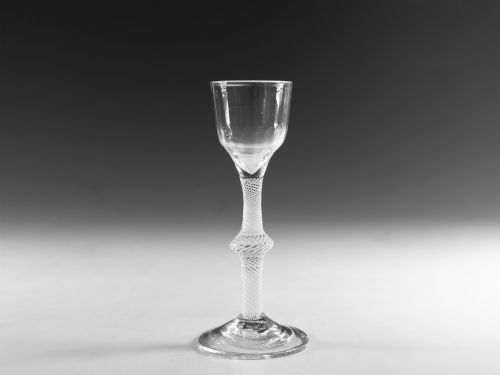
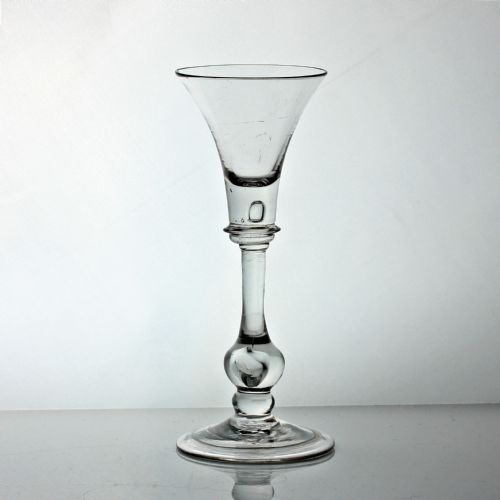
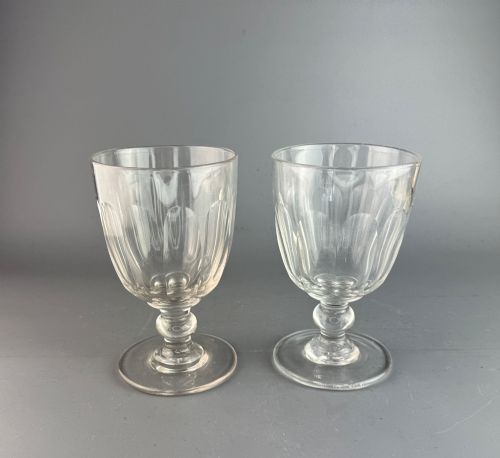
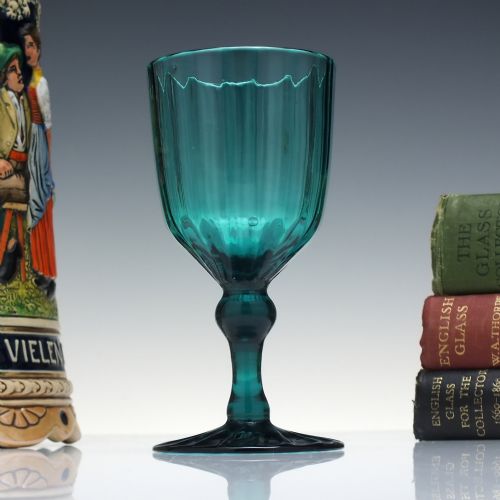
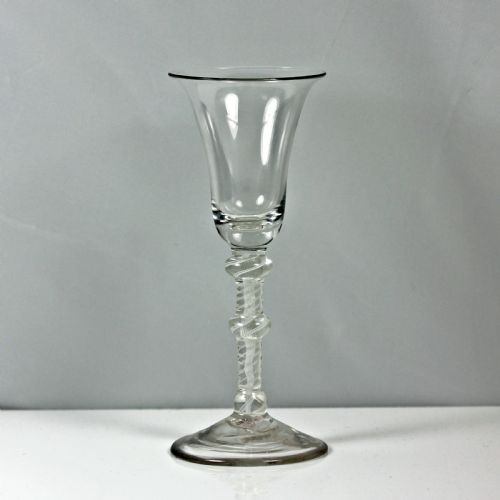
The version you are most likely to meet on this page is the eighteenth-century Georgian wine glass, often rendered in clear lead glass. These pieces frequently feature multi-series opaque twists or air twists running through the stem, sometimes punctuated by one or more structural knops. Alongside these eighteenth-century survivors appear Victorian green rummers and later Edwardian coloured goblets.
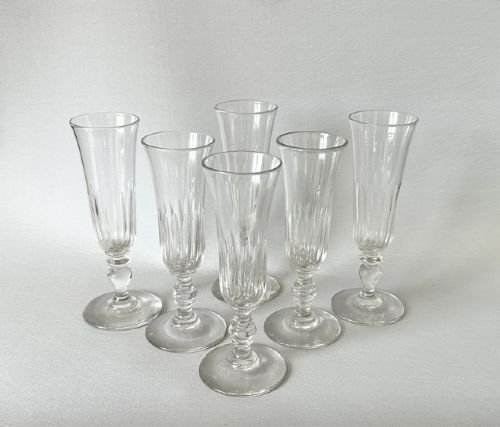
The forms extend beyond standard wine vessels into related stemware such as champagne flutes, rummers and sherry glasses. Regional European pieces, including Liege glassware with honeycomb or nut moulding, also appear within the selection. Each period brings its own characteristic bowl shape, from cup bowls to straight-sided funnel bowls supported by these prominent stem formations.
Materials and Techniques
The pieces on this page are formed predominantly from lead glass and lead crystal, materials introduced to give vessels greater brilliance and weight. This heavier glass allowed makers to draw out stems into complex air twists and multi-spiral opaque twists without losing structural integrity. Coloured glass variants, such as Bristol green and turquoise hues, rely on metallic oxide additions during the melting process.
Stem construction often involved forming nodes or knops through applied manipulation while the metal remained hot. Mould-blown techniques appear in pieces featuring rib moulding, honeycomb patterns and nut-moulded surfaces, where molten glass was expanded inside a pattern-part mould before finishing. Engraving, such as friendship inscriptions and commemorative armorial work, was subsequently applied by hand using rotating wheels.
One eighteenth-century glass arrived bearing a specific friendship engraving, proving that even antique drinking vessels occasionally carried personal toasts.
Judging Quality
Quality in these vessels rests upon the harmony of proportion between the heavy foot, the knotted stem and the upper bowl. Superior examples demonstrate crispness in the formation of air twists and opaque glass threads, avoiding cloudy inclusions or unintended distortion within the metal. The precision of the knop placement dictates whether a piece feels balanced in the hand or clumsy.
Engraved decoration further separates the ordinary from the exceptional when executed with deep wheel-cut clarity rather than shallow surface scratching. The weight and sonority of the lead crystal indicate the purity of the batch used by the glasshouse. Historical provenance, such as inclusion in noted collections, adds another layer of distinction to surviving specimens.
The Knopped Stem Wine Glasses Glossary
- Knop
- A thickened protuberance or bulbous node formed along the stem of a drinking glass. This feature offers both a secure finger grip and a decorative interruption to the linear flow.
- Baluster
- A heavy, swelling stem form inspired by architectural pillars, common in early eighteenth-century English glassware. These stems often contain internal air bubbles known as tears.
- Air Twist
- A spiral thread of trapped air running continuously through the transparent stem of a glass. This optical effect is created by drawing out air-filled canes of molten metal.
- Opaque Twist
- A series of white or coloured enamel glass threads enclosed within a clear stem. Makers twirled these threads into complex multi-spiral patterns before drawing and cooling.
- Rummer
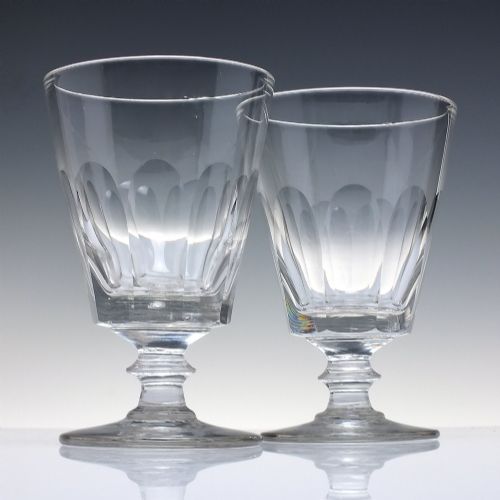
- A large, sturdy goblet used for wine or ale, typically featuring a short stem and a capacious bowl. Victorian examples are frequently heavy and cut with geometric facets.
Knopped Stem Wine Glasses: Frequently Asked Questions
What is a knopped stem?
A knopped stem refers to a drinking glass featuring one or more thickened, bulbous nodes along its vertical shaft. These nodes provided a secure grip for diners handling heavy lead glass vessels.
Over the eighteenth century, glassmakers turned these functional bulges into decorative elements, sometimes stacking multiple knops beneath the bowl and above the foot.
How do I date an antique glass?
Dating relies upon observing the combination of metal composition, bowl form, pontil mark texture and stem construction. Heavy lead metal and baluster stems generally point to the early decades of the eighteenth century.
Later Victorian and Edwardian productions introduce brighter colours, different mould-blown patterns and lighter walls compared to their Georgian predecessors.
Were these glasses used for wine?
Many of these vessels served wine, though capacities and bowl sizes varied according to the specific era and beverage customs. Eighteenth-century bowls were generally smaller because wine was consumed with greater moderation.
By the Victorian era, larger rummers and coloured goblets accommodated heavier pours and changing dining habits at the table.
What is lead crystal?
Lead crystal is a heavy, brilliant form of glass containing lead oxide, which increases the material's refractive index and weight. This composition allowed makers to cut deep facets and pull delicate stems.
Glassmakers adopted this heavy metal extensively in England from the late seventeenth century onwards to improve clarity and durability.