
Kingwood Writing Bureau
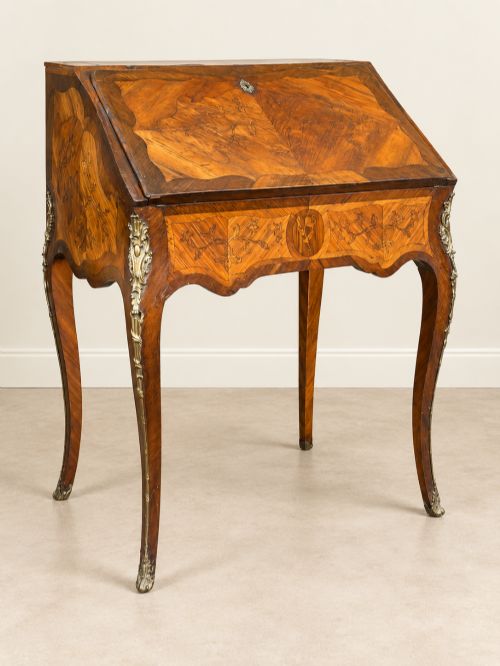
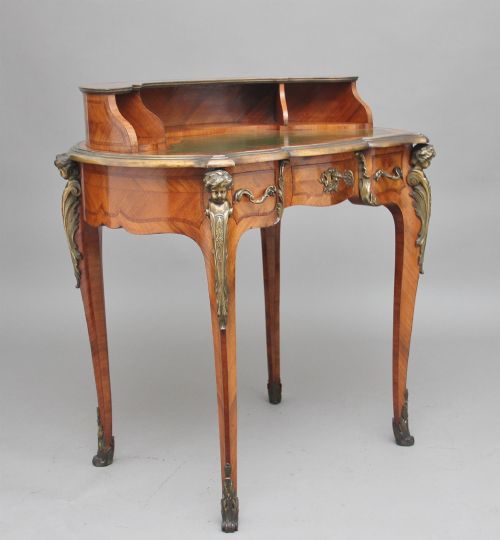
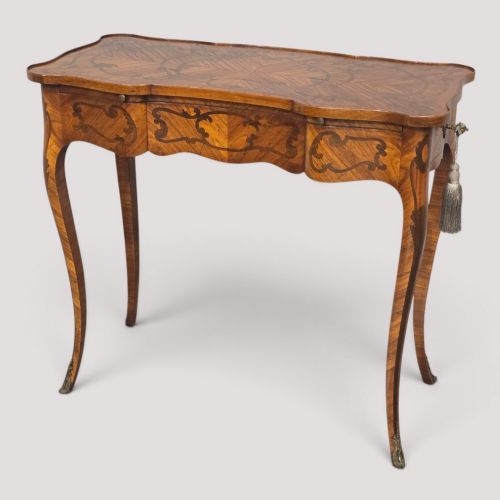
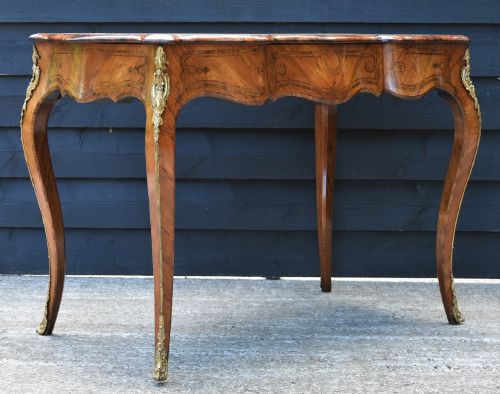
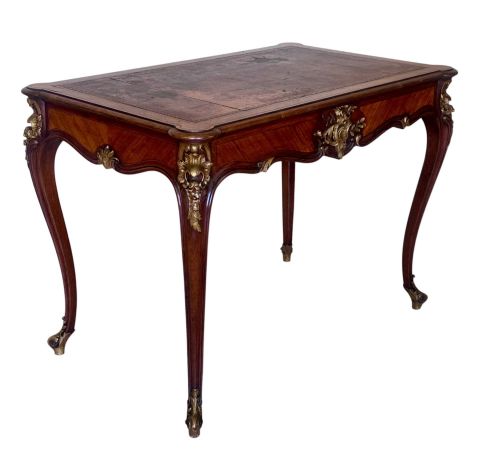
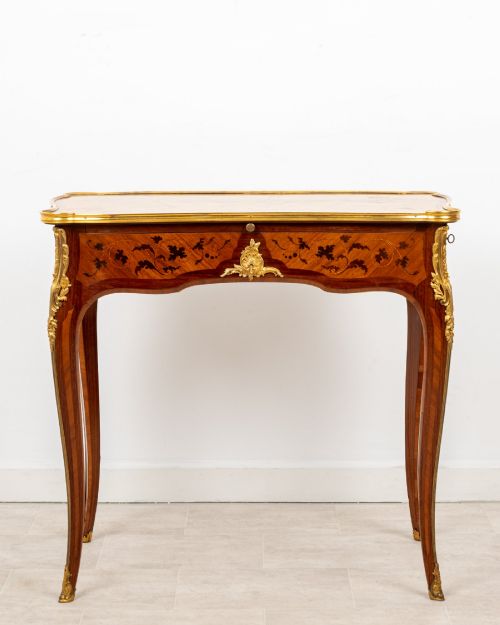
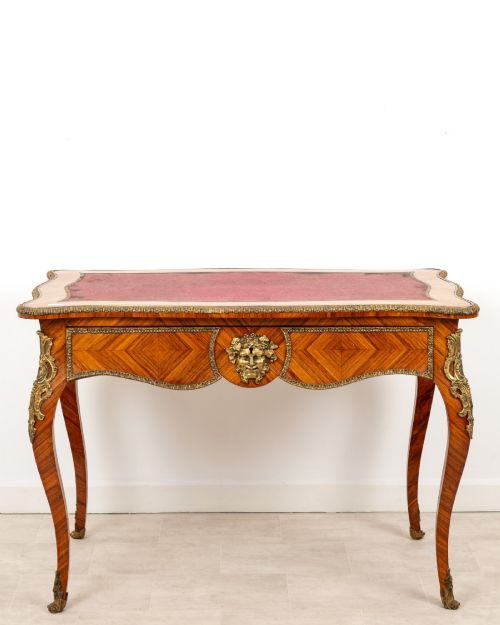
A kingwood writing bureau offers a refined workspace defined by rich violet-brown veneers and gilt metal mounts.
Kingwood Writing Bureau
When you search for a kingwood writing bureau, you encounter sophisticated European furniture designed for correspondence and private study. The pieces appearing here span the eighteenth, nineteenth, and early twentieth centuries, with a strong presence of nineteenth-century French manufacture.
How They Were Made
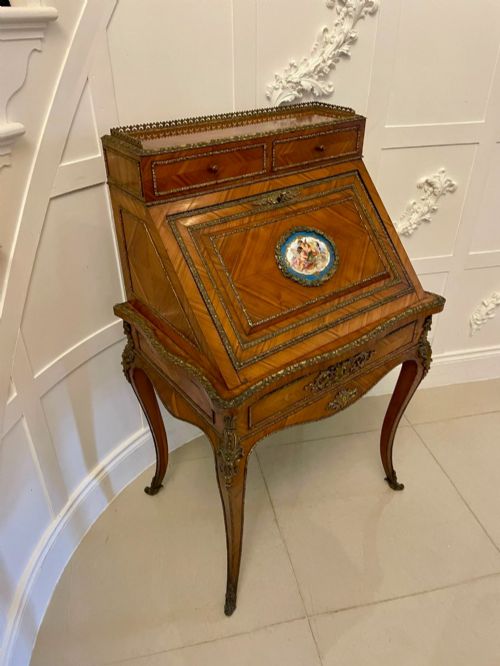
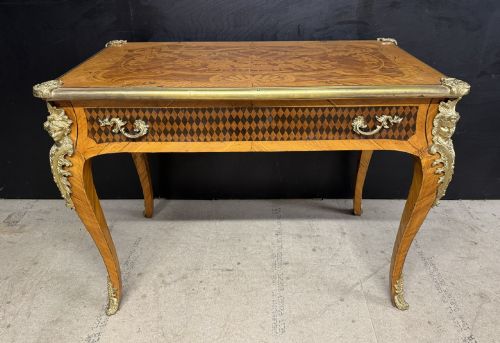
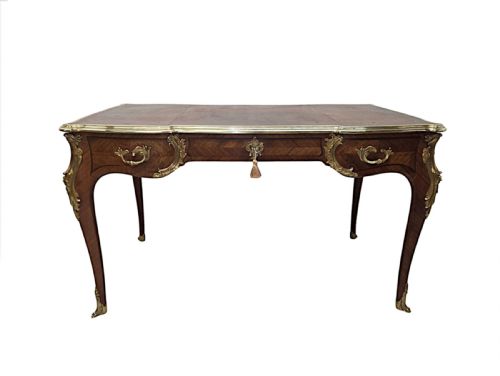
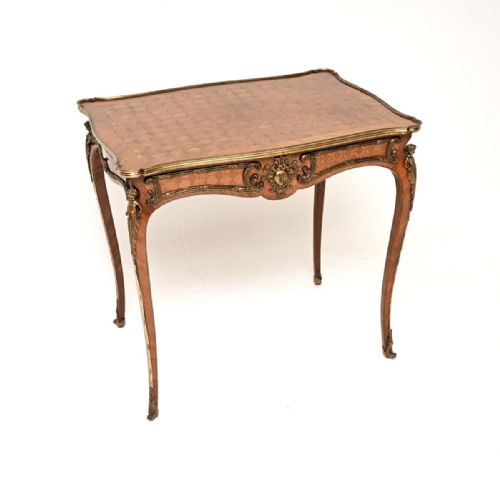
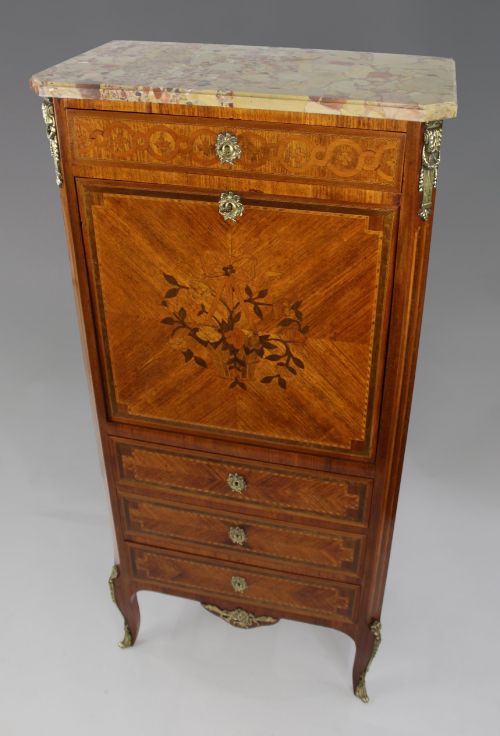
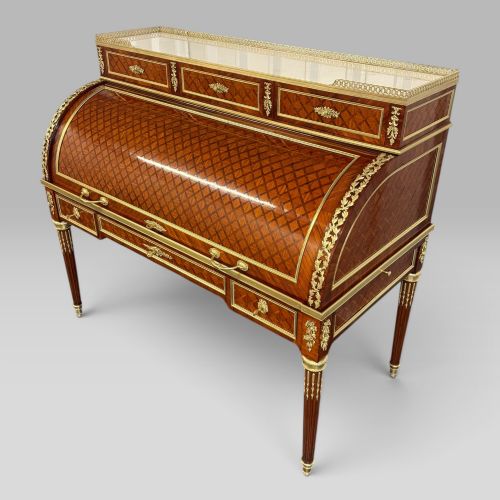
Cabinetmakers constructed these pieces using dense hardwoods as a foundation, applying decorative veneers of kingwood, tulipwood, and rosewood in intricate parquetry and marquetry patterns. Surfaces frequently incorporate leather writing inserts alongside hand-chased ormolu and gilt bronze mounts secured to corners, legs, and aprons.
Workshop methods also involved the integration of contrasting materials such as porcelain plaques, marble tops, and Vernis Martin panels. Joinery techniques supported complex serpentine and kidney-shaped carcases, while cabinetmakers utilised brass and bronze fittings to frame drawers and writing flaps.
Materials recorded across the inventory include kingwood, ormolu, leather, brass, rosewood, gilt bronze, porcelain, and walnut.
What Varies in Quality
The calibre of a piece depends heavily on the precision of the veneer work and the crispness of the cast metal mounts. Master workshops employed finely detailed ormolu that was individually chased after casting, whereas lesser examples relied on simpler, softer brass castings.
Differentiation also lies in the complexity of the timber layout and the attribution to known makers. Pieces bearing signatures from prominent cabinetmakers display superior interior secondary woods, more ambitious serpentine shaping, and refined hand-tooled leather writing surfaces.
Francois Linke·Paul Sormani·CH Jeanselme and Co·Durand·Blake London·Edwards and Roberts
The Kingwood Writing Bureau Glossary
- Kingwood
- A dense, heavy Brazilian hardwood prized for its distinct violet-brown grain and contrasting pale stripes, utilised extensively as a veneer on fine nineteenth-century French furniture.
- Bureau Plat
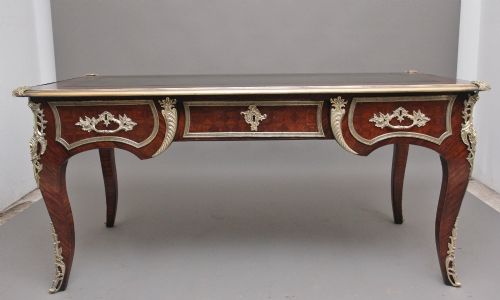
- A freestanding writing table fitted with one or more drawers across the frieze, designed to sit in the centre of a room rather than against a wall.
- Bonheur Du Jour
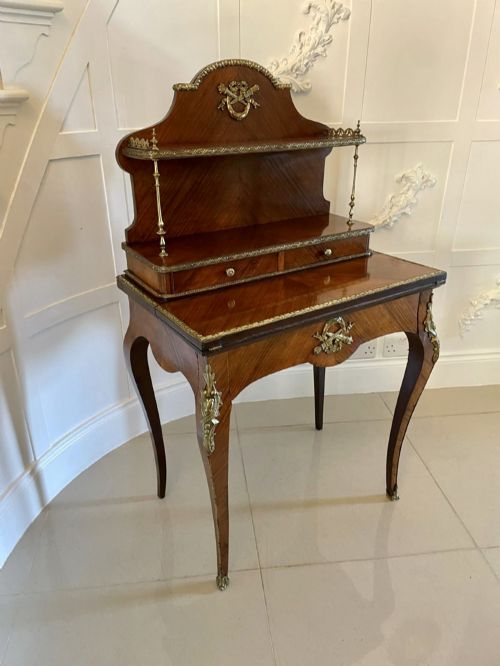
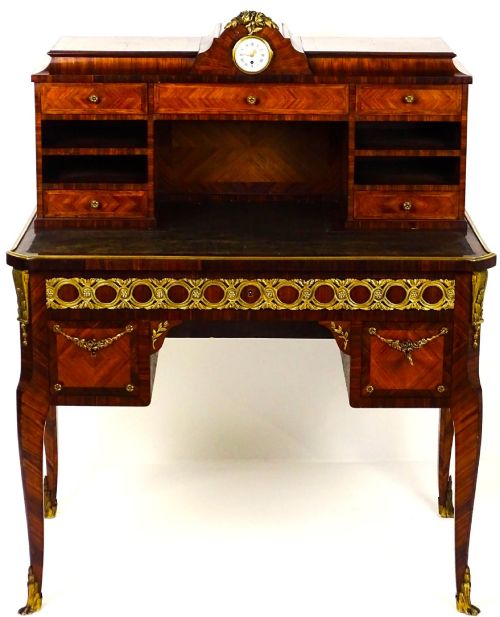
- A small ladies writing desk featuring a tiered cabinet, superstructure, or small drawers mounted upon the upper surface of the writing desk.
- Ormolu
- Gilt bronze ornamentation applied to the mounts, feet, and borders of furniture to accent the contours of the wooden carcase.
- Marquetry
- The art of applying decorative pieces of veneer to a structure to form intricate pictorial or geometric patterns.
Kingwood Writing Bureau: Frequently Asked Questions
What is a bureau plat?
A bureau plat is a flat-topped writing table featuring drawers within the frieze. These pieces were built for placement in the middle of a room.
They typically lack the upper shelving units found on bonheur du jours and provide an expansive leather-lined writing surface.
How do I identify kingwood?
Kingwood is recognised by its deep chocolate-brown colour marked with vibrant violet and golden streaks. It is a heavy, dense timber that takes a high polish.
Cabinetmakers used it primarily as a sliced veneer rather than solid wood, arranging the grain in symmetrical parquetry patterns.
Where were these desks made?
The vast majority of pieces matching this description originated in France during the nineteenth century. Parisian workshops led the production of revival furniture.
English makers also produced pieces in the French taste, often utilising imported kingwood veneers and cast ormolu mounts.
What is a bonheur du jour?
A bonheur du jour is a light writing desk equipped with a small cabinet or shelving superstructure on top. The design emerged in eighteenth-century France.
Victorian makers revived the form for ladies' boudoirs, frequently incorporating Sevres porcelain plaques and intricate marquetry.