
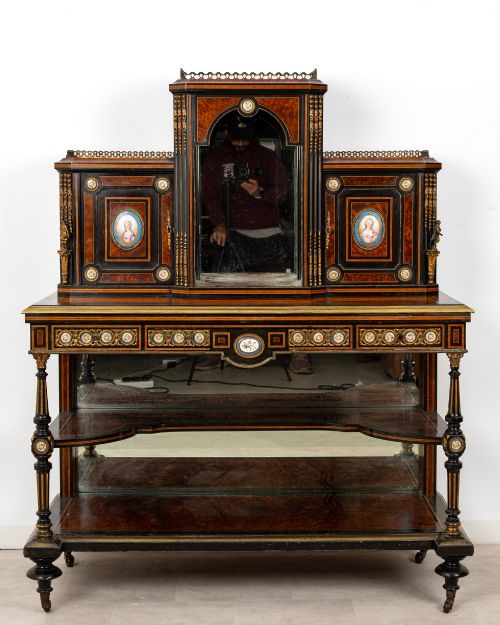
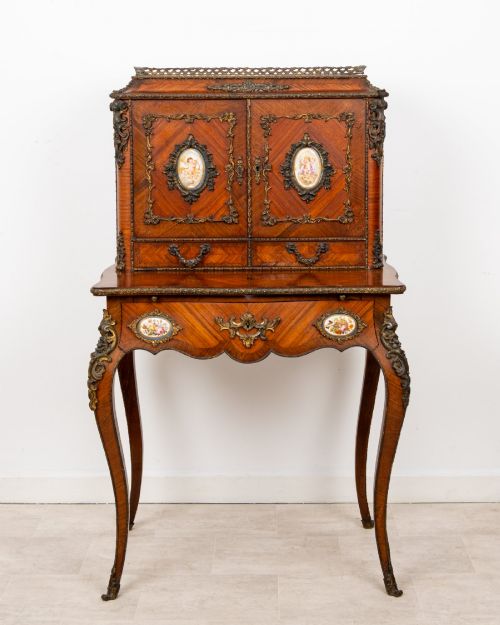
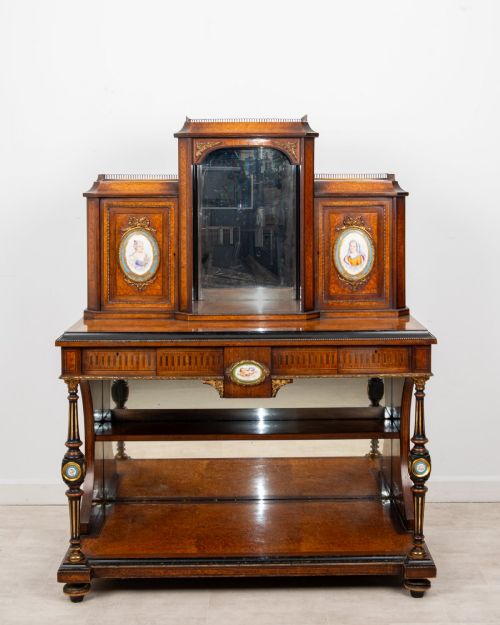


Napoleon III Lady Cabinet
A Napoleon iii lady cabinet brings the refined elegance of the Second Empire straight into a modern study with its exquisite portable writing surface.
Napoleon III Lady Cabinet
When you search for a napoleon iii lady cabinet, you encounter sophisticated writing desks and small writing cabinets originating from nineteenth-century France. These pieces typically take the form of a bonheur du jour or bureau de dame, combining a compact writing table with an upper tier of small drawers, shelves, or a cabinet.
The pieces listed on this page showcase classic nineteenth-century revival aesthetics, drawing heavily on Louis XV and Louis XVI styles alongside French Second Empire design. You will frequently find them described as writing desks and writing tables built to serve as delicate ladies' writing and jewellery cabinets.
Judging Quality and Execution
The distinction between standard examples and the finest work lies in the crispness of the ormolu mounts and the intricacy of the timber veneers. Finely chased bronze mounts and meticulous marquetry separate superior pieces from simpler workshop productions.
Material integration also dictates value, where the inclusion of hand-painted porcelain plaques, genuine pietra dura panels, or signed cabinetmaker bronzes elevates the execution. The harmony between the structural ebonised or exotic wood and the applied metalwork defines the overall visual success.
Listings for this phrase exclusively feature nineteenth-century items, spanning the 1860s through the 1890s, with a strong concentration of French origin.
Befort Jeune·Mathieu Befort
The Napoleon III Lady Cabinet Glossary
- Bonheur du jour
- A small nineteenth-century lady's writing desk featuring a tiered upper section with drawers or a cabinet. This form became a staple of French Second Empire interior decoration.
- Ormolu
- Gilt bronze mounts applied to furniture for decorative enrichment. The quality of its chasing defines the refinement of the piece.
- Boulle
- A style of marquetry utilising tortoiseshell and brass inlay developed in France. It appears frequently on ebonised nineteenth-century cabinets.
- Pietra dura
- An artistic technique using cut and fitted polished coloured stones to create pictorial designs. It creates striking inlaid panels on select writing furniture.
Napoleon III Lady Cabinet: Frequently Asked Questions
What is a Napoleon III lady cabinet?
A Napoleon III lady cabinet is a compact nineteenth-century French writing desk, frequently known as a bonheur du jour, designed for private correspondence and the storage of small valuables.
These pieces combine decorative elegance with utility, featuring tiered shelving, small drawers, and a pull-out writing surface.
How were these cabinets used originally?
Wealthy women used these cabinets in drawing rooms or boudoirs for writing letters, keeping journals, and storing jewellery or personal mementos.
The upper compartments held stationery and small trinkets, while the folding or sliding desk surface provided a dedicated space for daily correspondence.
Where should I place one at home?
These compact desks suit living rooms, studies, or bedrooms where a full-sized writing desk would overwhelm the floor plan.
Position them against a flat wall where their porcelain plaques, ormolu mounts, and exotic wood veneers receive adequate natural light.
How do I identify the period?
Nineteenth-century French furniture of this type displays characteristic revival styles such as Louis XV and Louis XVI motifs executed during the Second Empire.
Look for combinations of ebonised wood, ormolu mounts, boulle work, and stamped or signed elements that point to French workshops of the era.