
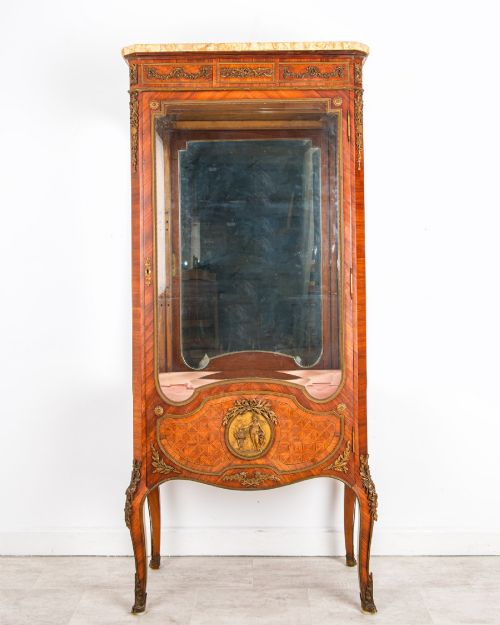


Kingwood China Cabinet
A kingwood china cabinet brings warmth and figured grain to a room, offering glazed display space for treasured porcelain.
What kingwood china cabinets are
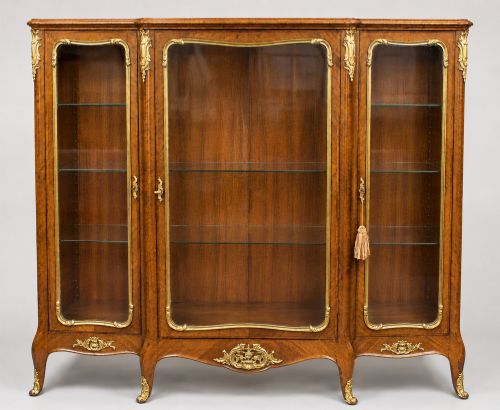
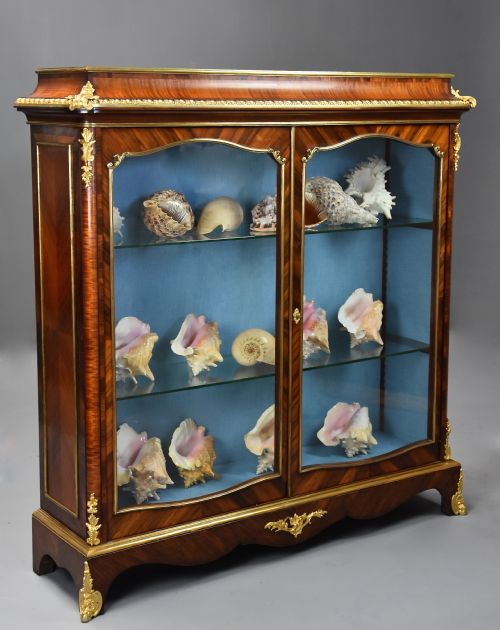
When you search for kingwood china cabinet, you encounter display furniture originating from the nineteenth century, including the Victorian era and the Edwardian period. These pieces take the form of vitrines and display cabinets designed to showcase collections behind glass.
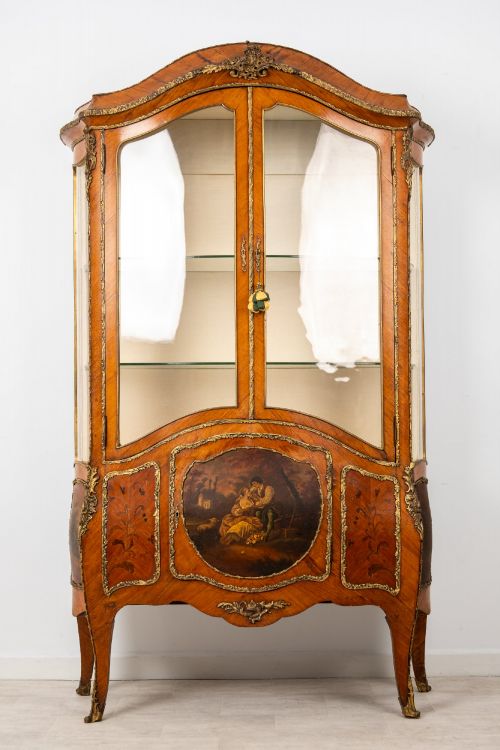
The selections on this page feature French revival styles, specifically French Rococo Revival, French Louis XV Revival, and French Louis XVI. Forms range from straight-sided cabinets to bombe display cabinets.
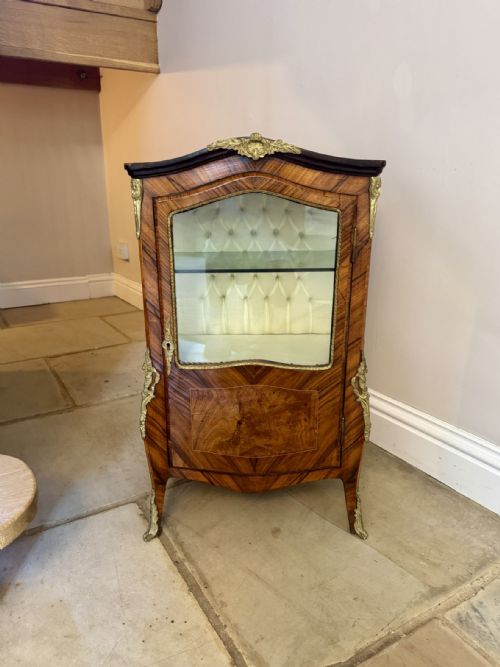
Origins span mid-nineteenth-century French workshops as well as Edwardian British production. Buyers encounter pieces employing glass doors and mirrored or fabric-lined interiors.
How they were made
Maker construction relies heavily on kingwood veneer applied over secondary woods such as walnut. Cabinet makers utilised parquetry patterns to create geometric designs across the timber surfaces.
Retail Price Guide 2026
Typical UK retail prices for kingwood china cabinet, calculated from the Sellingantiques database of over a million retail prices indexed since 2003. This retail price guide relies exclusively on Sellingantiques data; no external sources or auction records are used, so the figures do not describe the wider market.
Bombe cabinets curve outward like a welcoming belly, defying rigid geometry to show off timber grain.
What varies in quality
Quality separates through the crispness of the ormolu cast mounts and the complexity of the parquetry veneer work on the kingwood surfaces. Finer examples display meticulous matching of timber grain across the door panels and bombe curves.
The weight and integration of the gilt bronze mounts dictate the overall sculptural success of the cabinet. Lesser examples feature simpler brass details and straightforward flat veneering without geometric parquetry.
The Kingwood China Cabinet Glossary
- Kingwood
- A dense Brazilian timber featuring rich dark violet and brown tones with striking figuring. It was highly favored by eighteenth and nineteenth-century cabinet makers for luxury veneering.
- Ormolu
- Gilt bronze mounts applied to furniture for decorative effect. The technique involves coating cast bronze with a layer of gold amalgam.
- Parquetry
- Geometric wood mosaic work used for floors and furniture decoration. Artisans cut small pieces of veneer to form repeating patterns.
- Vitrine
- A glass-fronted display cabinet designed for showing porcelain and small objects. These pieces often feature glazed sides as well as front doors.
Frequently Asked Questions
What is a kingwood china cabinet?
A kingwood china cabinet is a glazed display piece veneered in richly figured tropical timber. These cabinets were built to protect and display fine ceramics.
Most surviving examples date from the nineteenth century and incorporate decorative gilt metal mounts.
How do I date a kingwood cabinet?
Dating relies on stylistic clues, construction methods, and materials recorded in the piece. Pieces from the mid-nineteenth century often display elaborate French revival influences and heavy ormolu.
Edwardian examples tend to combine kingwood with walnut and lighter structural framing. Examining the interior timbers and backboards helps confirm the manufacturing era.
Where were these cabinets made?
Many fine vitrines and display cabinets originated in French workshops during the nineteenth century. Cabinet makers in Britain also produced similar pieces during the Edwardian period.
French pieces frequently embrace Louis XV and Louis XVI revival aesthetics.
How do I care for kingwood veneer?
Keep wooden furniture away from direct sunlight and steady heat sources to prevent the veneer from drying out. Dust gently with a dry cloth and avoid harsh chemical polishes.
Maintain stable room humidity to protect both the timber and the underlying joints.