

Jewellery Cabinet Table
A jewellery cabinet table brings small treasures into plain view, combining tabletop height with enclosed storage for rings, brooches and curios.
Jewellery Cabinet Table
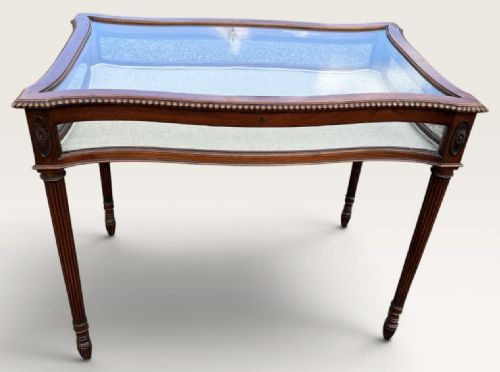
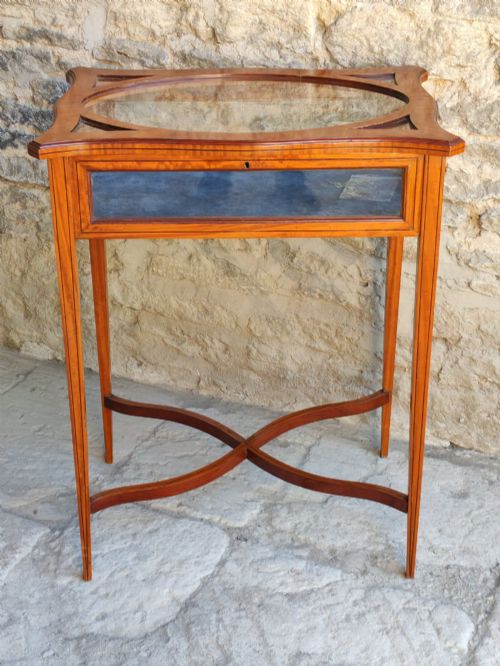
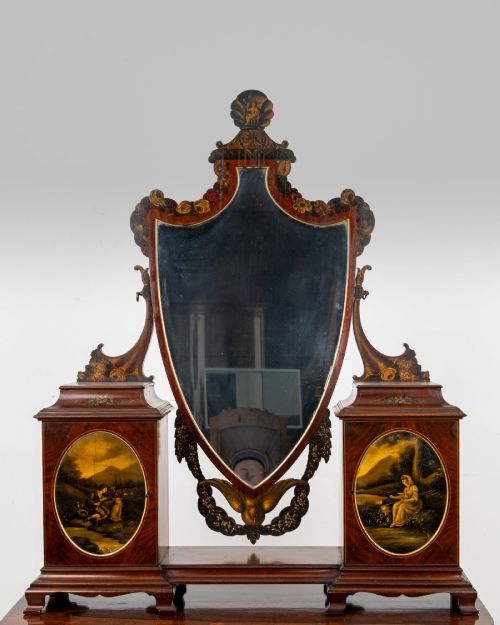
A jewellery cabinet table unites the display function of a vitrine with the compact storage of a tabletop chest. Buyers seeking a jewellery cabinet table will find pieces spanning the eighteenth, nineteenth and twentieth centuries, with Edwardian and Victorian examples forming the most frequent encounters.
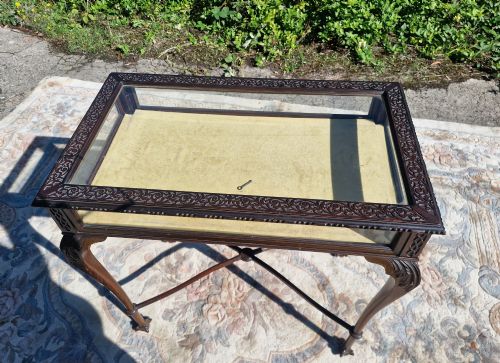
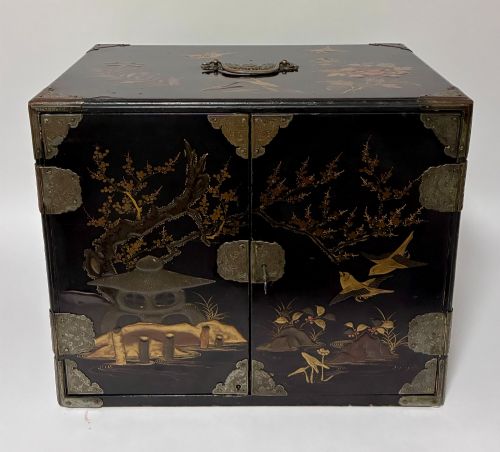
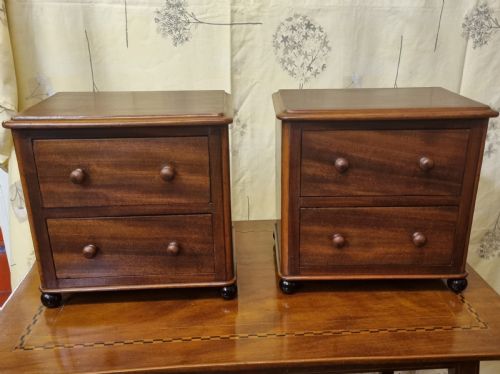
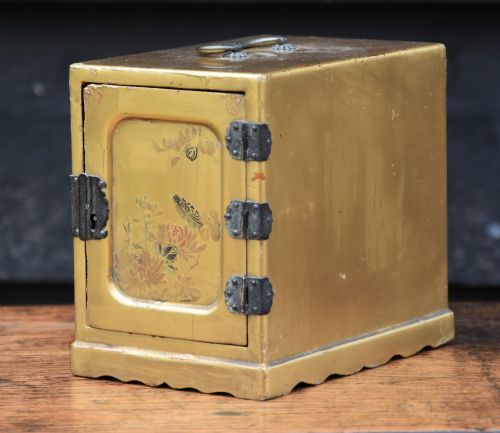
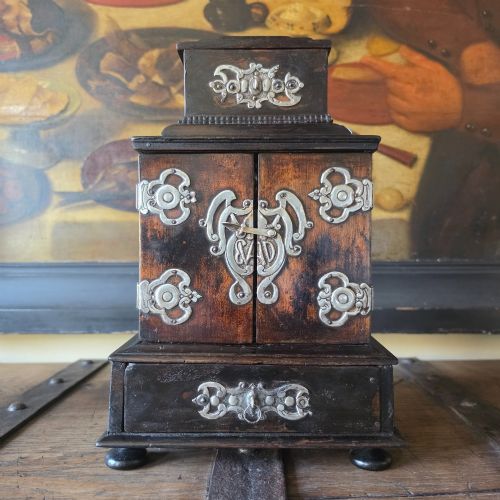
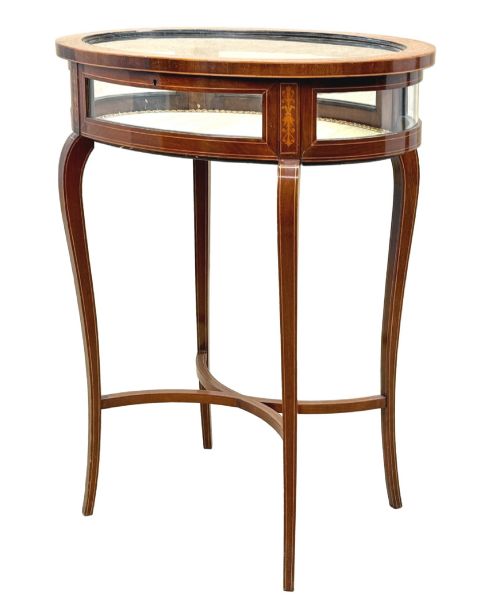
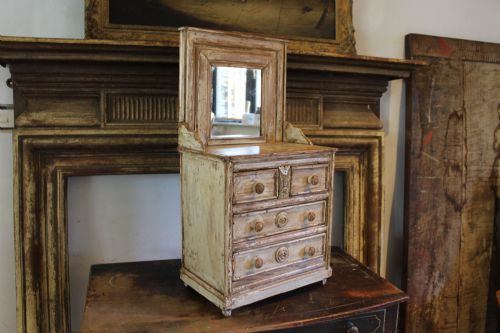
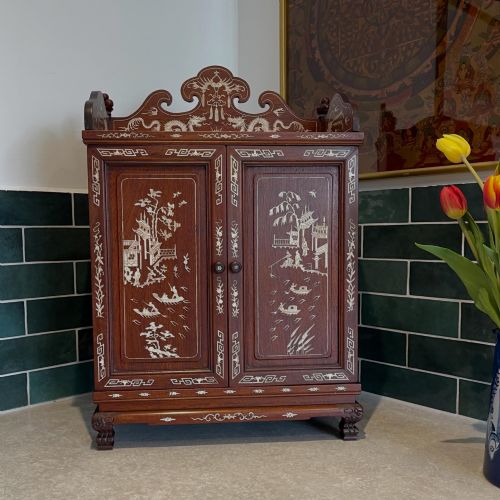
The category encompasses several distinct forms, from glass-topped bijouterie display tables on slender legs to lidded tabletop cabinets, miniature chests of drawers and Japanese lacquer kodansu. These items served different domestic spaces, sitting on drawing room surfaces or standing independently to exhibit collections of small valuables.
Origins range widely across British workshops, French design traditions and Asian export ateliers. Whether mahogany, walnut or lacquer, each version provides a dedicated vessel for organising personal ornaments and collector pieces within domestic rooms.
How they were made
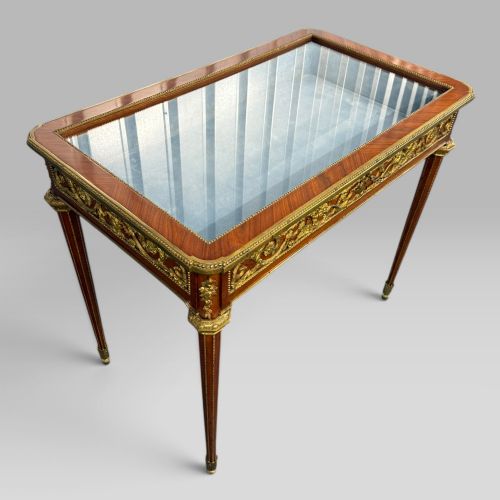
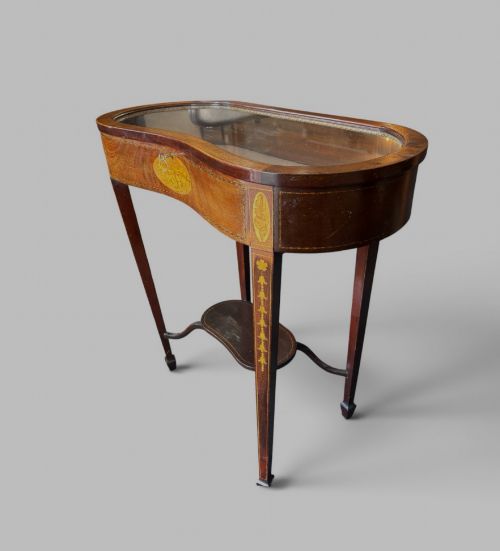
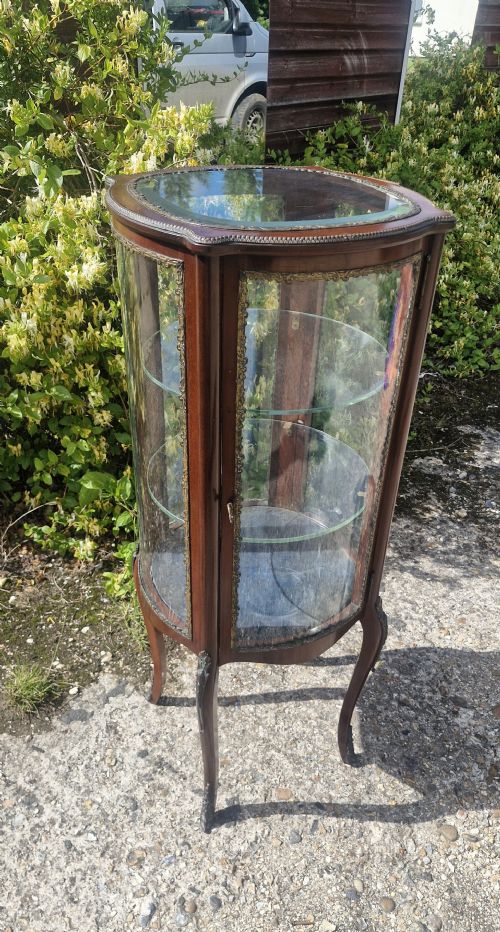
Cabinet makers utilised dense timber foundations of mahogany, walnut and satinwood, frequently applying marquetry, stringing or contrasting veneers to decorate the exterior surfaces. Brass, ormolu and gilt-metal mounts provide structural definition to corners, feet and hinged lids.
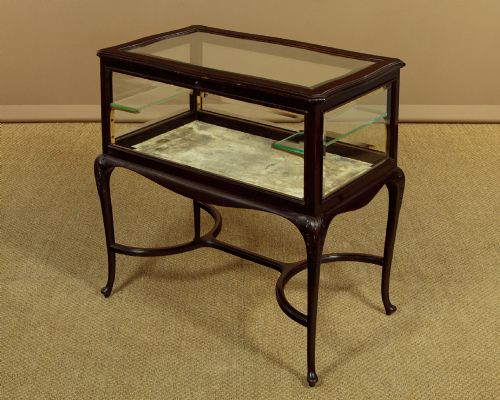
Glass panels set into hinged frames allow light into display wells, while interior compartments receive linings of velvet or fabric to protect delicate items. Japanese and Chinese examples employ black lacquer, gilt decoration and mother-of-pearl inlay over wooden carcases.
Joinery methods include precise dovetailing on small drawers and mortise and tenon construction for support frames. Carved elements appear on Black Forest walnut pieces and Edwardian mahogany frames, showing varying depths of relief.
Listings feature nineteenth and early twentieth-century pieces in mahogany, walnut and lacquer, including both English and French styles.
What varies in quality
The standard of timber selection and veneer matching dictates the visual presence of a piece. Finer examples display carefully chosen burr walnut, figured mahogany or precise satinwood marquetry that wraps coherently around corners and curves.
Mount quality separates standard production from exceptional work. Cast gilt-bronze or ormolu mounts with crisp chasing and secure fixing differ markedly from simpler stamped brass fittings.
Interior execution reveals the maker's hand through the snugness of drawer joints, the neatness of fabric or velvet linings, and the smooth operation of hinged glass display lids and original locks.
François Linke·Edwards and Roberts·Gillows
The Jewellery Cabinet Table Glossary
- Bijouterie table
- A glass-topped display table designed specifically for showcasing small valuables, medals and jewellery under a glazed lid. These pieces typically stand on slender legs with hinged or lifting tops.
- Kodansu
- A small Japanese cabinet featuring multiple internal drawers, traditionally used for storing documents, seals or personal ornaments. They often exhibit fine lacquerwork and metal fittings.
- Ormolu
- Gilt-bronze decorative mounts applied to furniture, popular in French-influenced nineteenth-century pieces. The technique involves coating bronze in a gold amalgam and firing it.
- Marquetry
- The art of applying thin slices of wood veneer to a structural carcase to form decorative pictures or geometric patterns. Makers used contrasting timbers such as satinwood, mahogany and ebony.
- Vitrine
- A glass-fronted or glass-topped display cabinet intended for the exhibition of curiosities and fine objects. In table form, it raises the display surface to a comfortable viewing height.
Jewellery Cabinet Table: Frequently Asked Questions
What is a bijouterie table?
A bijouterie table is a specialised display piece featuring a glazed top and a shallow compartment beneath for exhibiting small collections.
These tables were designed for drawing rooms where hosts could display rings, miniatures and curiosities to guests.
How were table cabinets used?
Table cabinets provided secure, compartmentalised storage for jewellery, letters and small personal valuables on top of larger furniture.
They kept delicate items organised and protected from dust within velvet-lined drawers and fitted interiors.
How do I date a mahogany piece?
Dating relies on timber characteristics, construction methods and stylistic markers such as inlay patterns and leg shapes.
Eighteenth-century examples show different carcase construction and timber density compared to nineteenth-century revival or Edwardian pieces.
What is the difference between a vitrine and a cabinet?
A vitrine incorporates prominent glass panels for viewing contents from multiple angles, whereas a table cabinet often relies on solid wood drawers or doors.
Vitrines prioritise visual display, while cabinets frequently combine enclosed drawer storage with tabletop display surfaces.