
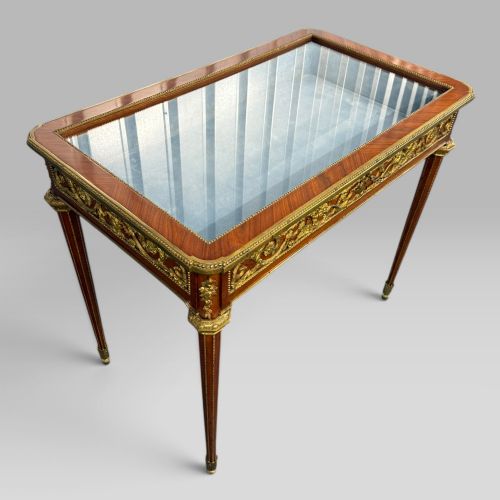
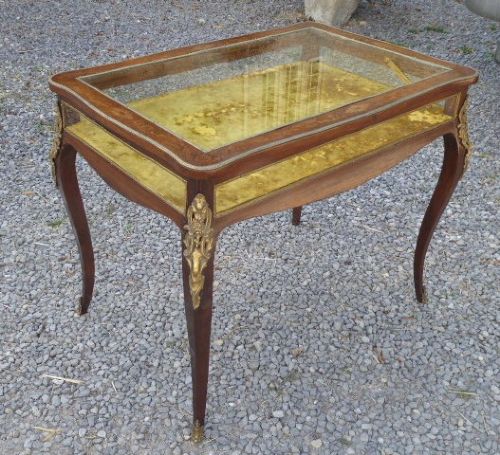
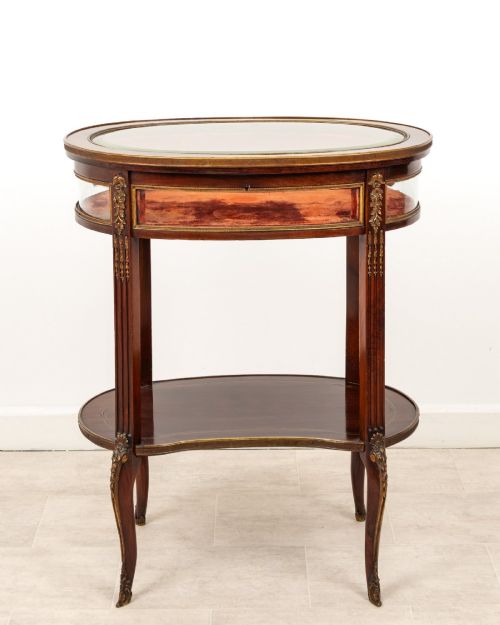


Ormolu Bijouterie Table
An ormolu bijouterie table brings glass-topped elegance into a room to hold small treasures and curiosities.
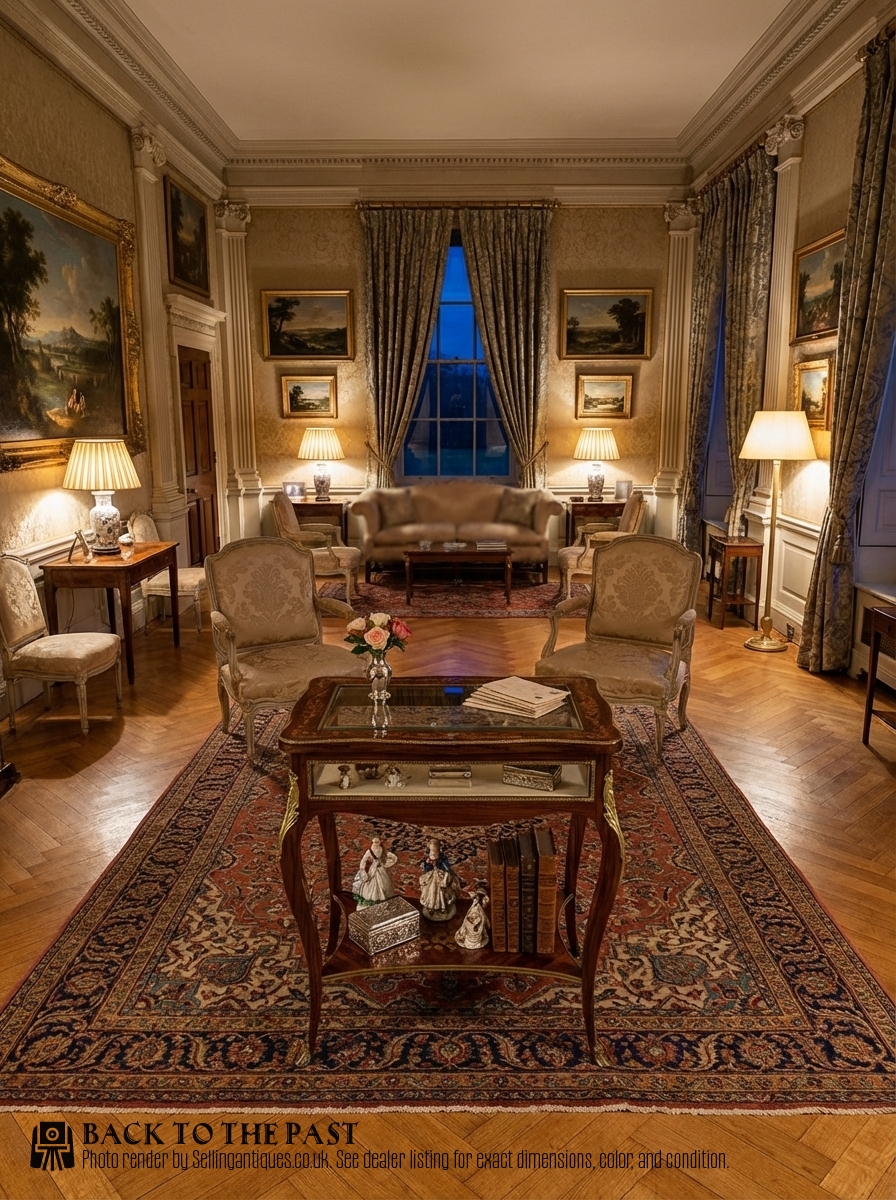
Ormolu Bijouterie Table
An ormolu bijouterie table is a glazed display piece designed to showcase small valuable items and personal ornaments under glass. The examples on this page predominantly span the nineteenth century, featuring nineteenth-century interpretations alongside revivalist designs.
Buyers will frequently encounter French models adhering to Louis styles, particularly Louis XV and Louis XVI revivals. These pieces combine timber frames with glass tops and hinged or lift-off lids for interior access.
The form functions as both a table and a vitrine, serving spaces that require refined display surfaces. Most variations on this page integrate ormolu mounts with woods such as mahogany, rosewood, and kingwood.
How They Were Made
Cabinetmakers constructed the main framework using dense cabinet timbers like mahogany, rosewood, and kingwood, occasionally incorporating marquetry patterns or brass inlay. The timber carcass provides the structural support necessary to bear heavy glass tops and cast metal mounts.
Gilded bronze, known as ormolu, was cast, chased, and applied to the corners, legs, and borders of the tables. Bevelled glass panels were then fitted into the frames to create the display chamber, often lined with velvet or fabric.
Listings feature woods including mahogany, kingwood, rosewood, harewood, and walnut paired with ormolu.
What Varies in Quality
Quality rests heavily on the crispness and weight of the ormolu mounts, where finely chased detailing distinguishes superior workshop output from simpler cast decoration. The precision of the cabinetwork, particularly in curved kingwood veneers and marquetry, further separates the standard of production.
The choice of secondary timbers and the clarity of the bevelled glass contribute to the overall execution of the piece. Tables bearing attribution or association with makers such as François Linke represent the highest tier of craftsmanship within this category.
François Linke
The Ormolu Bijouterie Table Glossary
- Ormolu
- Gilded bronze mounts applied to furniture. The technique involves applying a gold amalgam to cast bronze before heating.
- Bijouterie
- Small decorative items and personal trinkets. The term describes the objects originally intended for display inside these glazed tables.
- Vitrine
- A glass-fronted or glass-topped cabinet for displaying objects. These tables function as horizontal vitrines on legs.
- Kingwood
- A dense, richly grained tropical timber used extensively in high-end nineteenth-century French cabinetmaking. It provides a striking contrast against bright ormolu mounts.
- Marquetry
- Decorative veneer work forming patterns or pictures on furniture surfaces. Craftsmen assemble thin slices of various woods into intricate geometric or floral designs.
Ormolu Bijouterie Table: Frequently Asked Questions
What is an ormolu bijouterie table?
An ormolu bijouterie table is a specialised display furniture piece featuring a glass top and glazed sides held within a timber frame, decorated with gilded bronze mounts.
These tables were created to exhibit delicate personal collections, medals, and small decorative items in drawing rooms and reception spaces.
How were bijouterie tables used?
Victorians and collectors used these tables to display their most prized small possessions safely while keeping them visible to guests.
The glazed compartment protected fragile items from dust and handling while allowing light to illuminate the collection from above.
How do I identify French revival styles?
French revival styles on these tables typically follow the aesthetic codes of Louis XV or Louis XVI periods, characterised by either curving rococo lines or restrained neoclassical symmetry.
Look for specific leg shapes, mount designs, and marquetry motifs that emulate eighteenth-century royal furniture workshops.
Where should I place a bijouterie table?
These tables suit principal reception rooms, studies, or hallways where natural light can pass through the glass top to illuminate the interior.
Ensure the table sits away from direct, harsh sunlight to protect any sensitive fabric linings or displayed items from fading over time.