



Vintage French Bijouterie
These vintage french bijouterie items are glazed display pieces designed to show off small treasures, offering elegance and practical curation for any interior.
Vintage French Bijouterie
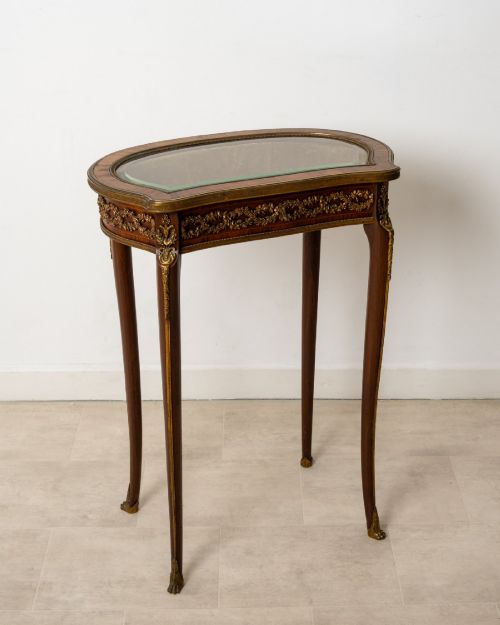
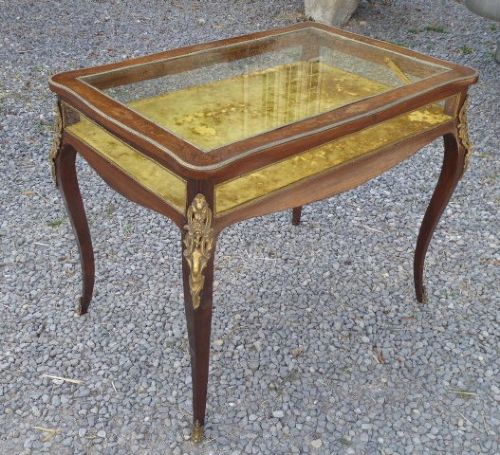
When you search for vintage french bijouterie, you encounter glazed display tables and vitrines created to hold small collections and precious items. These pieces draw heavily on historical French design vocabularies, particularly Louis XV and Louis XVI revivals.
Originating primarily from continental workshops inspired by master cabinetmakers like François Linke, these furnishings combine structural timber with clear viewing surfaces. They function as both furniture and personal museum cases for holding medals, trinkets, and curiosities.
Materials and construction
Makers built these display tables using robust timbers like mahogany and kingwood, often applied as fine veneers over secondary woods to create decorative surfaces. Marquetry patterns and contrasting wood inlays frequently adorn the timber frames of mid-nineteenth century examples and later revivals.
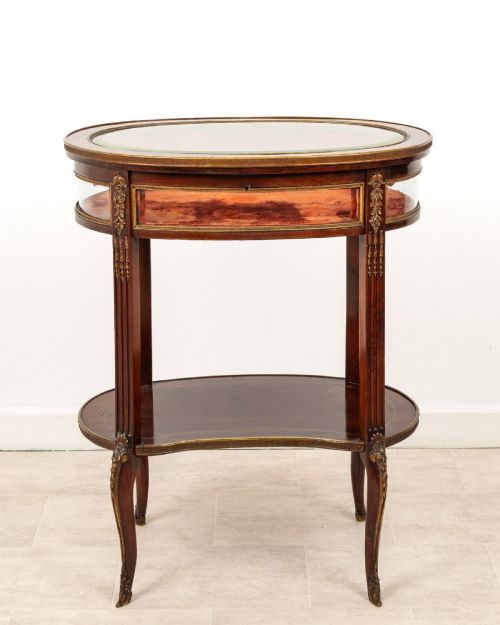
Glazing provides the primary viewing window into the interior chamber, supported by cast and gilt metal elements known as ormolu mounts. Brass stringing, velvet or fabric linings, and fitted hinged lids complete the construction of these specialised vitrines.
Vintage French Bijouterie Retail Price Guide 2026
Typical asking prices for vintage french bijouterie among the pieces listed under this phrase on Sellingantiques today, from the lower quarter to the upper quarter. They describe what is for sale here now, not the wider market.
Even empty, a bijouterie table insists that your paperclips deserve a velvet bed.
Distinctions in quality
The refinement of the ormolu mounts and the precision of the brass inlay largely separate standard production from finer work. Superior pieces display crisply chased metalwork and sophisticated timber veneers that reflect the high standards of nineteenth-century cabinetmaking.
Structural harmony also dictates value, where the proportions of the glazed top balance cleanly against the supporting legs and apron. The integration of quality velvet or fabric linings and smoothly operating hinged glass lids indicate a higher grade of manufacture.
François Linke
The Vintage French Bijouterie Glossary
- Bijouterie table
- A specialised display table featuring a glass top and sides designed specifically for showing small valuable items and curiosities. These pieces often include lined interior trays.
- Ormolu
- Gilt bronze ornamentation cast and chased to adorn furniture surfaces. This decorative technique is characteristic of fine French revival pieces.
- Marquetry
- Decorative veneer work arranged in pictorial or geometric patterns using various coloured woods. It often enhances the top panels of mid-nineteenth-century tables.
- Kingwood
- A dense, richly grained tropical timber utilised in high-end cabinetmaking for decorative banding and veneers. It frequently appears alongside mahogany on display tables.
- Vitrine
- A glass-fronted cabinet or display case intended for exhibiting objects of art or collections. They range from low table formats to standing cabinet versions.
Vintage French Bijouterie: Frequently Asked Questions
What is vintage french bijouterie used for?
These pieces function as dedicated display surfaces for holding and exhibiting small collections, jewellery, medals, and decorative objects under glass.
Collectors utilise them within drawing rooms and studies to keep delicate items visible yet protected from dust and handling.
How do I identify a Louis XVI style table?
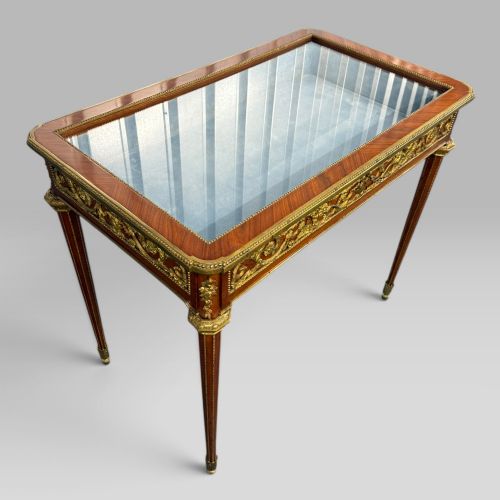
Louis XVI style pieces typically feature straighter lines, classical symmetry, fluted legs, and restrained neoclassical ormolu mounts compared to earlier rococo curves.
On this page, these characteristics appear on mid-twentieth-century revival display tables inspired by makers such as François Linke.
What woods were used for these cabinets?
Mahogany serves as the primary structural timber for the majority of these display tables, appearing in solid form or as fine veneers across various periods.
Kingwood and intricate marquetry also feature on select pieces, adding contrasting grain patterns to the outer frames and tabletops.
How should I care for the interior fabric?
The velvet or fabric lining inside the display chamber requires gentle cleaning with a soft brush or low-suction vacuum attachment to remove accumulated dust.
Avoiding direct sunlight helps preserve the colour of the textile lining and prevents fading of the underlying wood veneers.