
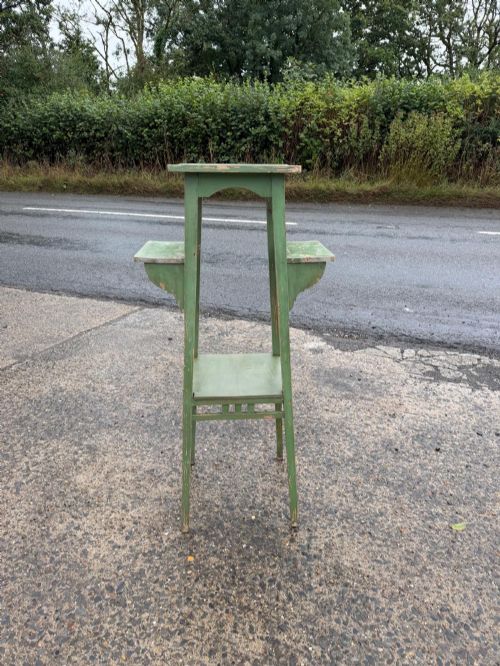
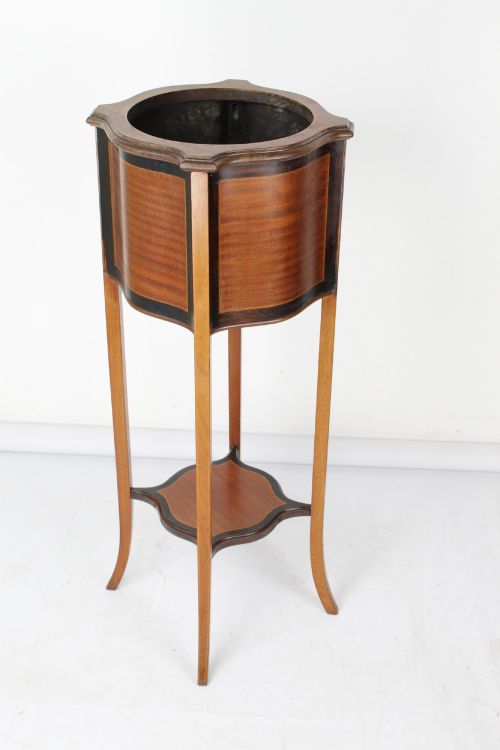
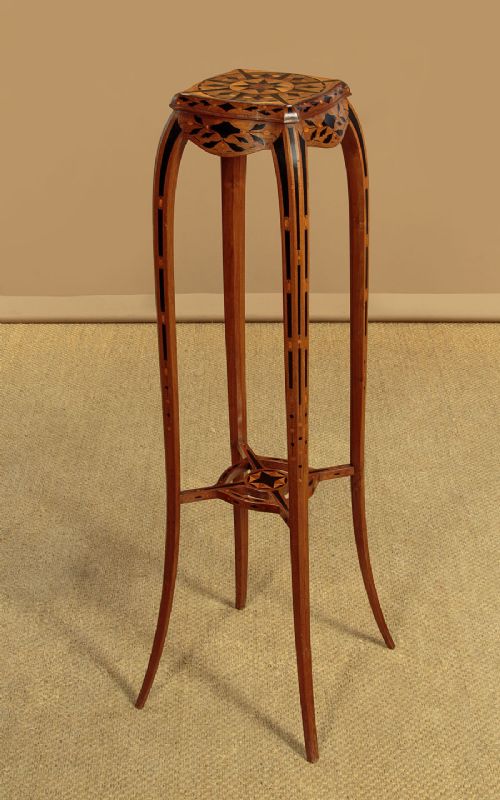
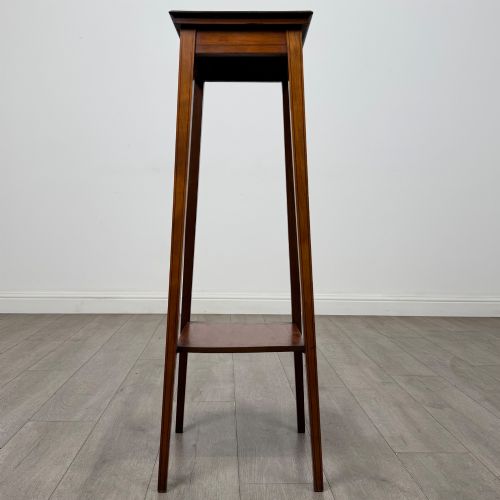
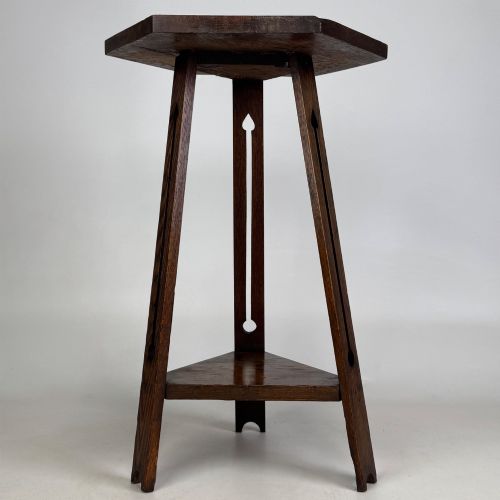
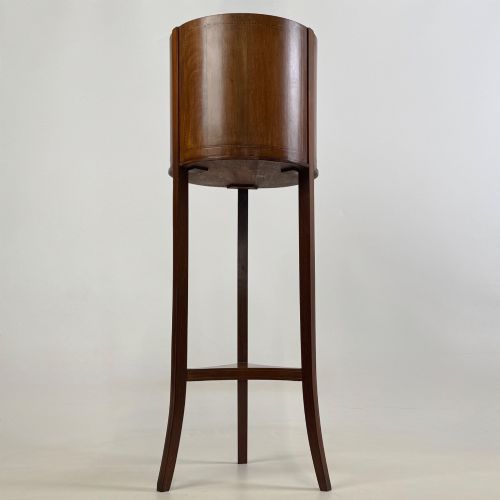
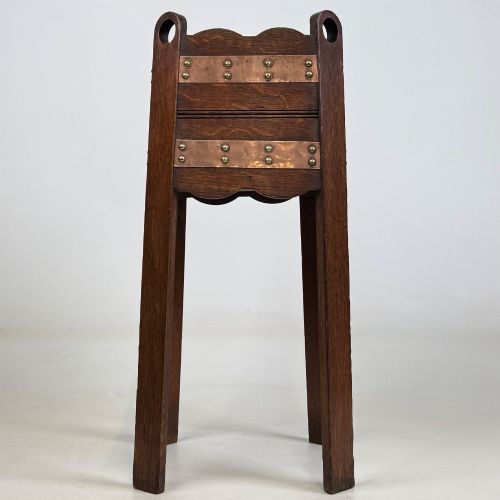
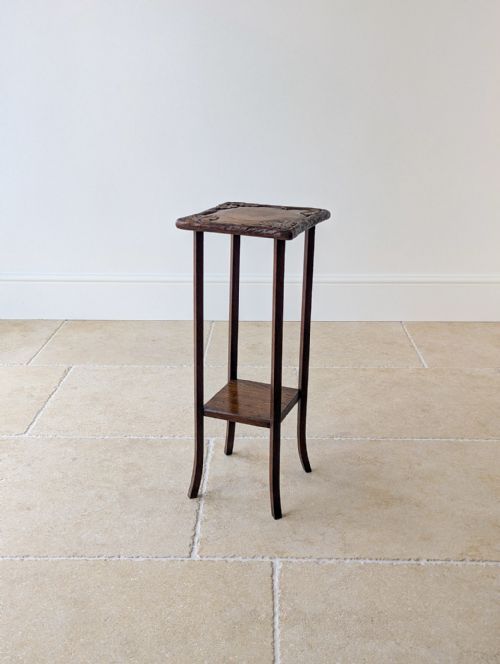
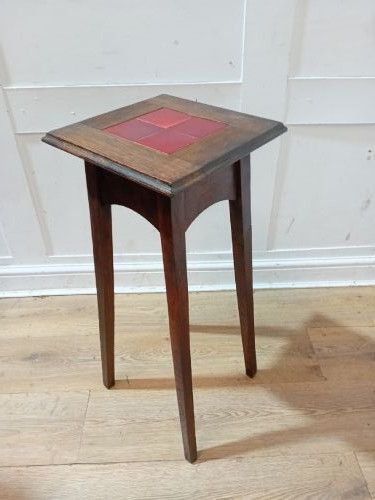
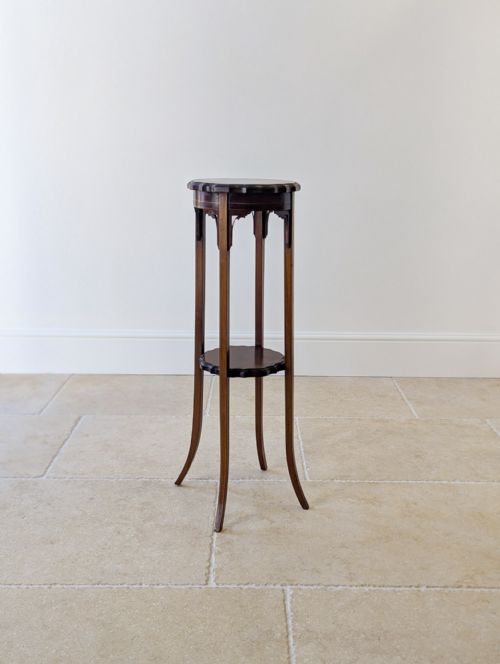
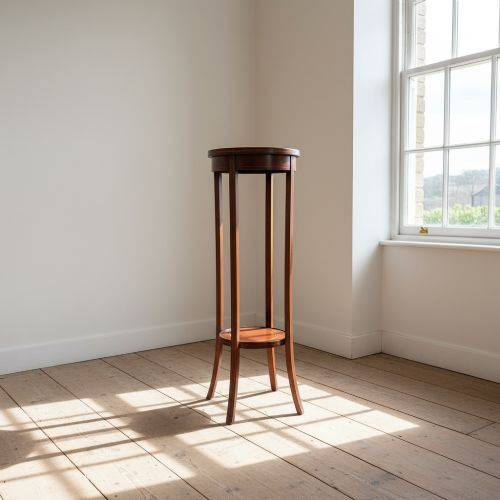
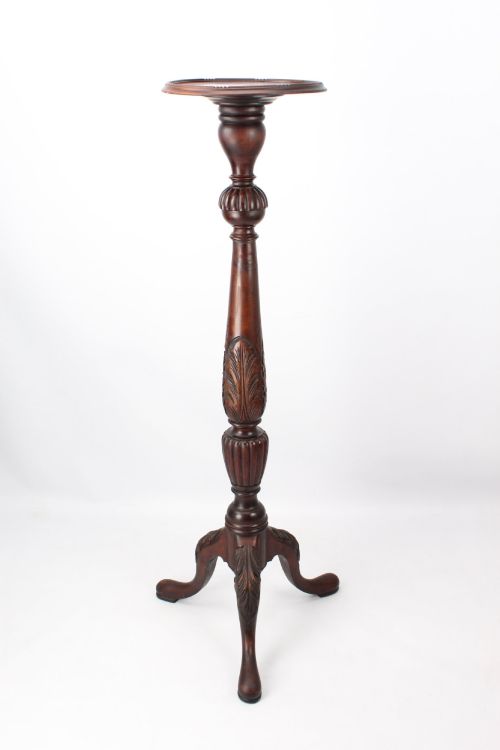
Jardiniere Pedestal Stand
These jardiniere pedestal stand pieces elevate plants and decorative vessels to centre stage in a room.
Jardiniere Pedestal Stand
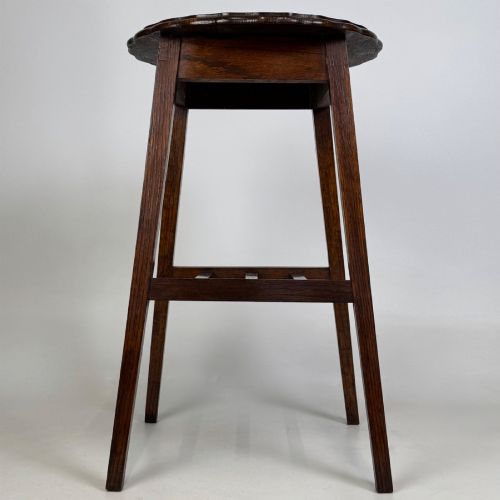
A jardiniere pedestal stand supports a heavy planter, bowl, or display piece to create a vertical focal point in a room. You will frequently encounter tall wooden plant holders, marble-top display columns, and ceramic jardiniere bases across the periods.
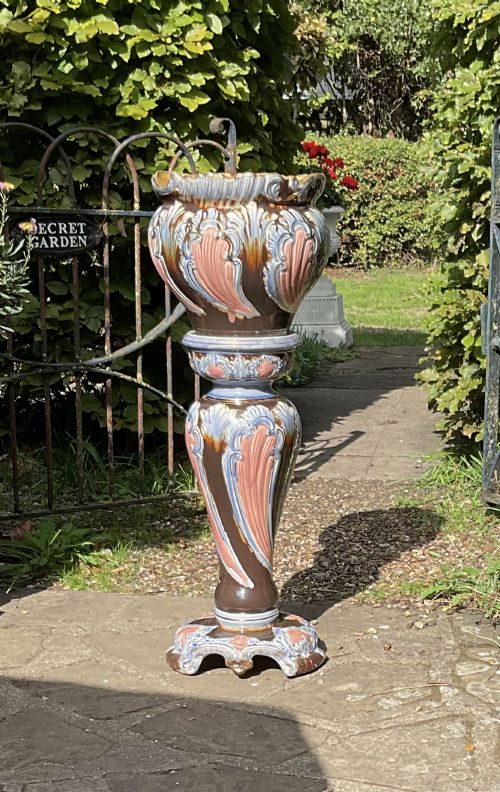
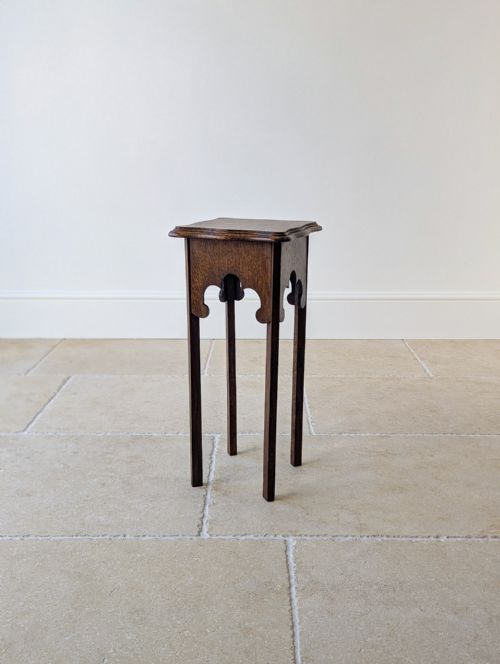
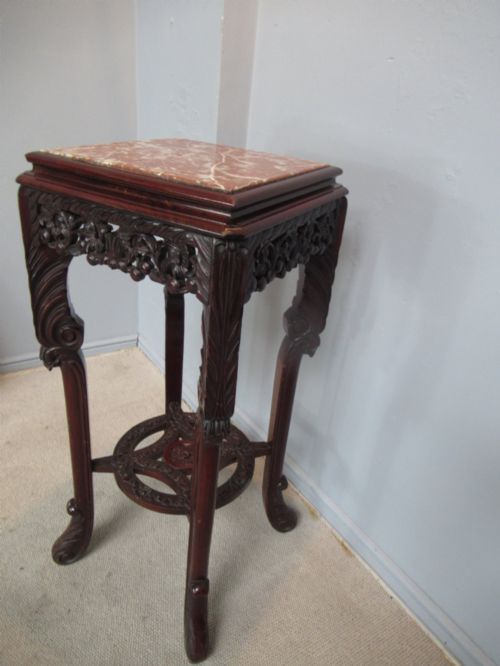
The selections span from late Georgian wine coolers and Victorian majolica ensembles to Edwardian mahogany columns and Arts and Crafts oak tiers. Many originate from British workshops, alongside continental European designs and Chinese export pieces.
Makers utilised various formats, including tripod bases, torcheres, and multi-tiered plant stands, designed to hold heavy earthenware, brass planters, or marble slabs securely.
How they were made
Cabinetmakers shaped sturdy timbers such as mahogany, oak, walnut, and satinwood, often applying intricate marquetry, inlay, or original paint finishes. Wood was turned, carved, or joined into stable columns and tall stands.
Artisans combined organic and mineral materials, mounting heavy white or coloured marble tops onto wooden frames, or casting brass, bronze, and iron into decorative plant containers and figural bases.
Ceramic works involved heavy majolica glazing, earthenware shaping, and art pottery manufacturing, creating robust pottery planters intended to withstand moisture from indoor flora.
Listings feature woods like mahogany and oak alongside marble, brass, and majolica earthenware across periods spanning from the Georgian era to the Edwardian period.
What varies in quality
The calibre of a jardiniere pedestal stand depends on the weight and integrity of the materials, such as thick slab marble versus thin veneers, or heavy cast brass versus pressed sheet metal. Superior examples display crisp, hand-carved details in wood or stone rather than soft, moulded contours.
Construction methods dictate longevity; sturdy joinery and well-balanced tripod or column bases ensure the stand supports heavy ceramic planters or water-filled jardinieres without tipping. Original matching components, such as a planter paired with its exact matching pedestal column, elevate the integrity of the piece.
Liberty of London·Thomas Hope·Eichwald·Burmantofts Art Pottery
The Jardiniere Pedestal Stand Glossary
- Jardiniere
- An ornamental pot or stand designed to hold a plant or flower arrangement. It often sits upon a matching column or pedestal.
- Torchere
- A tall, slender stand originally designed to support a torch or candle lamp, later adapted to hold vases and plants. These usually feature a small circular top and a single central shaft.
- Majolica
- A type of earthenware coated with an opaque white tin glaze and painted with brightly coloured metallic oxide enamels. It became immensely popular during the Victorian era for heavy garden and indoor planters.
- Dinanderie
- Objects made of beaten or cast brass, copper, or bronze, typically associated with decorative vessels and planters. The technique yields textured metallic surfaces with deep, warm patinas.
- Inlay
- A decorative technique where pieces of contrasting timber, such as satinwood, are inserted into recesses in a primary wood surface. It adds refined surface pattern to Edwardian and Georgian tables.
Jardiniere Pedestal Stand: Frequently Asked Questions
What is a jardiniere pedestal stand used for?
These pieces elevate potted plants, ceramic bowls, and decorative urns off the floor to create distinct focal points in interior spaces. They allow trailing foliage and heavy planters to occupy vertical room space safely.
Historically, they served both functional botanical display roles and purely decorative architectural functions in grand hallways and drawing rooms.
How do I distinguish Edwardian stands from Victorian ones?
Victorian examples generally feature heavier proportions, robust majolica ceramics, dark carved oak or mahogany, and exuberant ornamentation. Edwardian versions tend to be lighter, often incorporating satinwood inlay, tapered legs, and refined Arts and Crafts simplicity.
Examining the underlying timber preparation and the style of decorative motifs helps clarify the manufacturing era.
Can these stands support heavy ceramic planters?
Most solid wood, marble-topped, and cast metal columns are engineered specifically to bear substantial weight from wet earth and large ceramic pots. Checking the stability of the base and the integrity of the joints ensures safe display.
Heavier marble-top and cast iron versions offer maximum stability for massive Victorian majolica jardinieres.
Where should I place a plant stand at home?
They suit corners, empty hallway spaces, and flanking positions beside windows or fireplace hearths where plants receive adequate light. Tall torcheres and columns work particularly well to break up flat wall expanses.
Ensure the floor surface is level, especially when displaying heavy marble-topped or ceramic vessel combinations.