






Chippendale Plant Pedestal
These upright supports for flora carry the timeless lines of the eighteenth century into later rooms.
Chippendale Plant Pedestal
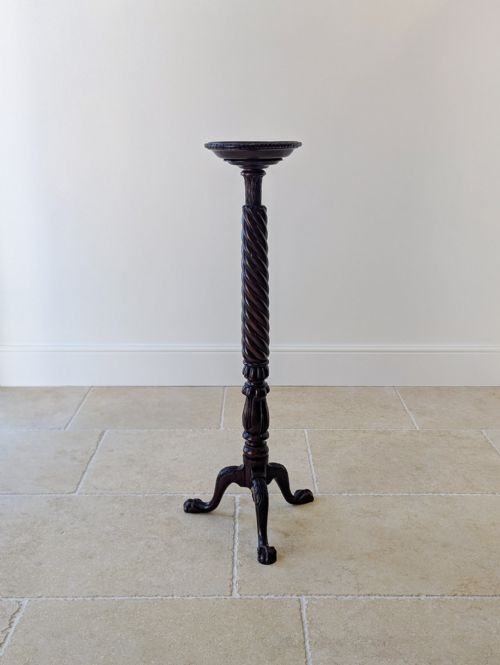
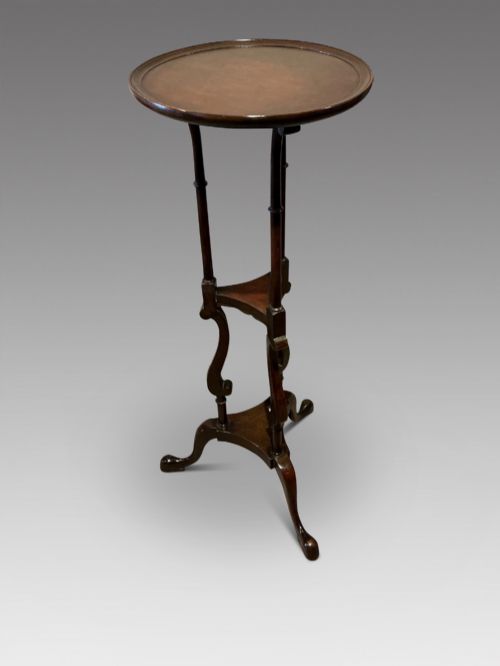
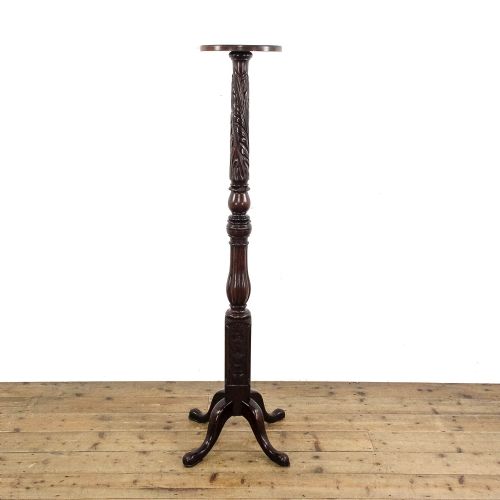
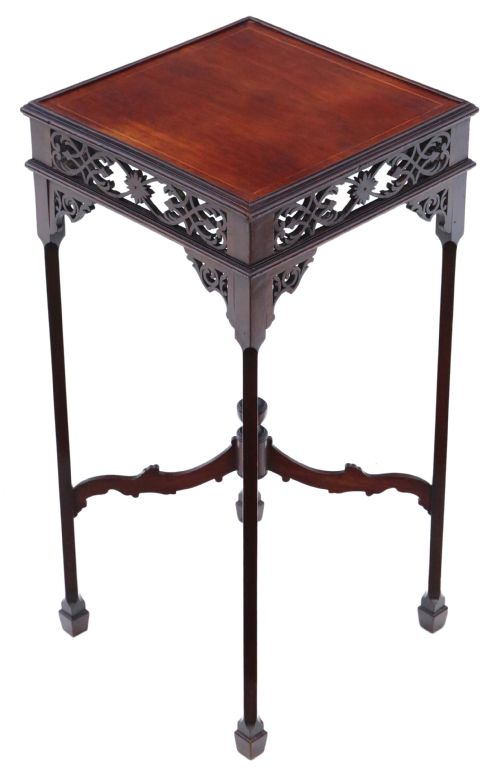
A chippendale plant pedestal provides an elevated stage for indoor greenery or lighting, taking the form of tall, slender torchères, plant stands, and occasional tables. These pieces emerge predominantly in mahogany and oak, reflecting revival periods from the Victorian and Edwardian eras alongside older pieces.
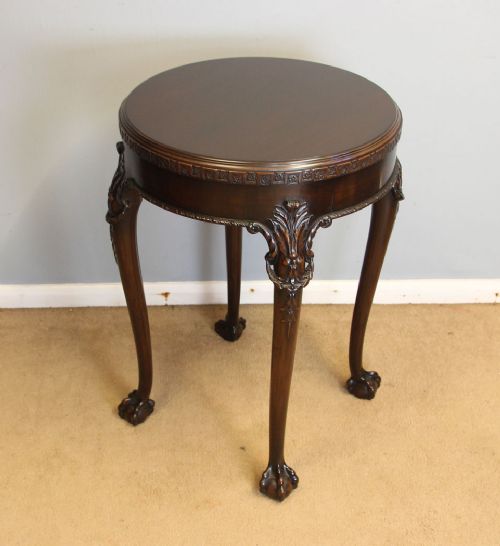
The silhouettes draw heavily on Georgian design principles, featuring slender columns or pedestals designed to occupy minimal floor space while adding vertical interest to a room. Buyers encounter various designations across the inventory, including wine tables, candlestick stands, and jardinière holders.
Most examples date from the nineteenth and early twentieth centuries, capturing the enduring popularity of revivalism in British homes. These furnishings serve practical functions as display surfaces while bringing architectural character to corners and hallways.
Construction and materials
Makers relied primarily on mahogany for its rich grain and stability, shaping the timber into slender shafts and sturdy circular or multi-sided tops. Oak appears in select examples, offering a different grain pattern and a heavier visual weight.
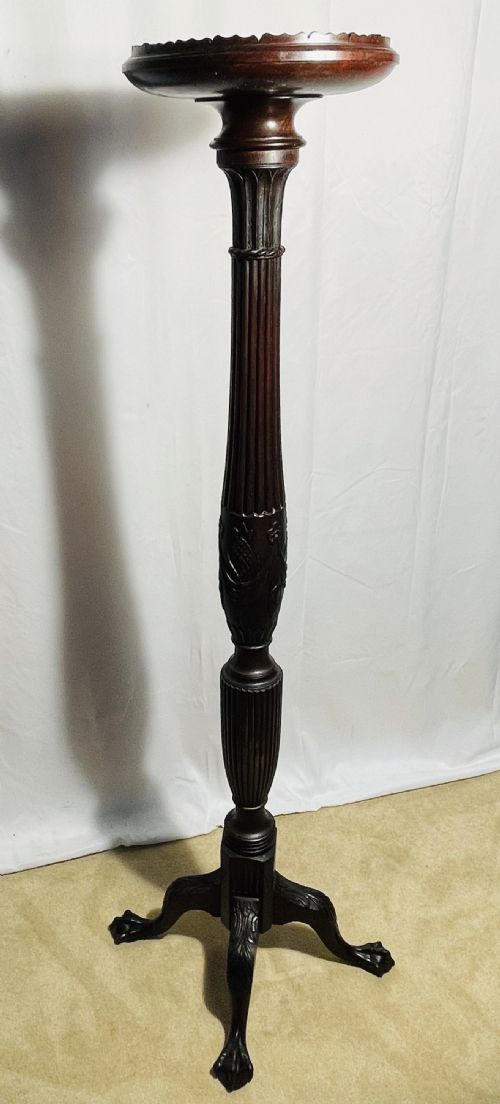
Carving techniques defined the decorative vocabulary, ornamenting pillars and tripod bases with motifs borrowed from classical and mid-eighteenth-century pattern books. Joinery focused on securing tall, narrow forms against tipping through balanced base designs and tight joints.
Several stands double as modest tables, proving that Victorians expected their potted ferns to share space with a glass of port.
Judging quality and craftsmanship
The refinement of the carved detail separates standard production from superior examples, particularly in the crispness of acanthus leaves or ball-and-claw feet. Proportion dictates elegance, with finer pieces maintaining a balanced relationship between the narrow shaft and the supporting base.
Timber selection and surface finish influence the overall appeal, where carefully matched grain and a deep patina indicate superior original materials. Structural integrity remains paramount in tall, slender forms, distinguishing solid, stable construction from looser joints.
The Chippendale Plant Pedestal Glossary
- Torchère
- A tall, slender stand designed to hold a light or a decorative object. These pieces utilise minimal floor space while providing significant height.
- Jardinière
- An ornamental pot or stand for holding plants or flowers. They often feature protective galleries or brass liners.
- Tripod base
- A three-legged support structure commonly found on tall stands and tables. This design ensures stability on uneven floors.
- Gallery
- A raised ornamental border surrounding the edge of a tabletop. This feature prevents items from sliding off the surface.
Chippendale Plant Pedestal: Frequently Asked Questions
What is a torchère stand?
A torchère is a tall, narrow stand historically used to hold a candle or lamp. Today, these pieces function primarily as plant stands or decorative pedestals in living spaces.
Their elevated design allows greenery or sculptural objects to occupy vertical space without crowding the floor.
How do I style a pedestal?
These stands suit empty corners, narrow hallways, or flanking larger pieces of furniture. Placing a trailing plant or a small lamp on top draws the eye upward.
Ensure the base sits firmly on the floor and keep heavier items to lower, wider stands for stability.
Are these pieces from the eighteenth century?
While the style originates in the mid-eighteenth century under Thomas Chippendale, most surviving examples date from the Victorian and Edwardian revival periods.
These later interpretations adopted the earlier aesthetic using the timber and machinery of their own time.
What is the difference between a plant stand and a wine table?
Plant stands and torchères generally prioritize height and narrow profiles for display purposes. Wine tables tend to sit lower with broader surfaces intended for drinks or small objects.
Both forms share similar pedestal bases and turn-of-the-century craftsmanship.