


Japanned Papier Tray
These japanned papier tray pieces offer glossy surfaces and gilded detail, bringing historic Chinoiserie and Regency elegance directly into modern rooms.
Japanned Papier Tray
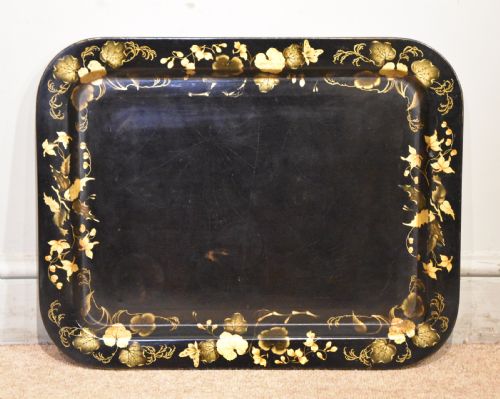
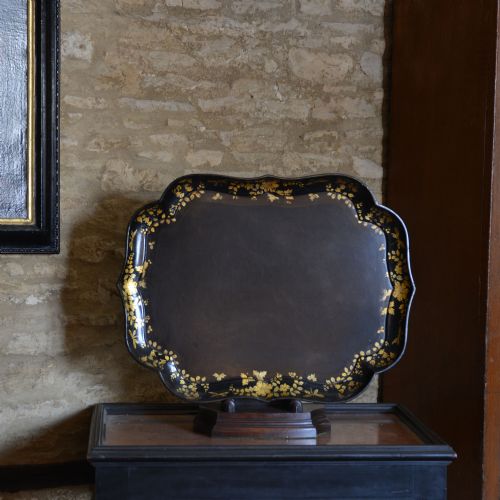
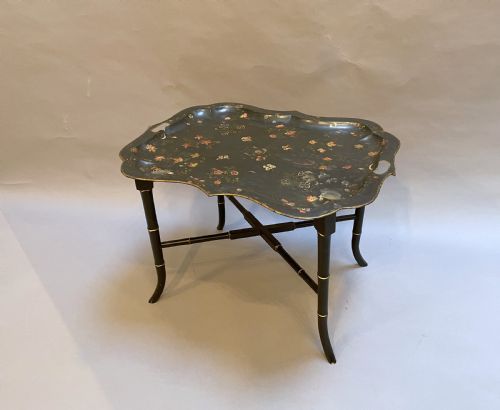
A japanned papier tray brings together sturdy moulded paper pulp and deep dark lacquer finishes, often enriched with hand-painted scenes or gilded borders. These functional objects appear as large oval serving trays, occasional tables set on folding stands, and smaller desk accessories.
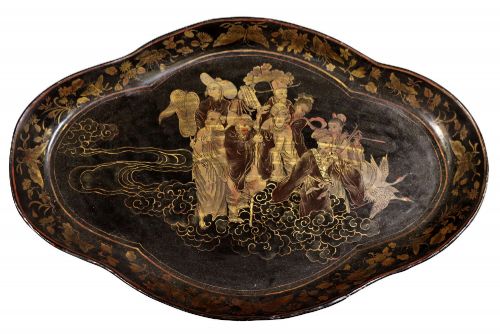
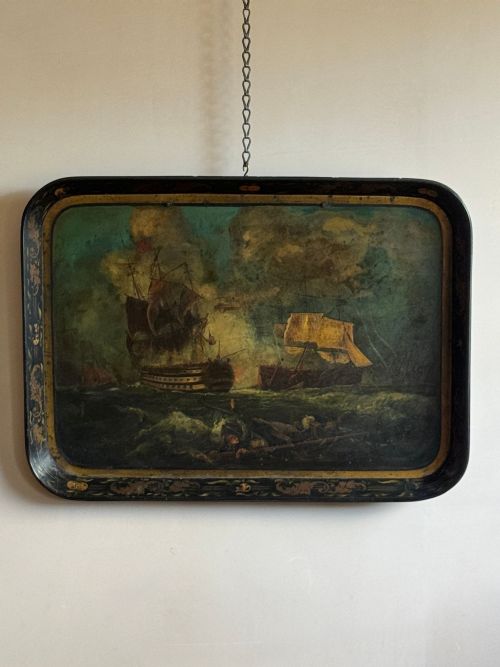
The pieces on this page span the Georgian, Regency, and Victorian eras, alongside select Japanese export examples and later revival pieces. Buyers most frequently encounter nineteenth-century rectangular and kidney-shaped trays decorated with Chinoiserie motifs or pastoral hunting scenes.
Materials and construction
Makers built these trays using layers of paper pulp mixed with glue and resin, pressed under heavy pressure and baked until rigid. This durable foundation received multiple coats of dark lacquer, rubbed smooth to create a deep reflective ground.
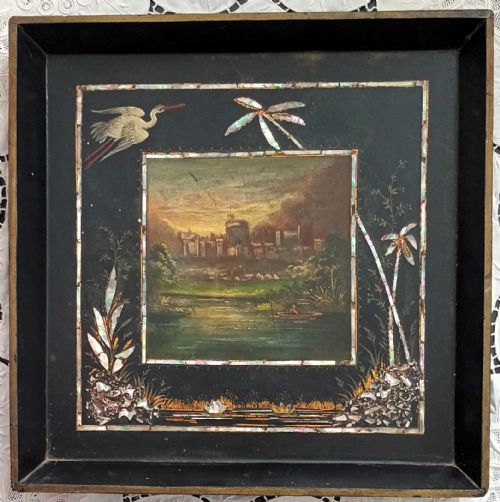
Artisans applied gold leaf, hand-mixed paints, and mother-of-pearl inlay to build up intricate decorative schemes, often sealing the finished surface with transparent varnish. Certain pieces incorporated brass fittings, while others were mounted onto custom wood stands to function as tables.
A stray hunting dog forever chases a painted hare across one nineteenth-century tray border.
Assessing the execution
The distinction between standard production and exceptional work rests upon the precision of the hand-painting and the depth of the lacquer finish. Superior examples display crisp gilding, nuanced pictorial detail, and well-preserved mother-of-pearl inlay that catches the light without appearing flat.
Structural integrity also divides the range, particularly the preservation of the original papier-mâché base and the crispness of moulded edges. Pieces bearing clear maker signatures from notable workshops command greater attention from collectors.
Henry Clay·Jennens & Bettridge
The Japanned Papier Tray Glossary
- Japanned
- European imitation of Asian lacquerwork using dark varnishes and metallic decoration. This technique allowed Western workshops to replicate costly oriental imports.
- Papier-mâché
- A composite material made from paper pulp or layered paper sheets mixed with binders. It formed a lightweight and remarkably tough base for decorative trays.
- Chinoiserie
- European artistic style reflecting Chinese motifs and imaginary oriental landscapes. It heavily influenced the painted decoration found on Regency and Victorian trays.
- Toleware
- Painted or lacquered sheet metal items produced in Britain and Europe. These objects share similar decorative palettes with papier-mâché wares.
Japanned Papier Tray: Frequently Asked Questions
How do I use a papier-mâché tray today?
These trays function well as decorative display surfaces on coffee tables or sideboards, holding books, candles, or glassware. Many examples also sit securely on custom folding stands to serve as occasional coffee or side tables.
Because historic lacquer is sensitive to moisture and heat, owners should avoid placing wet drinks or hot serving dishes directly onto the unprotected surface. Using coasters and soft cloths helps preserve the delicate painted and gilded finish for daily enjoyment.
How do I distinguish Regency from Victorian pieces?
Regency trays often display restrained neoclassical borders, crisp Chinoiserie landscapes, or rich gilding executed on deep black grounds. They frequently bear the impressed marks of early makers like Henry Clay.
Victorian pieces tend toward more exuberant decoration, incorporating mother-of-pearl inlay, intricate floral bouquets, and naturalistic hunting scenes. The later nineteenth-century examples also include Japanese export items and trays adapted into taller occasional furniture.
What does Japanese export mean here?
Japanese export items represent nineteenth-century pieces produced in East Asia specifically for Western markets, adopting familiar European tray proportions. They combine traditional local lacquer techniques with styles that appealed to British buyers.
These pieces sit alongside domestic British production, offering a distinct interpretation of the lacquered tray form during the Meiji and Edo periods.