


Japanned Grandfather Clock
A japanned grandfather clock brings a rich Chinoiserie surface and an authoritative brass movement directly into a traditional hallway.
Japanned Grandfather Clock
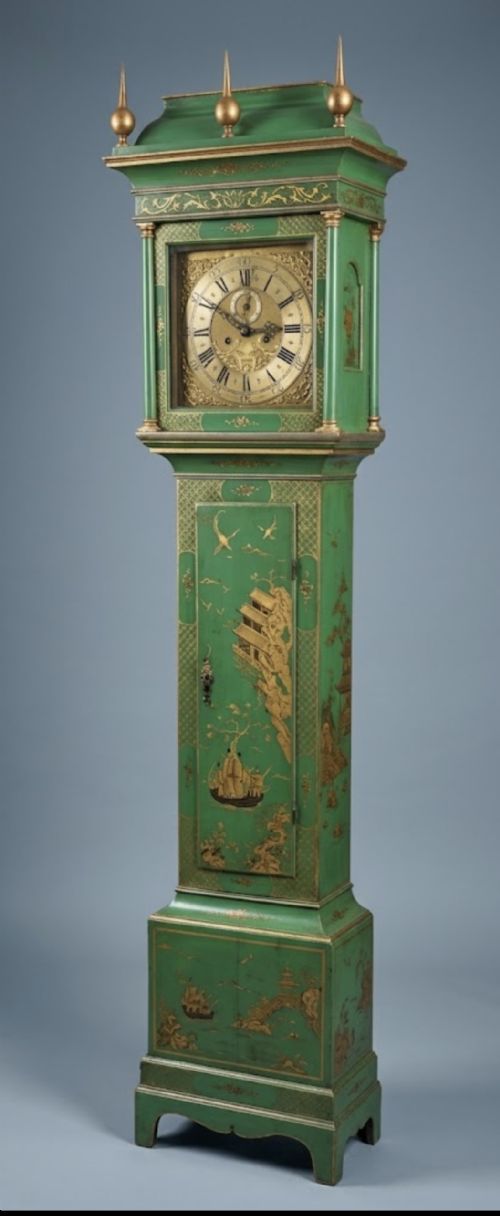
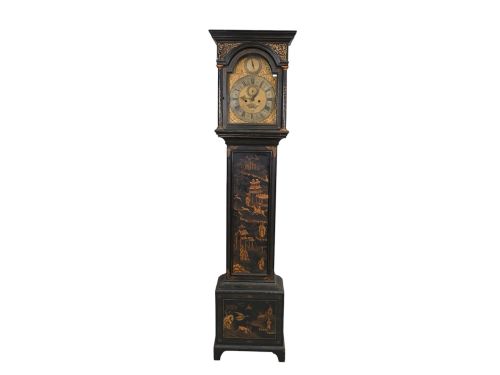
A japanned grandfather clock, also recorded as a longcase clock, combines tall timber housing with intricate painted decoration. These timepieces span the Georgian period, the eighteenth century, and later revivals from nineteen thirty.
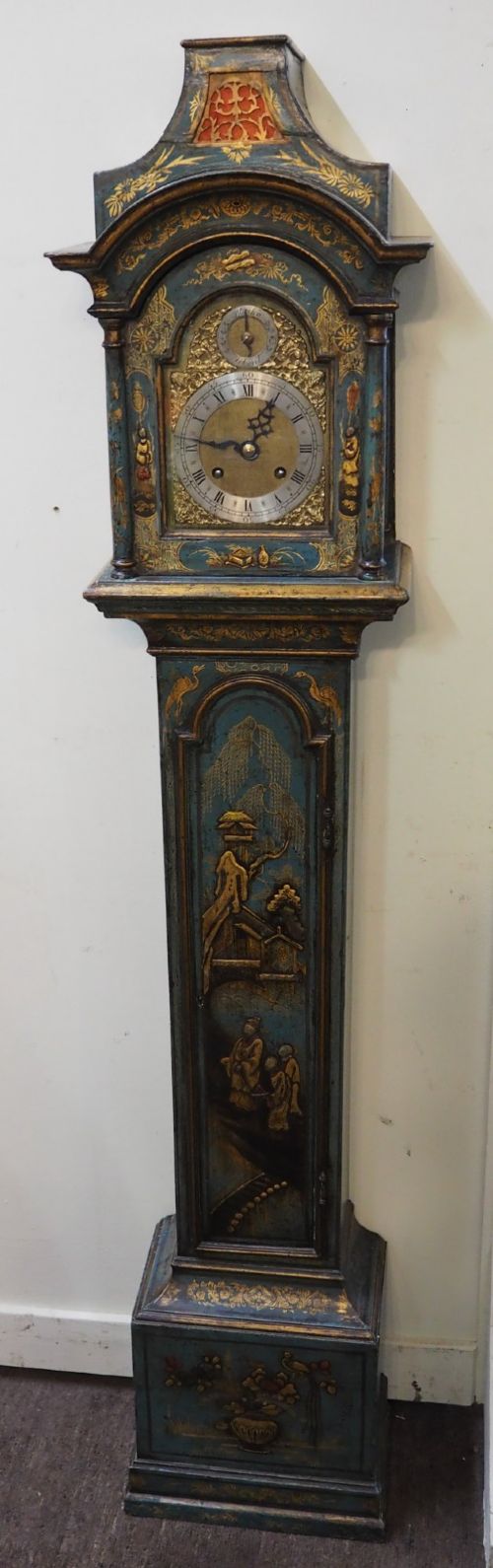
Makers housed these movements in green, blue, dark green, cream, and gilt lacquer finishes. The form appears as full-scale longcase clocks alongside smaller grandmother clocks originating from Scotland and England.
London makers such as William Kipling and provincial makers including John Fielder of Alton signed these brass movements. Examples feature automata, such as rocking Father Time, alongside standard longcase formats.
Materials and construction
Construction relies on wood treated with lacquer and gold leaf to create the distinctive japanned surface. Brass movements drive the timekeeping, protected behind glass dials.
The decorative schemes utilise Chinoiserie motifs painted onto lacquered wood bodies. Craftsmen applied multiple layers of finish to achieve deep green, blue, and cream colourways.
Japanned Grandfather Clock Retail Price Guide 2026
Typical asking prices for japanned grandfather clock among the pieces listed under this phrase on Sellingantiques today, from the lower quarter to the upper quarter. They describe what is for sale here now, not the wider market.
Object forms include standard longcases, grandmother clocks, and automaton clocks featuring moving figures on the dial.
Markers of distinction
Quality rests in the crispness of the Chinoiserie decoration and the depth of the lacquer finish. Signed brass movements by known makers elevate a piece above standard provincial work.
The survival of original painted surfaces without excessive restoration defines the better specimens. Details such as rocking figures within the dial add complexity to the mechanism.
John Fielder of Alton·William Kipling London·Wise of Reading·Thomas Utting of Yarmouth·Gardner of London·Robert Berry
The Japanned Grandfather Clock Glossary
- Japannan
- European imitation of East Asian lacquerwork, applied to furniture using painted and gilt decoration. This technique defines the visual character of these tall timepieces.
- Chinoiserie
- European artistic style reflecting Chinese motifs and landscapes. Artisans painted these scenes onto the wooden cases of longcase clocks.
- Longcase clock
- Tall pendulum clock housed in a wooden case resting on the floor. These items are frequently called grandfather clocks.
- Grandmother clock
- Smaller version of the traditional longcase clock produced in later periods. They share the lacquered finishes of their taller counterparts.
- Automaton
- Moving mechanical figure integrated into the clock dial, such as rocking Father Time. These mechanisms demonstrate advanced clockmaking skill.
Japanned Grandfather Clock: Frequently Asked Questions
What is a japanned grandfather clock?
A japanned grandfather clock is a tall floor-standing timepiece housed in wood decorated with European lacquer and Chinoiserie motifs. These pieces date primarily from the Georgian era and feature brass movements.
Craftsmen finished the timber cases in colours including green, blue, and cream, often highlighting the scenes with gold leaf.
How do I date an 18th century longcase clock?
Dating relies on the style of the lacquered decoration, the signature on the brass dial, and the construction of the wooden case. Eighteenth-century examples often bear the maker's name inscribed on the movement.
Later pieces from the twentieth century reproduce these earlier Chinoiserie aesthetics using similar lacquered wood techniques.
Where were these clocks made?
Production occurred across both London workshops and provincial English towns. Makers signed their brass movements from locations such as Alton, Reading, Yarmouth, and Edinburgh.
London horologists often produced complex movements, while regional makers supplied distinctive local interpretations of the Chinoiserie style.
How do I care for a lacquered clock case?
Protect the lacquered wood surface from direct sunlight and maintain stable room humidity to prevent timber movement. Dust gently with a soft cloth without applying modern chemical polishes.
Professional horologists should service the brass movement periodically to ensure the mechanical parts run correctly.