



Japanese Trinket Box
A Japanese trinket box holds small treasures while showing centuries of skilled metalwork and lacquer craftsmanship.
Japanese Trinket Box
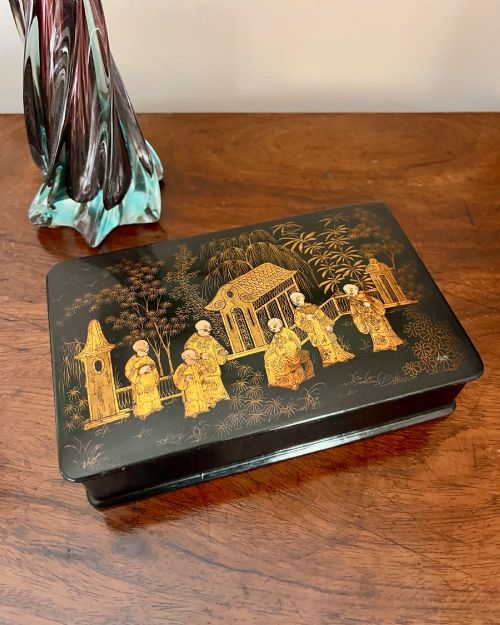
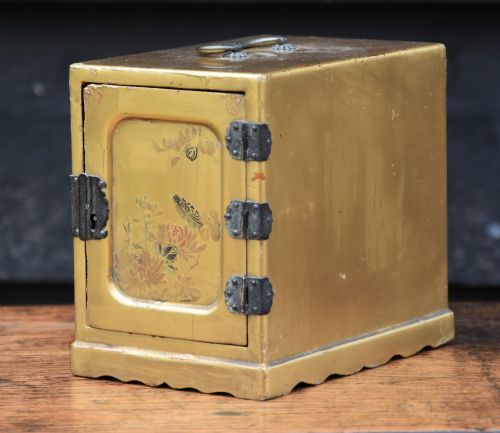
A japanese trinket box encompasses small containers, jewellery cases, and keepsake boxes originating from historical periods like the Meiji and Edo eras. These pieces appear in varied forms such as miniature table cabinets, lidded bowls, and boat-shaped dishes.
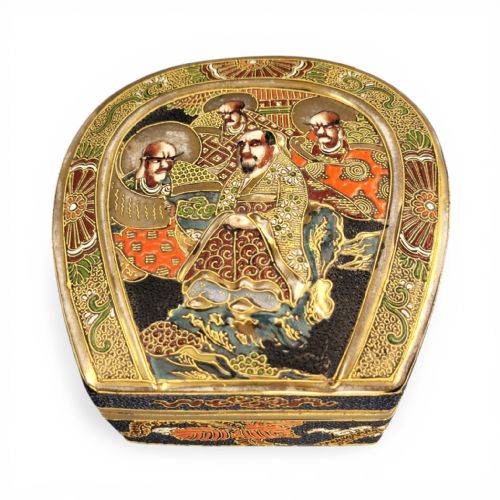
Most examples seen here date from the nineteenth and early twentieth centuries, reflecting traditional craftsmanship. Buyers encounter both lacquerware surfaces decorated with gold leaf and metal vessels featuring cloisonne enamel or mixed metals.
While some items serve specifically as jewellery boxes, others function as decorative jars or sharing boxes. The selection balances delicate earthenware and carved ivory alongside robust bronze and damascened iron.
Materials and Techniques
Maker workshops utilised traditional media including wood, brass, copper, bronze, and earthenware, often elevating simple forms with intricate surface decoration. Lacquer work frequently incorporates gold leaf and mother-of-pearl inlay to create rich visual depth.
Metal vessels display cloisonne enamel, known locally as shippo, alongside mixed metal work involving silver, gold, and bronze applied to the surface. Iron boxes employ Komai style damascening to etch fine metallic patterns into the dark base.
Carved elements on ivory and wood demonstrate precise hand tooling by skilled artisans. These varied construction methods ensure each container possesses a distinct texture and weight.
The listings combine organic media like wood and ivory with hard metals including bronze, brass, copper, and iron.
Distinctions in Quality
The standard of a japanese trinket box rests on the precision of its surface decoration and the integrity of its materials. Finer examples display meticulous gold takamaki-e or complex mixed metal inlay that remains crisp and firmly anchored.
Superior pieces often bear signature marks from recognised makers or workshops, indicating a higher tier of artistry. The depth of the lacquer finish and the uniformity of cloisonne cells further separate standard production from exceptional works.
Toshozan
The Japanese Trinket Box Glossary
- Meiji Period
- A historical era spanning from eighteen sixty-eight to nineteen twelve noted for intense artistic output and opening trade with the West. Many decorative metal and lacquer boxes date from this time.
- Shippo
- The Japanese term for cloisonne enamel work where wire partitions hold coloured vitreous pastes. This technique creates vibrant floral and abstract patterns across metal surfaces.
- Kodansu
- A traditional Japanese small cabinet or chest with doors and drawers designed for holding valuables. These portable units often feature elaborate lacquer and metal fittings.
- Komai Style
- A method of damascening iron with thin threads of gold and silver to depict landscapes or wildlife. This intricate metalwork is characteristic of high-end export items.
- Takamaki-e
- A Japanese lacquer technique where designs are built up in high relief using lacquer mixed with charcoal or metal powder. This process gives the artwork a tangible three-dimensional quality.
Japanese Trinket Box: Frequently Asked Questions
What were japanese trinket boxes used for?
These small containers stored personal valuables, seals, and keepsakes within traditional households. Their portable nature allowed owners to keep cherished items close at hand.
Larger versions functioned as table cabinets or document cases, whilst smaller lidded bowls held incense or delicate personal ornaments.
How do I date a japanese trinket box?
Dating relies on identifying stylistic markers, materials, and manufacturing techniques associated with specific historical eras. Pieces from the Meiji period often display complex mixed metalwork or advanced cloisonne.
Later items from the Taisho period or early twentieth century exhibit shifts in decorative motifs and construction. Examining signatures or maker marks also helps narrow the period of origin.
Are these boxes fragile?
Many materials require careful handling, particularly lacquerware and cloisonne enamel, which can chip upon sharp impact. Ivory and earthenware components also demand gentle treatment.
Displaying them away from direct sunlight and extreme humidity preserves the integrity of the surface decoration and organic inlays.
What is the difference between lacquer and metal boxes?
Lacquer boxes utilise a wooden base coated with refined tree sap, often embellished with gold leaf or mother-of-pearl. They offer a smooth, lightweight finish with deep pictorial scenes.
Metal boxes are constructed from bronze, brass, iron, or copper, providing greater weight and durability. These metal surfaces frequently feature etched damascening or applied enamel cells.