





Enamel Lid Trinket Box
An enamel lid trinket box brings together small metal or glass containers and decorated surfaces, offering a neat home for pins, coins, and keepsakes.
Enamel Lid Trinket Box
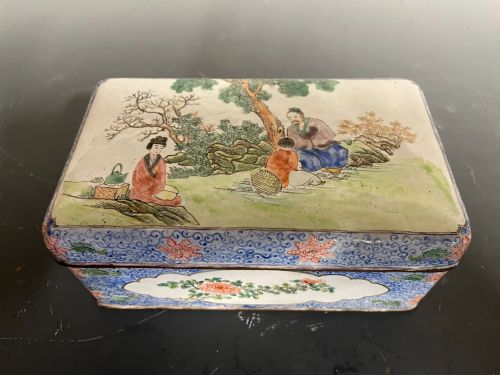
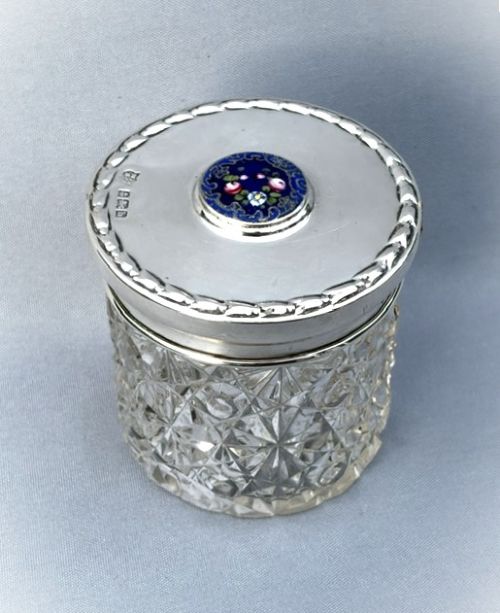
An enamel lid trinket box covers a varied group of small containers designed for dressing tables and desks, spanning periods from the eighteenth century to the mid-twentieth century. The selection includes lidded glass jars, metal boxes with decorated tops, and porcelain vessels.
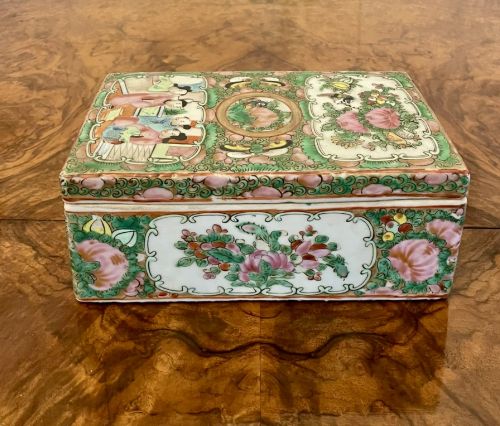
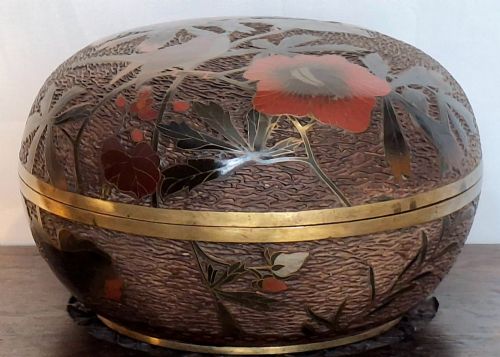
Buyers meet pieces originating from English makers, French workshops, and Asian traditions, including Japanese Meiji cloisonné and Chinese Qing pieces. Forms range from simple round pots to vanity jars and desk boxes.
The defining characteristic across the group is the use of enamel as a decorative panel or lid, paired with materials such as sterling silver, brass, copper, and cut glass.
How they were made
The construction combines metalworking, glassblowing, and ceramic production with glass-based enamel fused to surfaces through heat. Makers utilised sterling silver, brass, and pewter to form the body and mounts, often pairing them with cut or coloured glass and porcelain.
Enamelling techniques vary from the fine painted panels seen on Staffordshire patch boxes to the wire-work cloisonné found in Japanese Meiji period pieces and Chinese boxes. Gilt detailing and gold leaf frequently accent the metal mounts and ceramic rims.
Enamel Lid Trinket Box Retail Price Guide 2026
Typical asking prices for enamel lid trinket box among the pieces listed under this phrase on Sellingantiques today, from the lower quarter to the upper quarter. They describe what is for sale here now, not the wider market.
What varies in quality
Quality rests upon the precision of the enamel work, the weight and purity of the metal mounts, and the clarity of any glass or porcelain body. Hand-painted detail and crispness in the metal casting separate finer examples from standard production pieces.
The integrity of the fused enamel surface and the snug fit of the lid dictate the condition of a piece, while hallmarks on silver mounts provide clear maker and date attribution.
The Enamel Lid Trinket Box Glossary
- Cloisonne
- Enamelling technique where thin metal wires form compartments on a metal base to hold coloured glass paste before firing. This method creates detailed patterns of birds, flowers, and geometric designs.
- Patch box
- A small eighteenth-century container originally used for holding cosmetic beauty patches for the face. These boxes frequently feature copper bases with hinged enamel lids.
- Sterling silver
- A silver alloy containing ninety-two point five percent silver by mass, commonly used for the rims, lids, and mounts of dressing table jars.
- Famille rose
- A palette of Chinese porcelain enamels dominated by opaque pink introduced during the Qing dynasty. Pieces decorated in this style often feature floral and figural scenes.
- Bilston enamel
- Eighteenth-century enamels produced in the Staffordshire town of Bilston, known for copper boxes with painted lids. These items served as small gifts and trinket containers.
Enamel Lid Trinket Box: Frequently Asked Questions
What were enamel lid trinket boxes used for?
These small containers held pins, rings, coins, and cosmetic patches on dressing tables and desks. Their lidded designs kept delicate items secure and dust-free.
Wealthy owners used them as personal accessories or display pieces in private rooms and parlours throughout the eighteenth and nineteenth centuries.
How do I date an antique box?
Silver mounts often carry hallmarks that reveal the exact year and city of manufacture, such as London or Birmingham stamps. Stylistic clues like Art Deco geometries or Georgian hand-painted scenes also indicate the period.
Materials and construction techniques, such as copper bases or cloisonné wire, help narrow down the origin and decade.
How should I clean and care for them?
Dust the surface gently with a soft, dry cloth and avoid submerging pieces with hinged lids or paper linings in water. Enamel and glass require mild care to protect the fired glass surface.
Keep silver mounts polished with a suitable non-abrasive cloth, taking care not to rub cleaning agents directly onto painted enamel panels.
Are all these boxes English?
The selection includes pieces from varied geographic origins, including French porcelain, Japanese Meiji cloisonné, and Chinese Qing dynasty boxes. English examples range from Staffordshire enamel lids to Edwardian dressing table jars.
Each region employed distinct materials, from cut glass and pewter to copper and fine porcelain.