




Japanese Tea Table
These Japanese tea table pieces bring low forms and intricate woodwork into a room, offering a distinct surface for daily use.
Japanese Tea Table
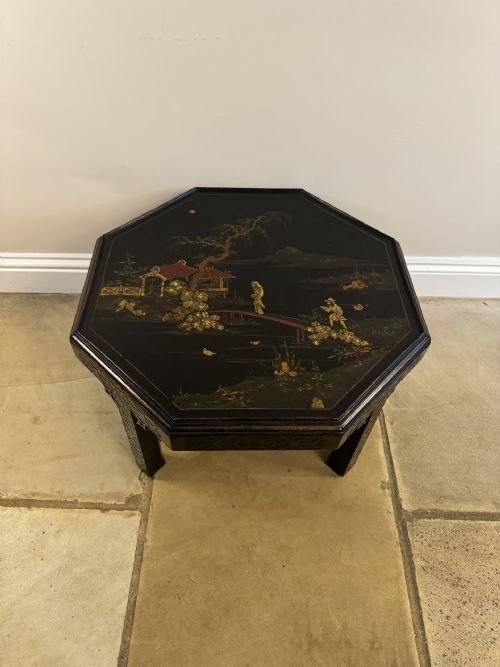
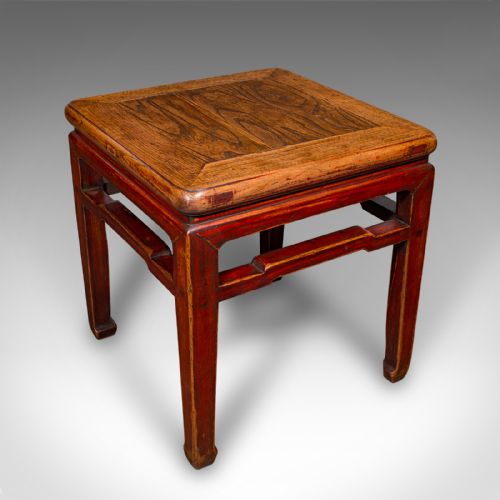
A japanese tea table search uncovers low kneeling forms alongside occasional tables, side tables, and coffee tables influenced by eastern design. Buyers encounter pieces from the late nineteenth century through the early twentieth century, spanning Victorian and Edwardian interpretations as well as traditional formats.
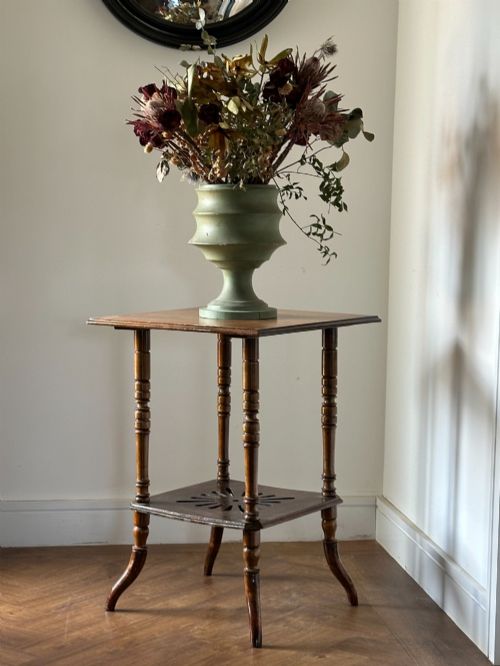
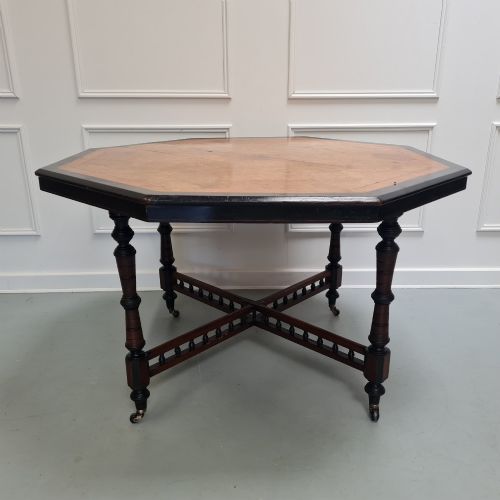
The selection ranges from low elm chabudai tables designed for kneeling to octagonal centre tables, card tables, and hibachi tables adapted for modern rooms. Hardwoods, ebonised wood, and lacquer dominate the physical forms seen across these listings.
Materials and construction methods
Construction relies heavily on hardwood, elm, walnut, and ebonised wood, often enhanced by carved details and crossbanded surfaces. Artisans incorporated copper, iron, and brass fittings, occasionally setting cloisonne enamel panels directly into the table top.
Lacquering techniques provide smooth, polished finishes on wood bodies, while traditional joinery supports low kneeling tables and multi-tiered occasional furniture without relying on modern fasteners.
Tea storage boxes from the archive double as miniature architectural cabinets, proving that nineteenth-century tea culture appreciated containment on every possible scale.
Distinguishing quality in construction and design
Quality separates simple imported novelties from substantial pieces through the selection of timber, such as dense rosewood or seasoned elm, and the precision of hand-carved ornamentation. Finer examples display crisp inlay work, secure joinery, and well-integrated metal or enamel panels.
Design cohesion also marks superior pieces, where movement styles like the Aesthetic Movement or Edwardian chinoiserie decoration are executed with balanced proportions rather than superficial surface pattern application.
Liberty & Co.
The Japanese Tea Table Glossary
- Chabudai
- A traditional low Japanese table used for kneeling while drinking tea or eating meals. These low-profile wooden pieces sit close to the floor.
- Hibachi
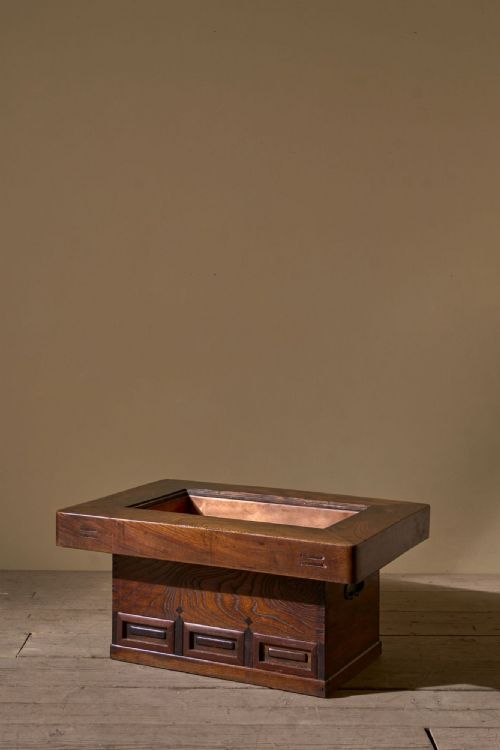
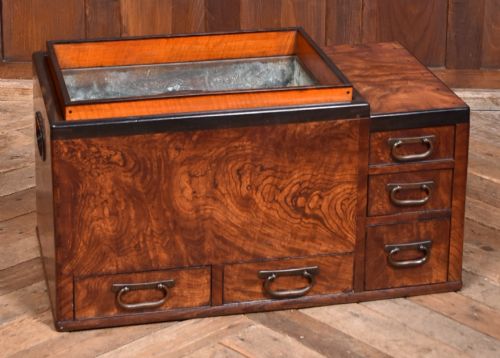
- A traditional Japanese heating device or container that was often adapted into a table format. These pieces feature metal inserts like copper or iron within a wooden frame.
- Aesthetic Movement
- A late nineteenth-century design style emphasising visual beauty over narrative content, heavily influenced by Japanese art and craftsmanship. It frequently employs ebonised wood and clean structural lines.
- Cloisonne
- An enamelwork technique where metal wire forms compartments on a surface, which are then filled with coloured paste and fired. Inset panels of this work appear on table tops in this category.
- Chinoiserie
- European artistic interpretation and imitation of Chinese and East Asian artistic traditions, popular in English furniture during the Edwardian period. It often involves decorated or painted surfaces.
Japanese Tea Table: Frequently Asked Questions
What is a chabudai table?
A chabudai is a traditional low table from Japan designed for use while kneeling on the floor. These pieces function well as low coffee tables in contemporary seating arrangements.
They offer a compact footprint and are typically constructed from woods like elm, reflecting the domestic habits of the Meiji period.
How do I style a hibachi table?
Hibachi tables include a built-in metal basin, originally used for charcoal heating, which can now be displayed as a feature or covered with a glass top. They work effectively as low centre tables or distinct occasional surfaces.
Their unusual inserts provide a focal point that suits eclectic interiors and rooms featuring Aesthetic Movement decor.
Are these tables purely decorative?
While many examples feature intricate carving, lacquer, and cloisonne enamel panels, they were built as functional furniture. Side tables, card tables, and coffee tables serve everyday domestic purposes.
Careful placement and thoughtful use help integrate these historic surfaces into modern daily life without risking delicate finishes.
How do I identify Meiji period pieces?
Meiji period items often combine traditional Japanese woodworking forms with export styles suited to Western homes of the late nineteenth century. Look for characteristic woods, traditional joinery, and specific decorative motifs.
Evidence in this category points to low kneeling tables and detailed occasional furniture produced during this era of expanding international trade.