


Japanese Satsuma Dish
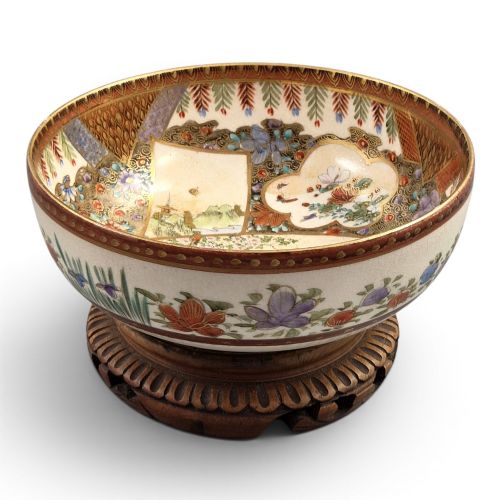
A japanese satsuma dish brings the intricate hand-painted narratives of the Meiji period into your home through finely cracked earthenware.
Japanese Satsuma Dish
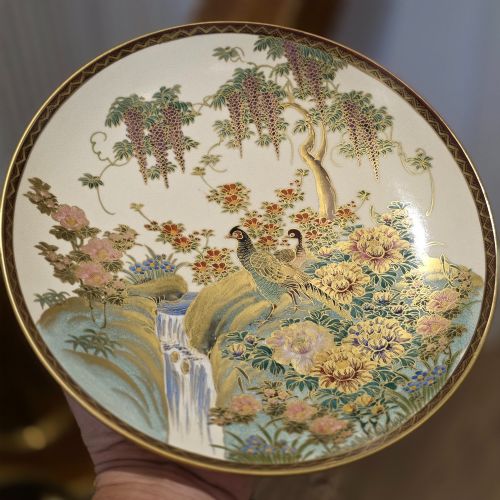
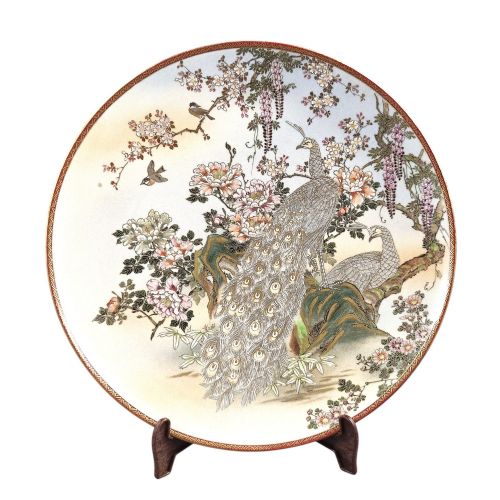
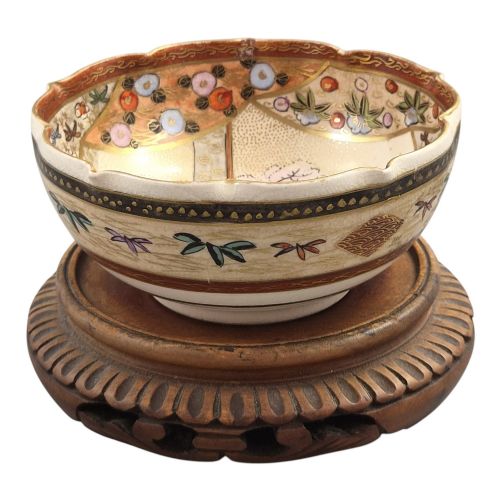
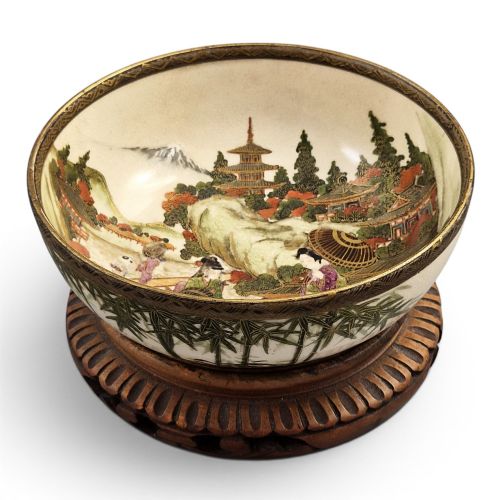
A japanese satsuma dish forms part of a rich tradition of earthenware pottery that collectors prize for dense pictorial decoration. These pieces mostly date from the nineteenth century and the Meiji period, appearing as shallow plates, chargers, and bowls.
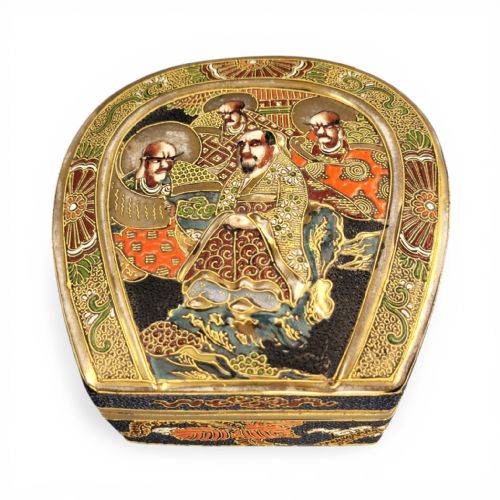
You will frequently encounter round plates and decorative bowls painted with elaborate scenes of figures, birds, and flowers. Makers often employed rich palettes enriched with enamel and gold gilt to portray traditional Japanese subjects.
The objects span domestic table wares and larger display chargers created for export. Their enduring appeal lies in the miniature precision of the brushwork across the cream-coloured, craquelure glaze.
Materials and Construction
Potters built each japanese satsuma dish using a porous earthenware body covered in a distinctive milky glaze that crazes upon cooling. This network of fine cracks accepts subsequent colouring agents to create the characteristic textured surface.
Artists applied detailed designs using mineral enamels supplemented by gold leaf and gilt work. Certain workshops also utilised raised moriage decoration to give specific elements of the pattern a tactile, three-dimensional quality.
Evaluating Quality and Craftsmanship
Quality rests primarily on the discipline of the brushwork and the density of the narrative painting. Finer examples display meticulous control in multi-figure scenes and botanical motifs without crowding the composition.
The application of gold gilt and enamel relief distinguishes standard production from masterwork output. Superior pieces balance vibrant colour with disciplined restraint across the earthenware surface.
Koshida·Gyokkō·Kozan·Toshozan·Kinkozan·Shuzan·Yasuda·Nikko·Hododa·Meizan·Yabu Meizan·Seikozan·Gyokuzan
The Japanese Satsuma Dish Glossary
- Satsuma
- A type of Japanese earthenware originating from Satsuma Province, known for its pale crackle-glazed body. It became the canvas for elaborate polychrome and gilt painting during the nineteenth century.
- Meiji Period
- The era in Japanese history spanning from eighteen sixty-eight to nineteen twelve. This period produced the finest and most prolific painted ceramics for international export.
- Moriage
- A ceramic technique using piped clay to build up raised decorative patterns. It adds a distinct textural relief beneath the enamel and gold highlights.
- Gilt
- Application of gold or gold-coloured material to highlight details in the design. It catches the light across the rim and main decorative panels.
- Charger
- A large ornamental plate intended for display rather than dining. These pieces showcase the most ambitious pictorial scenes.
Japanese Satsuma Dish: Frequently Asked Questions
Were these dishes meant for daily use?
Most surviving examples were created for display or export rather than practical dining. The porous earthenware and fragile enamel decoration suited decorative cabinets.
Larger chargers and shallow plates functioned primarily as visual centrepieces in Western and Japanese interiors.
How can I tell the period of a piece?
Examine the signature or crest on the base alongside the style of painting and the fineness of the glaze. Nineteenth-century pieces typically feature detailed hand-written artist marks.
Compare the subject matter against known Meiji period motifs to narrow down the decade of production.
What is the craquelure on the surface?
Craquelure is the intentional network of fine cracks in the milky glaze of earthenware pottery. It forms naturally during the cooling process.
Artists often enhanced these lines with subtle staining to accentuate the age and texture of the ceramic body.