

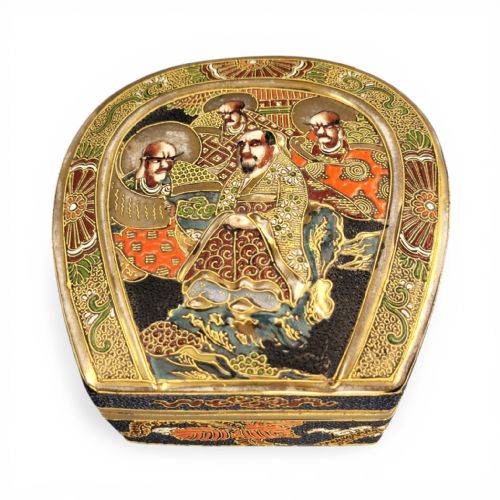


Gilded Satsuma Dish
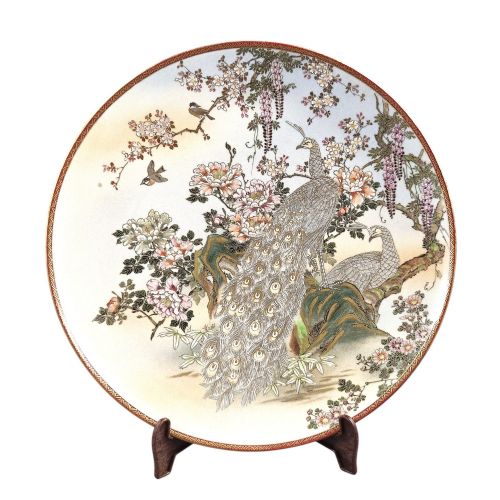
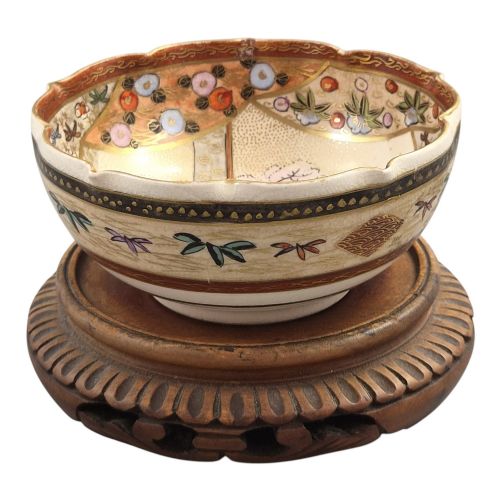
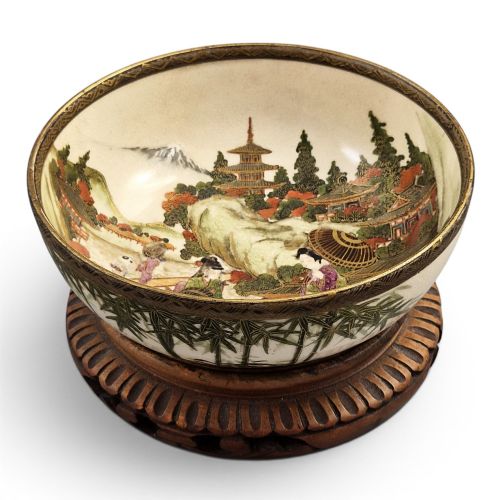
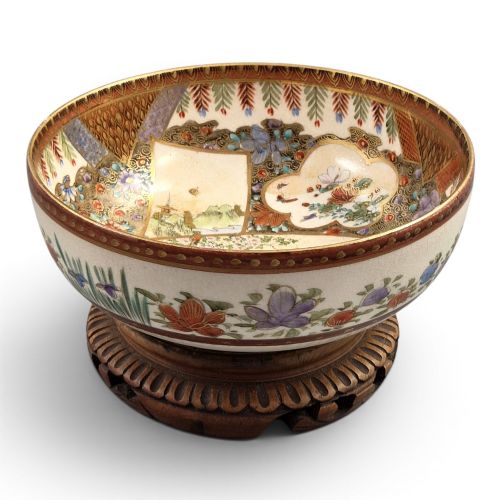
These gilded satsuma dish examples offer intricate Japanese ceramic artistry enriched with gold leaf and detailed enamel work.
Gilded Satsuma Dish
A gilded satsuma dish brings traditional Meiji period Japanese craftsmanship into domestic spaces through earthenware vessels decorated with fine enamel and gold leaf. The items seen on this page span the nineteenth century, nineteen hundred, nineteen ten, Victorian, and Edwardian periods.
The selection ranges from chargers and decorative plates to small bowls, saucers, trinket boxes, and shallow dishes. Many pieces originate from specific production centres such as Kyoto and Yokohama, reflecting distinct regional output.
Buyers encounter forms that display elaborate figurative scenes, floral motifs including wisteria and peonies, and dense thousand flowers patterns. These objects serve primarily as decorative items rather than functional tableware.
Materials and construction
Potters formed these items from earthenware, applying an ivory-crackled glaze as the foundation for subsequent decoration. Artisans then used enamel paint to build up colourful pictorial or abstract subjects across the surface.
Gold leaf and gilt work were applied to highlight borders, backgrounds, and specific details within the painted compositions. Wood elements occasionally appear in associated components or displays, though ceramic and enamel dominate the physical structure.
Object forms catalogued here include decorative bowls, plates, chargers, trinket boxes, and saucers originating from workshops in Kyoto and Yokohama.
Assessing quality and execution
The precision of the brushwork and the complexity of the enamel and gilt application separate standard production from superior examples. Master workshops employed skilled painters whose control over fine lines and facial expressions remains notably crisp.
Signed pieces by recognised makers often demonstrate a higher grade of artistic execution and material finish than unsigned alternatives. The density and registration of decorative elements, such as moriage relief work and thousand flowers patterns, also indicate the level of care taken during production.
Koshida·Kozan·Toshozan·Shuzan for Yasuda·Hododa
The Gilded Satsuma Dish Glossary
- Satsuma
- A type of Japanese earthenware featuring an ivory-coloured, crackled glaze that originated in Satsuma Province. It later expanded to major production centres like Kyoto and Yokohama.
- Moriage
- A decorative technique where slip is piped onto the ceramic surface to create raised relief patterns before glazing and gilding. This method adds tactile dimension to floral and avian motifs.
- Meiji Period
- The era in Japanese history spanning from eighteen sixty-eight to nineteen twelve, characterised by extensive export trade and intricate decorative arts. Pieces from this time often exhibit elaborate gold work.
- Charger
- A large decorative plate intended for display on a wall or stand rather than for serving food. These items frequently feature complex figural or landscape scenes.
- Millefleur
- A dense surface pattern composed of thousands of tiny painted flowers covering the entire vessel. This French term translates to thousand flowers and describes specific intricate Satsuma styles.
Gilded Satsuma Dish: Frequently Asked Questions
What is a gilded satsuma dish?
A gilded satsuma dish is a Japanese earthenware ceramic decorated with enamel and gold leaf, originating mainly from the Meiji period. These decorative pieces feature detailed painted scenes of flowers, birds, and figures.
They were created primarily for export and display, reflecting the intense cross-cultural exchange between Japan and the West during the late nineteenth and early twentieth centuries.
How do I identify a Meiji period piece?
Meiji period items often feature dense hand-painted polychrome enamels combined with extensive gilding, depicting traditional Japanese subjects. Many superior examples carry artist signatures or workshop seals on the underside.
The use of earthenware with a fine, ivory-crackled glaze is another primary indicator of authentic Satsuma ware from this era.
Were these dishes used for dining?
These vessels were made for decorative display rather than daily dining or food service. The soft earthenware body and delicate surface enamel make them unsuitable for practical table use.
Chargers, shallow dishes, and bowls were designed to be showcased on stands or hung on walls.