




Japanese Relief Urns
These Japanese relief urns bring dynamic metalwork and rich ceramic forms directly from the Meiji era into contemporary spaces.
Japanese Relief Urns
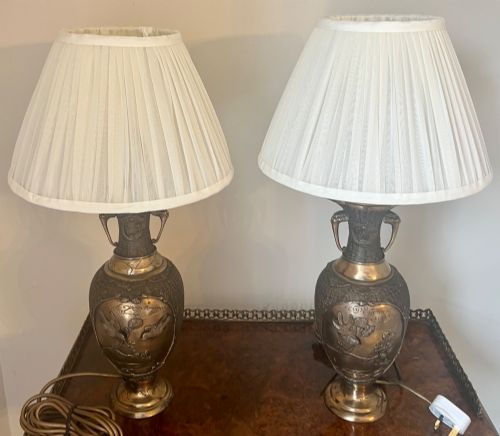
When you search for japanese relief urns, you encounter substantial metal vessels, ceramic jardinieres, and sculptural vases originating primarily from the late nineteenth and early twentieth centuries. These objects span the Meiji, Edo, and Showa periods, capturing a diverse range of traditional aesthetics.
Originating from distinct periods of Japanese craftsmanship, these pieces reflect the intricate metalworking traditions and ceramic innovations that reached Western markets during the Victorian era and beyond.
How they were made
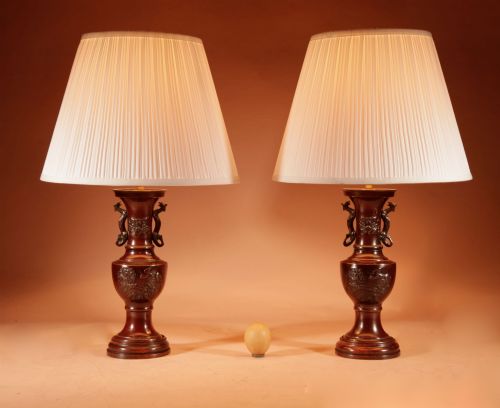
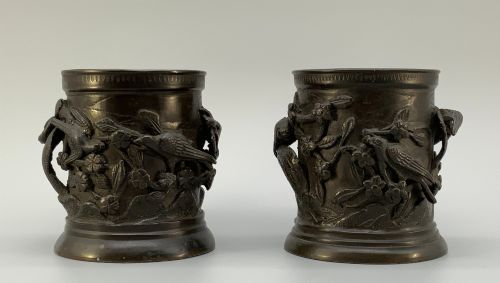
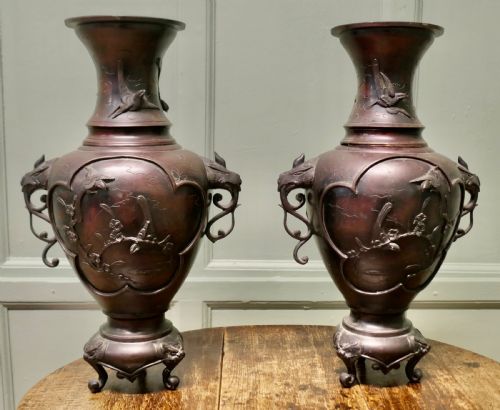
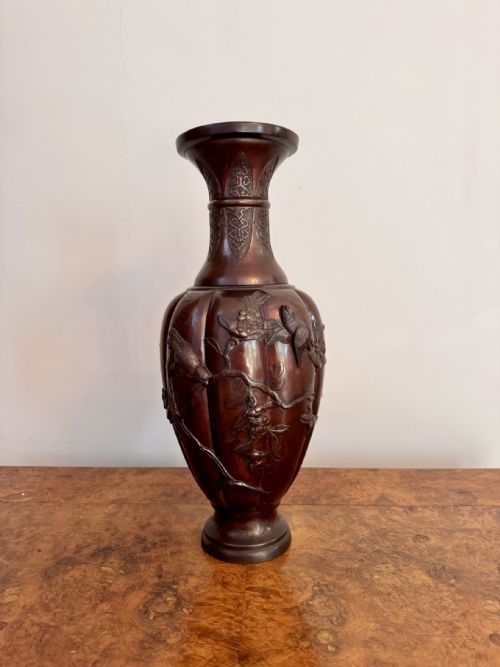
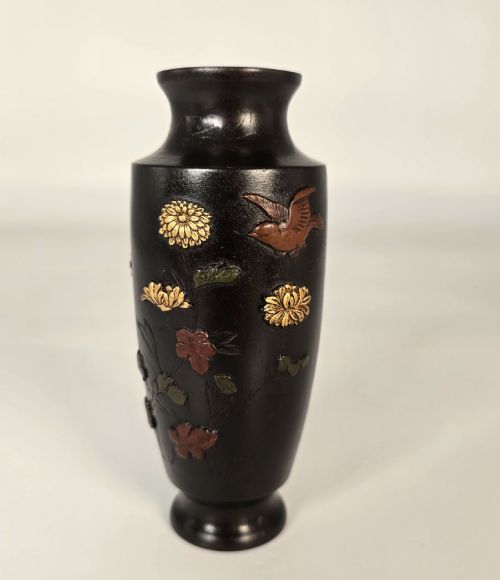
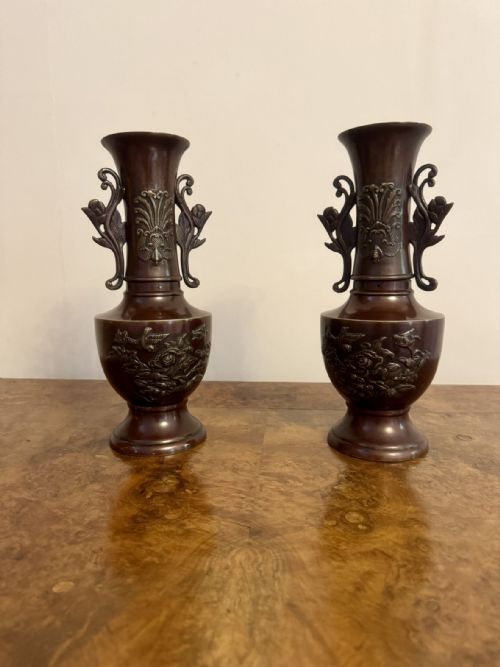
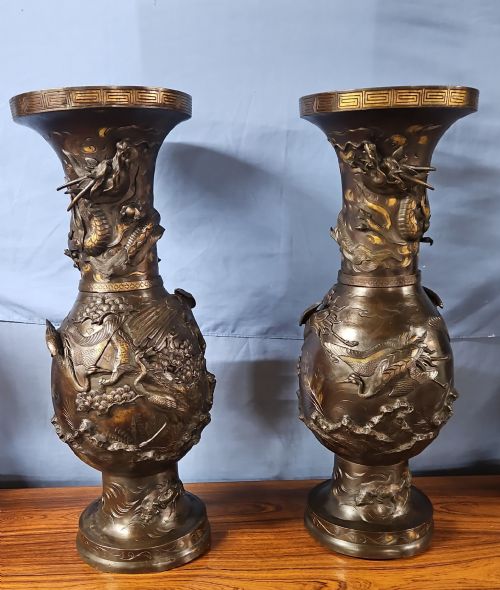
Metal vessels in this collection rely on casting techniques using bronze, brass, and copper, frequently enhanced through patination and mixed metal applications. Artisans integrated contrasting metals to highlight raised botanical and avian details against dark patinated surfaces.
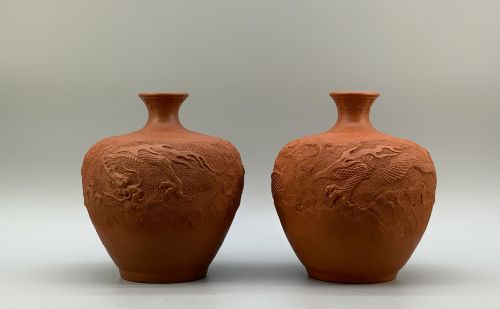
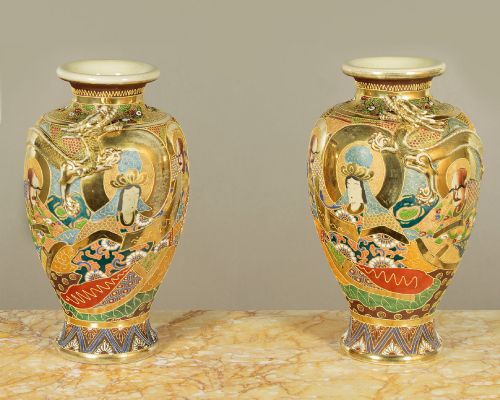
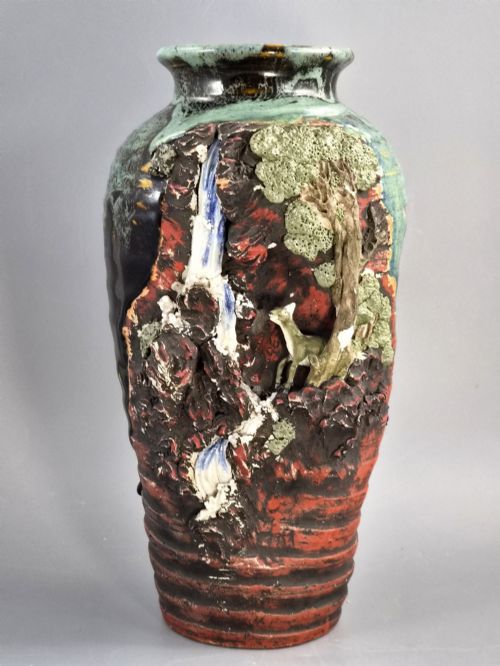
Ceramic pieces utilise stoneware, red clay, and porcelain bodies, often finished with elaborate glazes or sculptural additions. Stoneware jardinieres and earthenware vases employ moulded or hand-modelled relief elements depicting landscapes, dragons, and figures.
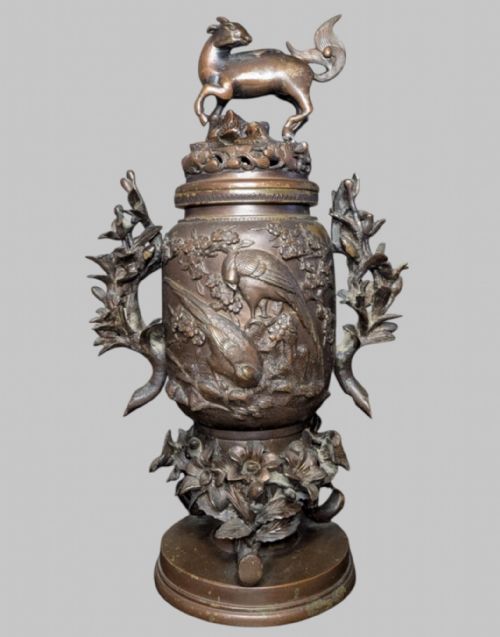
A goat finial presides over one antique bronze incense burner, keeping watch from above.
What varies in quality
The standard of metalwork distinguishes superior examples, marked by the crispness and depth of the raised relief ornament. Finer specimens display meticulous hand-finishing on mixed metal inlays and balanced proportions across large bronze forms.
Artistic execution in the sculptural details determines overall merit. Pieces bearing signatures from established makers demonstrate exceptional mastery in translating natural subjects into enduring bronze and ceramic compositions.
Makuzu Kozan II
The Japanese Relief Urns Glossary
- Meiji
- The period in Japanese history spanning from eighteen sixty-eight to nineteen twelve, characterised by extensive artistic production and international trade. Works from this era frequently exhibit high technical proficiency in metalwork and ceramics.
- Patinated Bronze
- Metal treated with chemical solutions to produce a specific surface colour and aged appearance. This finish protects the bronze while accentuating the raised details of the design.
- Mixed Metal
- A technique involving the combination of different metals such as copper, brass, and silver on a bronze ground. It creates contrasting colour highlights within the relief decoration.
- Jardiniere
- A large ornamental pot or planter designed to hold growing plants. These objects appear in bronze and stoneware formats with decorative surface relief.
- Baluster
- A vertical architectural form featuring a rounded lower body tapering to a narrower neck. Many of the vases and urns adopt this balanced silhouette.
Japanese Relief Urns: Frequently Asked Questions
How do I identify a Meiji period piece?
Meiji period metalwork and ceramics typically display dense, highly detailed relief decoration and substantial weight. Look for traditional motifs such as birds, blossoms, and landscapes executed with high technical precision.
Signatures or artisan marks frequently appear on the base or body of finer bronze and ceramic works from this era.
What is mixed metal decoration?
Mixed metal work involves inlaying contrasting elements of copper, brass, or silver into a primary bronze surface. This technique adds distinct colour variation to raised floral and animal scenes.
Artisans utilised this method to create depth and visual contrast without relying on paint or enamel.
Where were these urns originally displayed?
These decorative vessels were created for both domestic Japanese interiors and the expanding export market in Europe and America during the late nineteenth century. Large bronze vases and jardinieres often occupied prominent spaces in Victorian reception rooms.
Smaller vessels functioned as table ornaments, stem vases, or functional incense burners within refined decorative schemes.
How should I care for patinated bronze?
Dust patinated bronze surfaces gently with a soft, dry cloth to prevent the accumulation of particles. Avoid using metal polishes or chemical cleaners, as these substances strip away the historic patination.
Keep the pieces away from direct moisture and extreme temperature fluctuations to preserve the stability of the metal and any mixed metal inlays.