
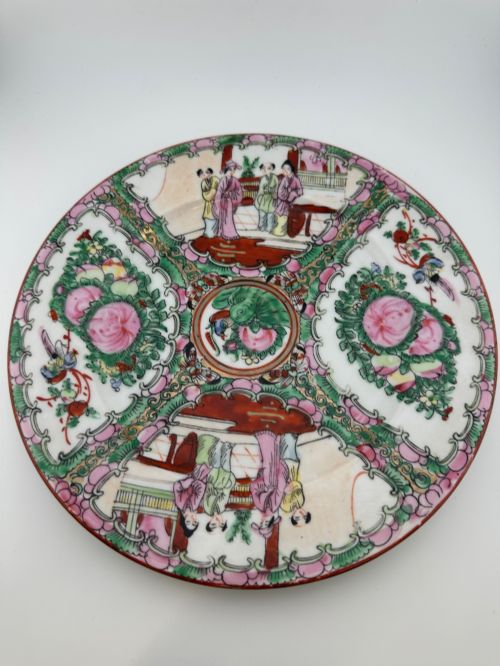



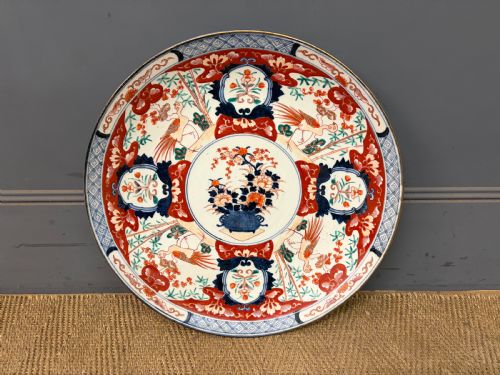
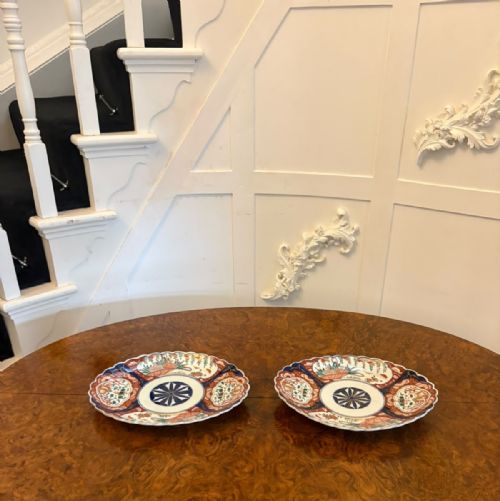
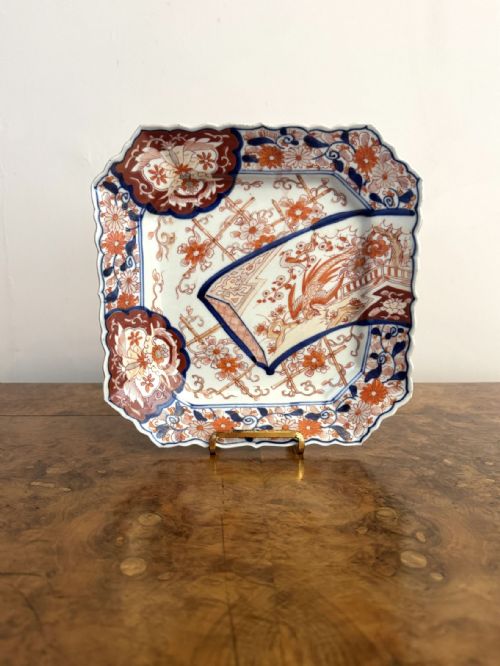
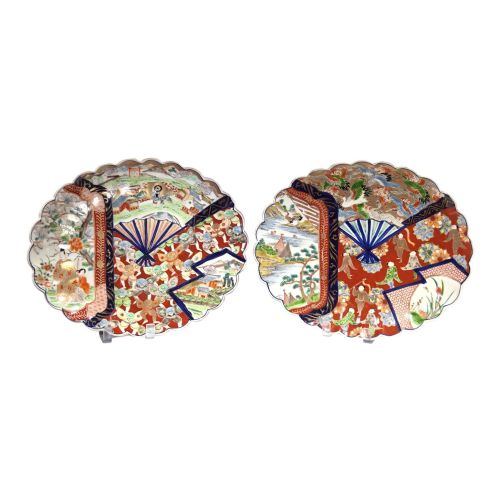


Japanese Porcelain Wall Platter
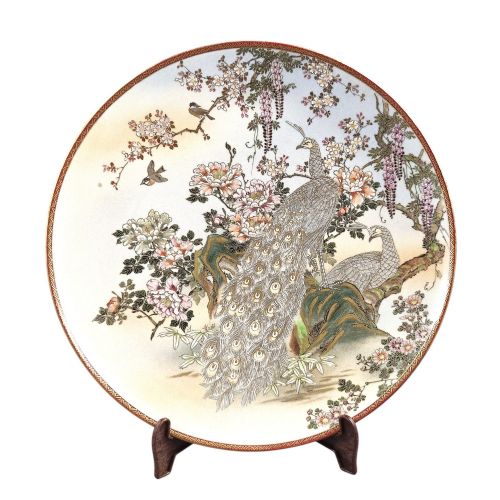
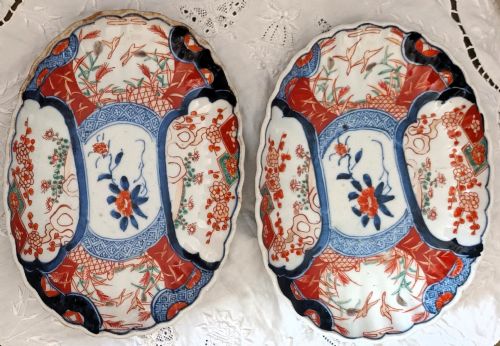
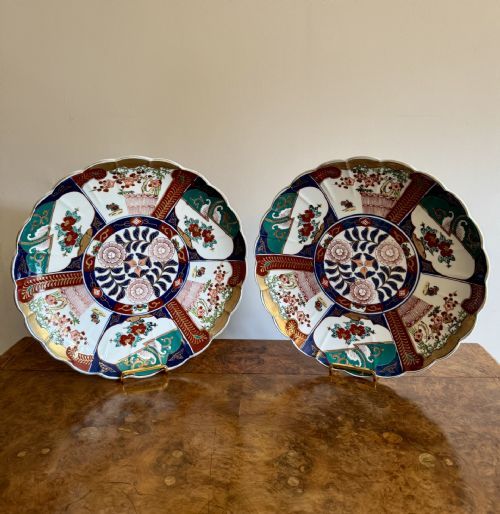
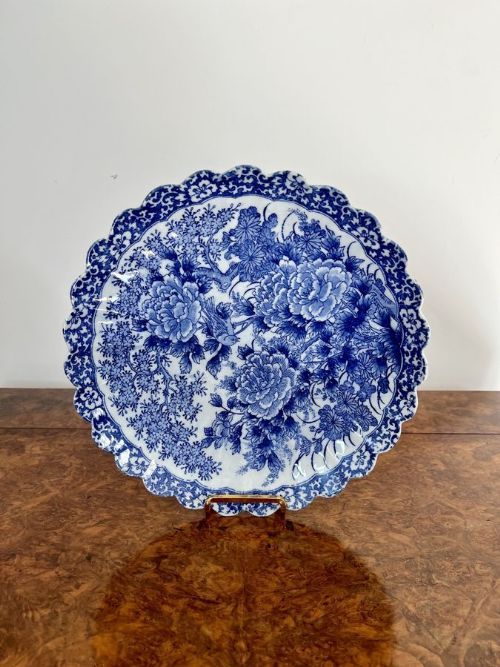
A japanese porcelain wall platter brings intricate hand-painted palettes and substantial forms to interior display spaces.

Japanese Porcelain Wall Platter
Most examples originate from the Meiji period and the broader nineteenth century, with occasional earlier Edo period pieces appearing. Forms range from traditional circular chargers to square, octagonal, fan-shaped, and scalloped plates.
These items were created primarily for decorative purposes, utilising substantial porcelain bodies that allow for expansive painted scenes. Buyers encounter both single chargers and matched pairs depicting traditional motifs like the Seven Lucky Gods, koi carp, and botanical subjects.

How they were made
Potters shaped high-fired ceramic and porcelain bodies into broad circular or geometric plates before applying cobalt underglaze details. Artisans then overlaid complex enamel pigments and gold leaf accents to achieve the rich visual depth characteristic of these works.
Certain specialised pieces incorporate moriage raised enamel techniques or employ cloisonne tree bark effects upon the porcelain surface. Hand-painting remains the primary decorative method across the inventory, executed with fine brushwork on glazed surfaces.
Several heavy chargers depict serene koi carp swimming alongside fierce mythological deities.
What varies in quality
Differentiation in quality rests upon the precision of the hand-painted brushwork and the complexity of the compositional layout. Finer examples display meticulous control over the cobalt underglaze and rich application of enamel and gilt detailing.
The sophistication of the form also dictates the tier of the piece, with standard circular chargers sitting alongside unusual square, octagonal, and fan-shaped plates. Superior items exhibit crisp moulding, balanced colour palettes, and well-executed figurative or naturalistic subjects.
The Japanese Porcelain Wall Platter Glossary
- Imari
- A style of Japanese porcelain decorated in underglaze blue, iron red, and gold. This palette dominates the chargers and plates found in this category.
- Kutani
- A traditional style of Japanese coloured porcelain noted for bold pictorial designs. Pieces in this category include large chargers bearing this designation.
- Meiji Period
- The era of Japanese history lasting from 1868 to 1912. Many decorative plates and chargers on this page date from this period.
- Charger
- A large decorative plate intended for display rather than table service. These form the core of the wall-hanging porcelain available here.
- Totai Shippo
- A technique where cloisonne enamel is applied directly onto a porcelain body. This creates textured surfaces such as tree bark designs on the charger.
Japanese Porcelain Wall Platter: Frequently Asked Questions
How do I hang a heavy charger?
These porcelain pieces require robust wall fixings designed to support substantial ceramic weight safely. Use specialist spring-loaded plate hangers with protective coated tips to secure the rim.
Ensure the mounting anchor engages directly with wall studs or appropriate masonry fixings. Check the wire or bracket integrity periodically to maintain secure display.
What is the difference between Imari and Kutani?
Imari porcelain typically relies on a distinct combination of cobalt blue, iron red, and gilt highlights arranged in intricate geometric and floral patterns. The palette is bright and highly contrasting across the surface of the plate.
Kutani wares often feature bolder pictorial scenes with heavier emphasis on green, purple, yellow, and red enamel tones. Both styles produce striking wall platters but utilise different decorative vocabularies.
How can I date a Meiji period plate?
Meiji period porcelain dates between 1868 and 1912, aligning with the reign of the Emperor Meiji. Pieces from this era often exhibit confident hand-painted motifs and refined cobalt underglaze.
Examination of the foot ring, glaze pooling, and stylistic execution helps separate these nineteenth-century items from later twentieth-century productions. Signatures on the reverse can also provide specific artisan context.
Were these plates meant for dining?
Large chargers and decorative platters served primarily as ornamental display pieces in traditional settings rather than functional tableware. Their generous diameters and elaborate painted surfaces made them suitable for viewing on walls or stands.
The absence of cutlery wear on many surviving examples confirms their intended role as decorative interior objects.