

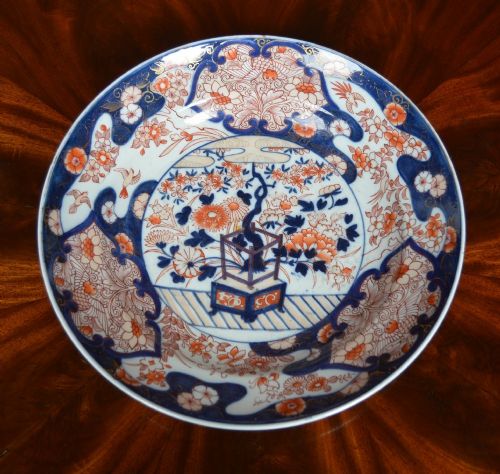


Japanese Porcelain Wall Plaque
A Japanese porcelain wall plaque brings vibrant Meiji period colour and intricate Imari patterns directly to your interior walls.

Japanese Porcelain Wall Plaque
A japanese porcelain wall plaque typically takes the form of a large decorative charger or plate created for display. These pieces originate predominantly from the Meiji period and the late nineteenth century, capturing the height of traditional ceramic artistry.
Buyers encounter everything from standard Imari plates to monumental chargers decorated with dragons or phoenix motifs. Most examples utilise traditional hanging or display methods suited for prominent wall placement.
Manufacturing and Materials
Potters shaped these heavy porcelain chargers by hand before applying detailed hand-painted mineral pigments. Artisans then incorporated rich gold leaf and gold gilt highlights to accentuate intricate floral and fauna motifs.
Specialised techniques such as Totai shippo combined porcelain bases with cloisonne enamel or applied copper wire to create textured tree bark effects. Cinnabar lacquer was also utilised on specific architectural wall pieces to build raised decorative relief.
Japanese Porcelain Wall Plaque Retail Price Guide 2026
Typical asking prices for japanese porcelain wall plaque among the pieces listed under this phrase on Sellingantiques today, from the lower quarter to the upper quarter. They describe what is for sale here now, not the wider market.
The listings feature porcelain, enamel, gold leaf, and copper materials across Victorian and Meiji period examples.
Judging Quality and Execution
Superior examples demonstrate exceptional brushwork control in hand-painted motifs and precise application of gold leaf gilding. Finer pieces command attention through balanced composition and deep, stable enamel firing rather than rushed production.
Unusual techniques like Totai shippo or integrated cloisonne elements elevate a charger beyond standard Imari output. The depth of the carved lacquer and the complexity of the subject matter distinguish exceptional masterworks from standard decorative plates.
The Japanese Porcelain Wall Plaque Glossary
- Imari
- A traditional style of Japanese porcelain featuring distinctive blue underglaze and red overglaze with abundant gold gilt highlights. This palette defined much of the export ware seen during the Meiji period.
- Charger
- A large decorative plate intended primarily for display on a wall or sideboard rather than dining use. These substantial vessels often measure over forty centimetres across.
- Totai
- A specialised technique where enamel or cloisonne wire is applied directly onto a porcelain body. It creates a tactile, textured surface resembling metalwork or carved wood.
- Cloisonne
- An enamelling method utilising thin metal wires to form individual compartments for coloured pastes. Firing fuses the vitreous enamel permanently to the underlying structure.
- Meiji Period
- The historical era in Japan spanning from eighteen sixty-eight to nineteen twelve, marked by extensive international export of fine decorative arts. Pieces from this time often exhibit remarkable technical ambition.
Japanese Porcelain Wall Plaque: Frequently Asked Questions
How do I hang a heavy charger?
Large porcelain chargers require dedicated wall brackets with protective coated wire to distribute the weight safely. Ensure the fixing secures directly into a wall stud or uses appropriate masonry anchors.
Avoid standard spring-loaded plate hangers that lack the structural depth needed for monumental nineteenth-century chargers.
Are these pieces signed by makers?
Certain large chargers feature painted or incised artist signatures on the reverse or base. These signatures often indicate workshop production from the Meiji period rather than an individual master.
Unsigned pieces remain common and were produced in high quantities specifically for Western export markets.
What is Totai shippo porcelain?
Totai shippo describes a hybrid technique where artisans applied cloisonne enamel work directly onto a fired porcelain foundation. This method combined ceramic painting with raised metallic wire cells.
The resulting surface mimics the appearance of metal-based cloisonne while retaining a porcelain core.