



Japanese Porcelain Punch Bowl
A Japanese porcelain punch bowl brings deep cobalt blue, iron red, and gilt ornamentation straight to the table from Meiji, Edo, and later periods.
Japanese Porcelain Punch Bowl
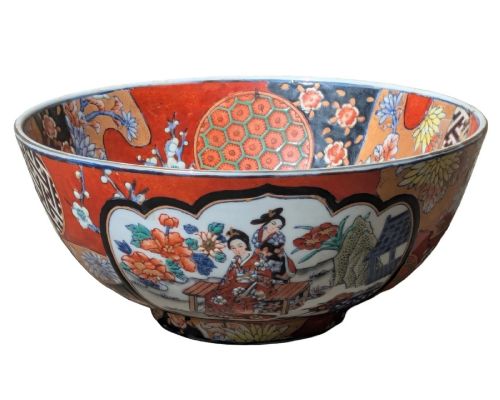
When you search for a Japanese porcelain punch bowl, you are looking at large decorative vessels made for display and service, predominantly represented here by Japanese Imari and Satsuma wares. These objects span from the 17th century Genroku period through the 19th century Meiji period up to 1930.
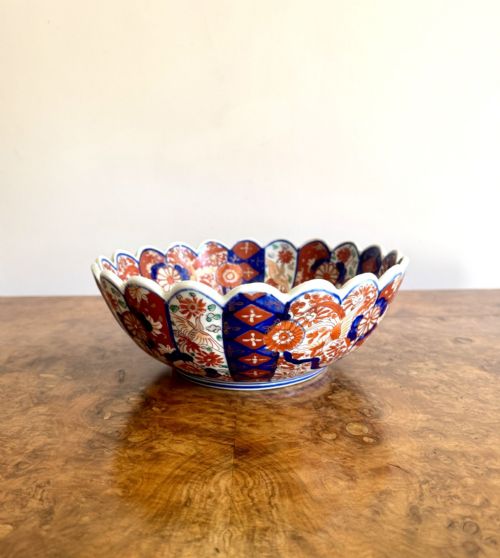
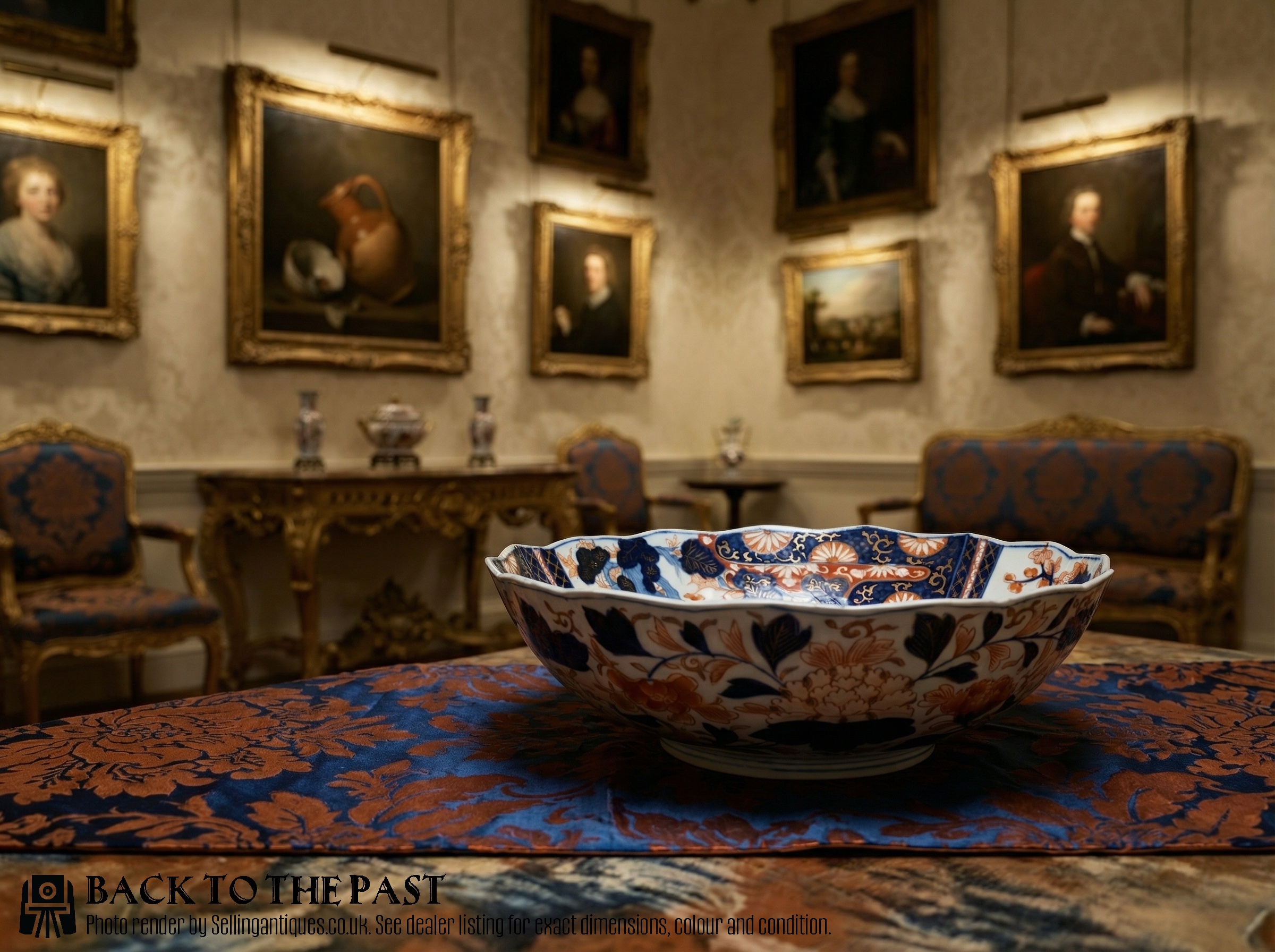
The version you are most likely to meet on this page is the Japanese Imari bowl, often featuring a scallop-shaped edge and robust porcelain body. Alongside these sit Satsuma earthenware pieces, including millefleur patterns and works by named makers such as Ryuzan.
How they were made
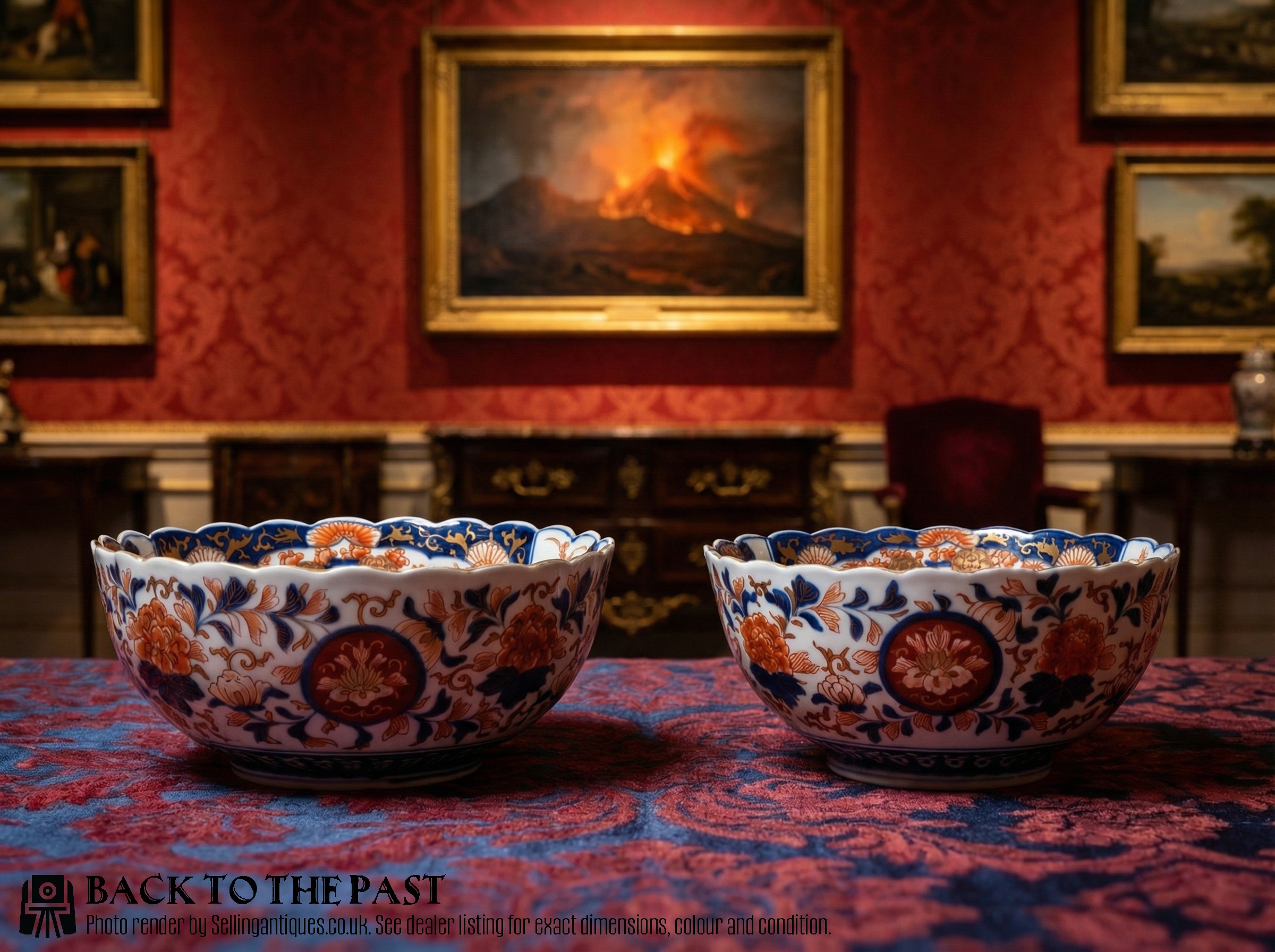
The makers formed these pieces from porcelain and earthenware, applying cobalt blue underglaze and iron red enamel directly onto the clay body. Many examples incorporate intricate gilding and gold leaf highlights to accentuate the painted motifs.
Firing techniques allowed for detailed polychrome schemes, particularly seen in the dense floral patterns of Satsuma wares and the traditional panel designs of Imari vessels.
Materials recorded across these items include porcelain, earthenware, enamel, gold leaf, glaze, cobalt blue, gilt, and gilding.
What varies in quality
The distinction between standard vessels and superior examples rests upon the crispness of the cobalt blue underglaze and the precision of the enamel work. Finer pieces demonstrate careful control in the application of gold leaf and gilding.
Form also dictates standing, with scalloped edges, large diameters, and named maker attributions setting certain bowls apart from simpler decorative bowls of the period.
Ryuzan
The Japanese Porcelain Punch Bowl Glossary
- Imari
- A style of Japanese porcelain decorated in underglaze blue, iron red, and gold, named after the port from which it was shipped to Europe. It remains one of the most recognisable aesthetic traditions in these listings.
- Satsuma
- A type of Japanese earthenware characterised by a ivory-crackled glaze and intricate polychrome and gilt decoration. These pieces often feature dense pictorial scenes or millefleur patterns.
- Meiji Period
- The era in Japanese history spanning from 1868 to 1912, known for a surge in decorative arts produced for export. Many bowls on this page originate from this time.
- Edo Period
- The period of Japanese history lasting from 1603 to 1867, associated with early porcelain production such as 17th-century Genroku examples. Pieces from this era show foundational styles for later export wares.
Japanese Porcelain Punch Bowl: Frequently Asked Questions
How old is my Japanese Imari bowl?
Dating relies upon stylistic markers, glaze characteristics, and period attributions ranging from the seventeenth-century Genroku era to the nineteenth-century Meiji period and early twentieth-century production.
Examining the depth of the cobalt blue and the application of gilding helps place the bowl within its correct historical window.
What is the difference between Imari and Satsuma?
Imari pieces are made of porcelain with a characteristic palette of cobalt blue, iron red, and gilt highlights, frequently shaped with scallop edges. Satsuma bowls are typically earthenware featuring an ivory crackled glaze decorated with detailed polychrome motifs.
Both styles served as major decorative exports during the nineteenth century and appear prominently across these listings.
Were these bowls used for punch?
Large decorative vessels served varied functions in domestic interiors, ranging from centrepieces on dining tables to display pieces in reception rooms. Their generous proportions accommodated generous service when required.
Today, collectors primarily utilise them as standalone decorative centrepieces or focal points within a room.
How do I care for antique Japanese porcelain?
Display these bowls away from direct sunlight and sudden temperature shifts to protect the glaze, enamels, and delicate gilding. Gentle dusting with a soft, dry cloth preserves the surface without risking abrasion.
Hand washing in lukewarm water with mild soap is occasionally suitable for robust porcelain, though earthenware with crackled glaze requires extra caution.