

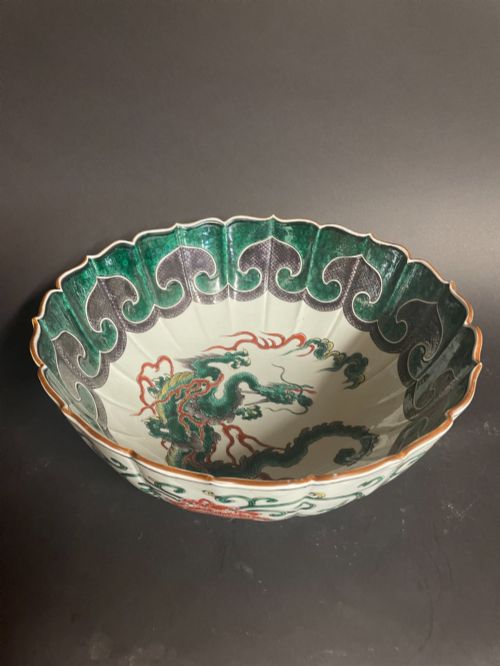
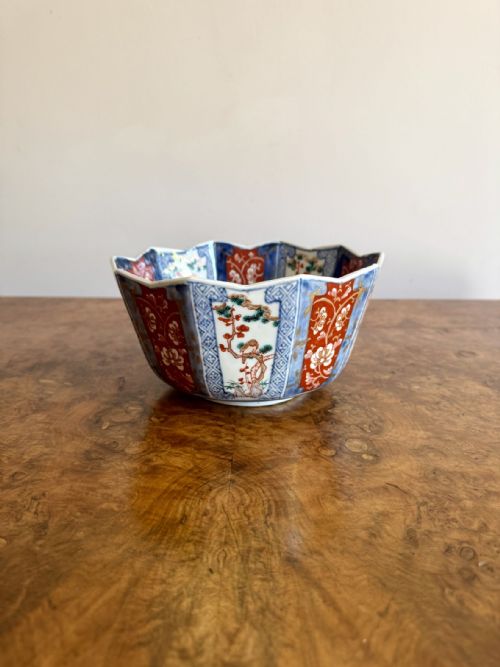
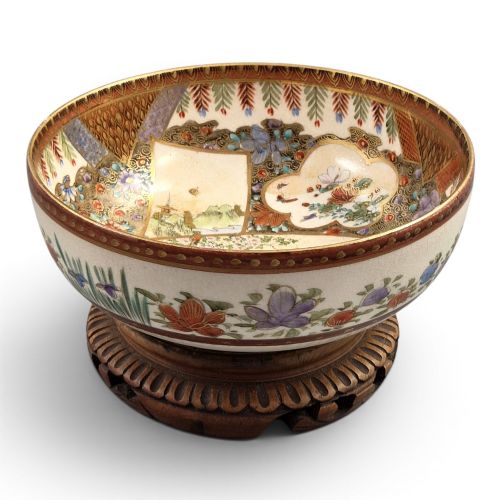


Japanese Porcelain Centrepiece
A Japanese porcelain centrepiece brings commanding decorative presence to a table through intricate hand-painted enamel and cobalt blue work.
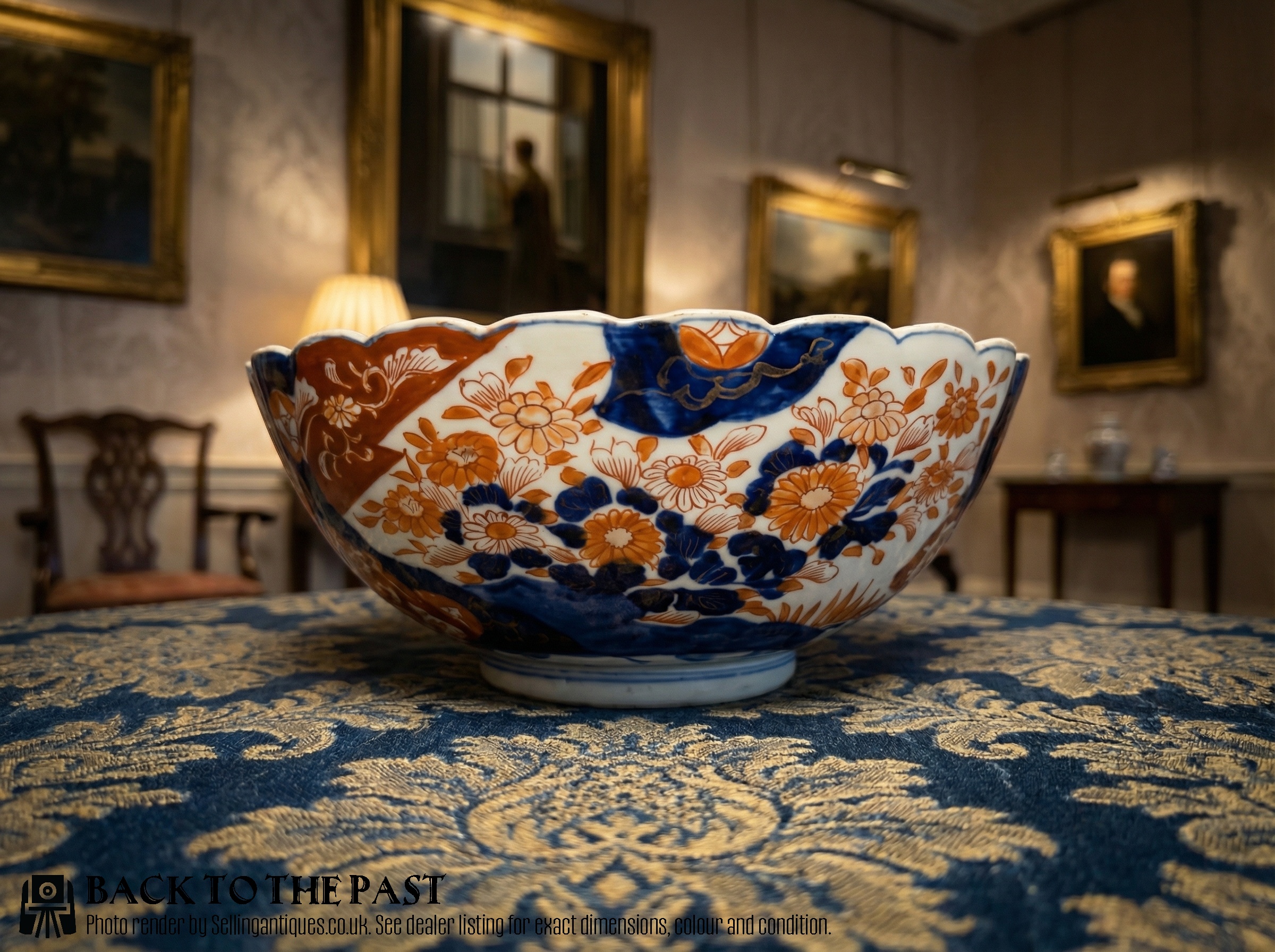
Japanese Porcelain Centrepiece
A Japanese porcelain centrepiece takes the form of a decorative bowl, frequently created in the Imari, Satsuma, or Arita styles during the Meiji period and the nineteenth century. These items range from standard decorative vessels to large scallop edge bowls and monumental works designed to draw the eye in a room.
The objects seen here reflect production traditions spanning the late nineteenth century and around nineteen hundred, with Edwardian examples also appearing for export. Buyers encounter both robustly potted Imari pieces and finely detailed Satsuma earthenware vessels bearing signature marks.
Each Japanese porcelain centrepiece serves as a focal point, uniting traditional eastern ceramic techniques with forms intended for western decorative display. The surviving inventory demonstrates a strong preference for expansive bowls suited to prominent placement.
Materials and construction methods
Makers shaped these pieces from porcelain or earthenware, applying complex glaze combinations alongside cobalt blue and rich enamel colours. Gold leaf and gilt highlights frequently enrich the surface designs, catching the light across intricate patterns.
Wood stands sometimes accompany the bowls, providing a stable base for display. The application of underglaze cobalt and overglaze enamel required precise firing control to achieve the depth and permanence seen in these historic works.
Samurai warriors occasionally battle across the surface of a quiet nineteenth-century breakfast table.
Distinguishing quality in decoration and form
Quality rests upon the crispness of the hand-painted detail and the vibrancy of the enamel and gilt work applied across the surface. Finer bowls display rigorous control in complex pictorial scenes or dense floral patterns.
The prestige of the workshop influences distinction, with signed pieces by named makers carrying added weight. Physical scale and potting weight also divide standard decorative vessels from monumental display items.
Kozan·Ryuzan·Kinkozan Kyoto
The Japanese Porcelain Centrepiece Glossary
- Imari
- A traditional Japanese porcelain style characterised by a palette of cobalt blue, iron red, and gilt. It dominated export wares during the Meiji period.
- Satsuma
- A type of Japanese earthenware featuring a crackle glaze and elaborate overglaze enamel paintings often heightened with gold. It represents a distinct tradition from hard-paste porcelain.
- Meiji Period
- The era in Japanese history spanning from eighteen sixty-eight to nineteen twelve, noted for prolific ceramic production aimed at international export markets.
- Arita
- The historic centre of Japanese porcelain production in Hizen province, where skilled potters fired the clay bodies used for many export vessels.
- Mon
- A Japanese heraldic badge or crest used to identify families or clans, sometimes painted onto the surface of Satsuma wares.
- Millefleur
- A decorative pattern covering the entire surface with a dense multitude of painted flowers.
Japanese Porcelain Centrepiece: Frequently Asked Questions
How do I identify an Imari bowl?
Look for the distinctive palette combining deep cobalt blue underglaze with iron red and gold leaf highlights over the glaze. These pieces often feature intricate panel designs filled with floral and geometric motifs.
Most examples date from the nineteenth century or around nineteen hundred, reflecting the height of Japanese export manufacturing during the Meiji period.
What is the difference between Satsuma and Imari?
Satsuma pieces are typically earthenware with a characteristic creamy crackle glaze, painted delicately with polychrome enamels and gold. Imari wares are true porcelain, known for their heavier potting and rich blue and red colour scheme.
Both styles were produced in large quantities during the Meiji period for international buyers seeking decorative centrepieces.
Where should I place a large bowl?
These decorative bowls suit prominent central locations such as dining tables, sideboards, or large entrance hall consoles where their scale can be appreciated. Because many are wide and heavy, ensure the supporting surface is stable.
Some larger examples include fitted wood stands designed specifically to elevate and support the base during display.
Are signed pieces more desirable?
Pieces bearing signatures or mon symbols from recognised workshops or artists often attract greater attention from collectors. Signatures confirm the specific origin and help attribute the work to notable production centres like Kyoto.
Not all antique bowls are signed, as many export pieces carried only general decorative marks or none at all.