


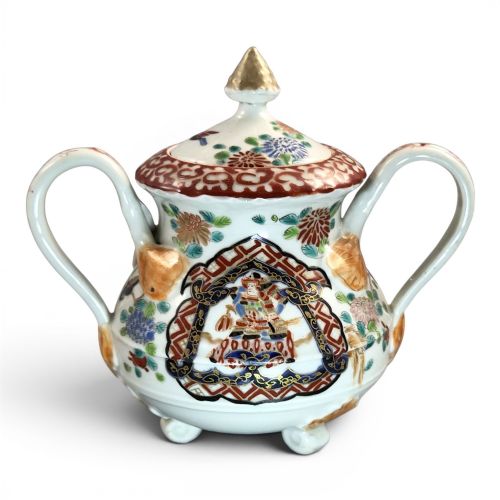


Japanese Porcelain Basin
A Japanese porcelain basin brings vibrant cobalt blue and iron-red palettes into a room, spanning centuries of Arita, Imari, and Satsuma production.

Japanese Porcelain Basin
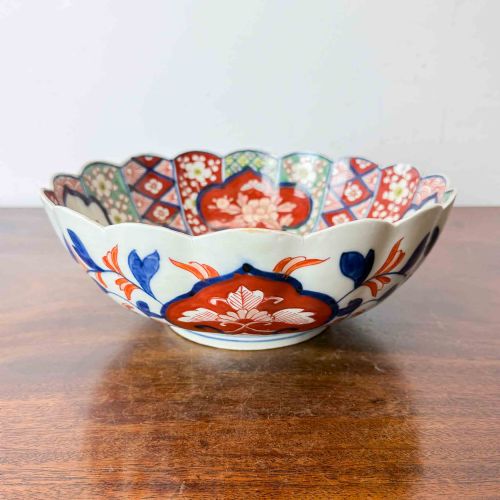
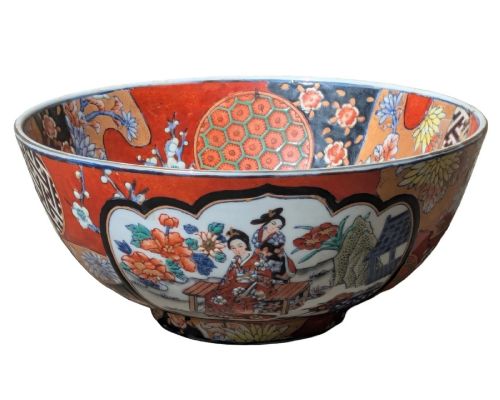
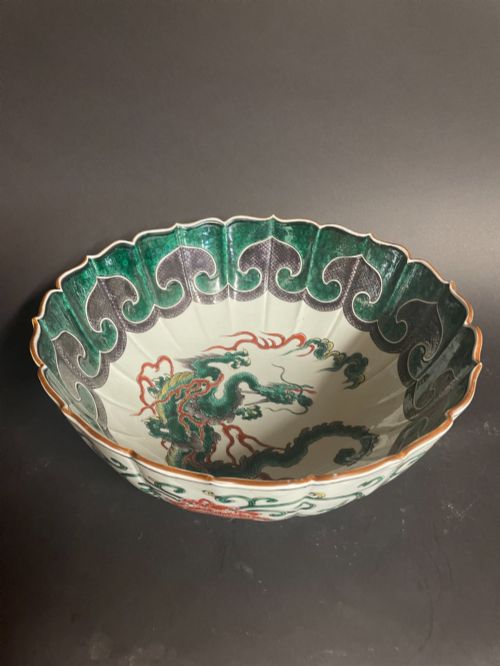
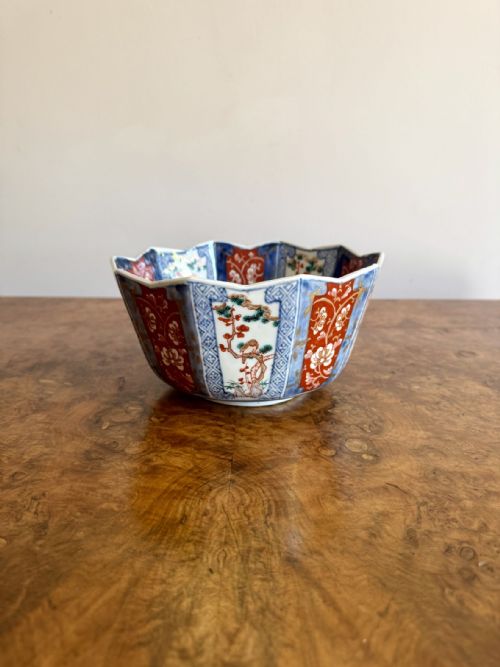
A Japanese porcelain basin encompasses forms ranging from deep jardinieres and shallow decorative bowls to large chargers and sugar bowls. The examples seen on this page stretch across the seventeenth, eighteenth, nineteenth, and early twentieth centuries, capturing the Edo, Meiji, and Showa periods. Buyers encounter both robust vessels meant for planting and finely painted tableware intended for display.
Imari and Satsuma styles dominate the selection, often carrying traditional cobalt blue underglaze, enamel colours, and gilt highlights. Pieces from the Meiji period frequently showcase elaborate storytelling scenes, floral motifs, and signature crests. Forms vary from simple round dishes to scalloped edges, hexagonal profiles, and oval jardinieres resting on hardwood stands.
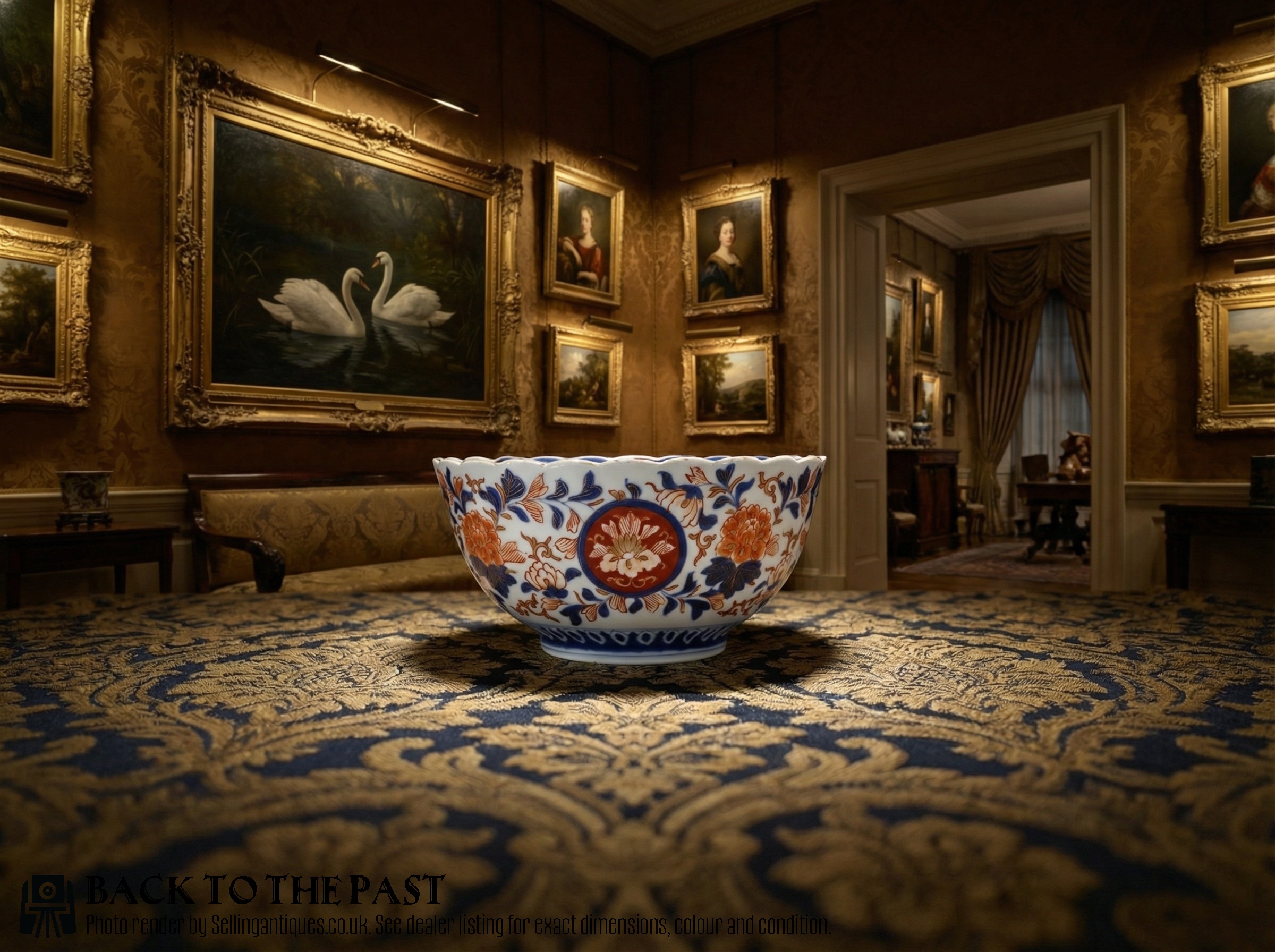
What Varies in Quality
The precision and density of the hand-painted brushwork determine much of the distinction between standard vessels and exceptional works. Master studios utilised finer lines, more intricate figural detailing, and heavier applications of gold leaf and enamel.
The sophistication of the potting, the weight of the ceramic body, and the clarity of the kiln firing set individual pieces apart. Signed works from celebrated Kyoto studios or specific potteries carry distinct artistic authority compared to unmarked export wares.
Some nineteenth-century jardinieres come with climbing ceramic figures that appear to scale the rim as if exploring the basin.
Ryuzan·Nikko·Kinkozan·Shozan
The Japanese Porcelain Basin Glossary
- Imari
- A traditional Japanese porcelain style originating from the port of Arita, characterised by a palette of underglaze cobalt blue, iron-red, and gilt. It became immensely popular for export to Europe during the Edo period.
- Satsuma
- A type of Japanese earthenware featuring a pale, ivory-coloured crackle glaze, typically decorated with elaborate polychrome enamels and gilding. Kyoto workshops refined this style extensively during the Meiji period.
- Arita
- The Japanese town and surrounding region in Hizen province where porcelain production first began in the early seventeenth century. Kilns here produced the vast majority of exported Japanese blue and white wares.
- Meiji Period
- The era of Japanese history running from 1868 to 1912, marked by the opening of trade with the West and a flourishing of decorative arts designed for international markets.
- Jardiniere
- A large ornamental pot or basin designed to hold growing plants or flowers. In Japanese export pieces, these often appeared as heavy porcelain or earthenware vessels paired with hardwood stands.
Japanese Porcelain Basin: Frequently Asked Questions
Can I plant directly inside an antique jardiniere?
Placing soil and moisture directly against unglazed or porous historical ceramic bodies can cause staining or damage over long periods. Using a separate plastic or ceramic liner protects the interior from dampness and mineral deposits.
Ensure any liner is easily removable so you can water plants away from the antique vessel. This preserves the internal glaze and prevents water pressure or freezing from stressing the structure.
How do I tell Imari apart from Satsuma?
Imari pieces consist of hard-fired porcelain featuring a ringing tone when tapped, typically decorated in deep cobalt blue and rust-red with gold accents. The surface is smooth, non-porous, and vitreous.
Satsuma ware is an earthenware ceramic characterised by a distinctive fine network of cracks across a creamy, ivory glaze, painted with dense enamel scenes. It feels slightly softer and more absorbent than porcelain.
Where were these basins displayed historically?
During the height of the export trade, large bowls and jardinieres stood on tables, pedestals, or bespoke hardwood stands in drawing rooms and parlours. They served as focal points for floral arrangements or simply as displays of exotic craftsmanship.
Today, collectors place them on sideboards, mantelpieces, or floor stands where their intricate hand-painted patterns remain visible. Their durable forms allow them to function both as decorative objects and practical containers.