




Japanese Pattern Porcelain Urns
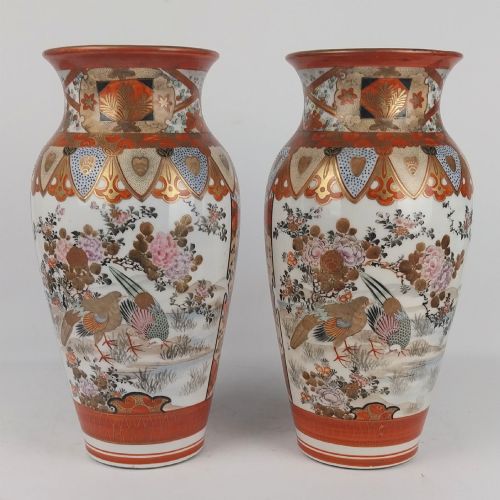
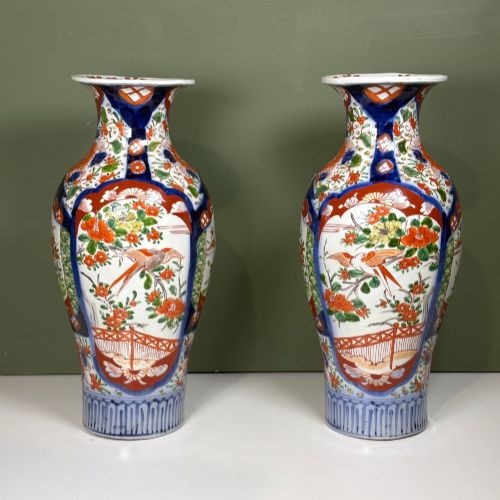
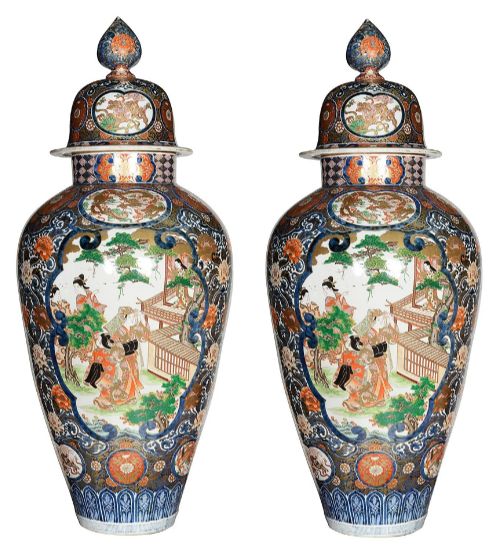
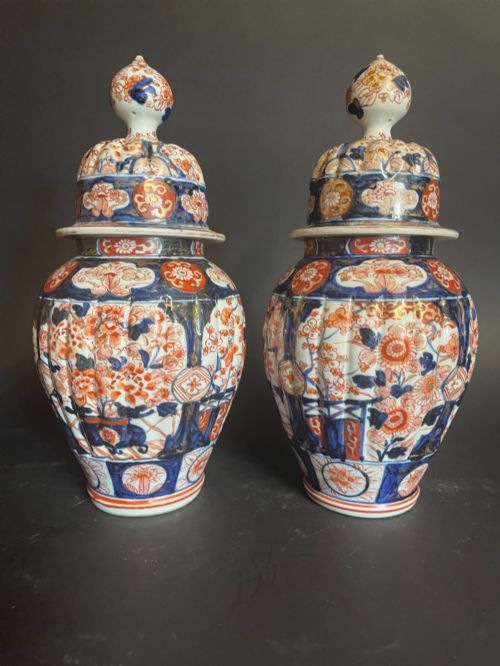
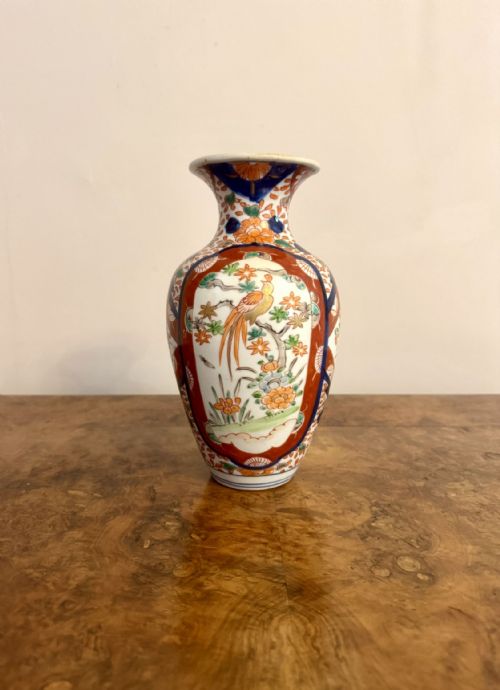
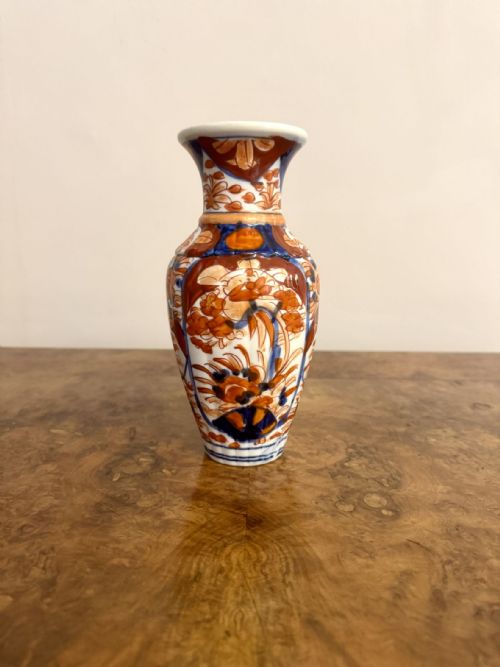
These Japanese pattern porcelain urns bring bold cobalt and iron-red palettes into a room, offering the decorative punch collectors prize.
Japanese Pattern Porcelain Urns
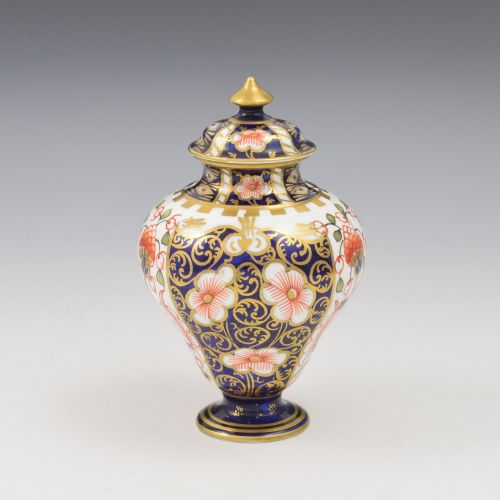
When someone searches for Japanese pattern porcelain urns, they encounter lidded jars, baluster vases, and jardinieres originating from the Edo and Meiji periods alongside European interpretations.
The most common pieces on this page are Japanese Imari vessels and Satsuma wares, spanning the eighteenth century through to the Edwardian era.
Forms range from large pairs intended for prominent display to miniature lidded jars and converted table lamps.
Materials and Methods
Potters shaped high-fired porcelain and earthenware bodies before applying underglaze blue and overglaze enamel colours.
Many examples incorporate gold leaf and gilt highlights to enrich the floral and geometric motifs across the surface.
Japanese Pattern Porcelain Urns Retail Price Guide 2026
Typical asking prices for japanese pattern porcelain urns among the pieces listed under this phrase on Sellingantiques today, from the lower quarter to the upper quarter. They describe what is for sale here now, not the wider market.
Several vases carry the scars of old electrical wiring from a past life as glowing table lamps.
Assessing Quality
The refinement of the hand-painted brushwork and the crispness of the underglaze cobalt distinguish standard production from exceptional pieces.
Intricacy in the gilding and the balance of the octagonal or baluster form dictate the standing of individual vessels.
Royal Crown Derby·Tagawa Kyoto·Samson
The Japanese Pattern Porcelain Urns Glossary
- Imari
- A style of Japanese export porcelain decorated in underglaze blue, iron red, and gold. This palette defined many wares made for Western markets from the Edo period onwards.
- Satsuma
- Earthenware pottery featuring a crackle-glaze finish and detailed polychrome enamel painting. These pieces frequently depict figurative scenes or botanical subjects.
- Meiji
- The period of Japanese history spanning from eighteen sixty-eight to nineteen twelve. Work from this era often shows extraordinary technical precision.
- Baluster
- A vase shape with a rounded body that tapers toward the base and flares at the neck. This silhouette provides a stable canvas for complex surface decoration.
- Jardiniere
- A large decorative pot designed to hold live plants. In porcelain, these objects serve as substantial centrepieces within a room.
Japanese Pattern Porcelain Urns: Frequently Asked Questions
How do I spot genuine antique Imari?
Look for the slight imperfections of hand-mixed pigments and the subtle weight of true porcelain bodies.
Hand-painted lines show tiny variations under close inspection that distinguish period pieces from later copies.
Where should I display large porcelain urns?
Substantial lidded jars and baluster vases suit heavy furniture tops, pedestals, or wide fireplace hearths.
Pairs balance a room when placed symmetrically on side tables or console surfaces.
How do I care for antique gilded porcelain?
Dust these surfaces gently with a soft dry cloth to protect the delicate overglaze enamels and gold leaf.
Avoid liquid cleaners entirely, as moisture can lift old gilding from the ceramic body.
Were these pieces made for export?
The vast majority of Japanese pattern porcelain found in Western collections was produced specifically for international trade.
European factories also created their own versions to satisfy the intense demand for Eastern aesthetics.