



Large Floral Ceramic Planters
Large floral ceramic planters bring architectural weight and botanical display together, spanning Victorian majolica and blue and white porcelain.
Large Floral Ceramic Planters
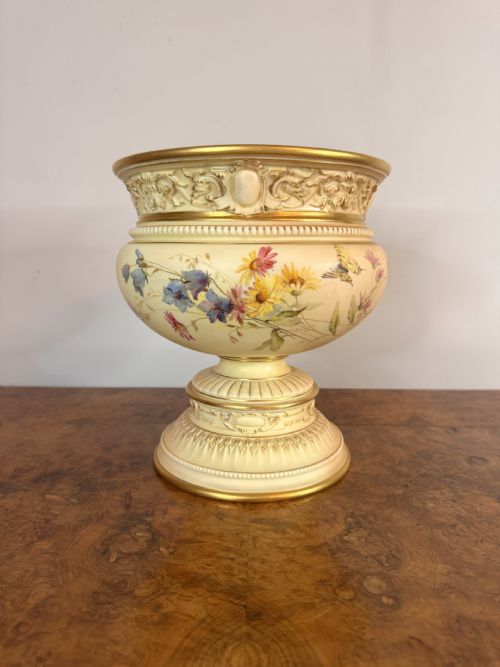
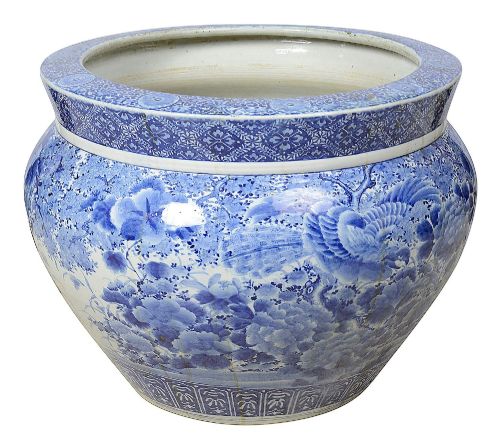
Large floral ceramic planters comprise substantial vessel forms designed to house indoor greenery or serve as decorative focal points within a room. The listings show heavy earthenware, porcelain and ceramic bodies shaped as jardinières, footbaths, urns and pedestals.
Victorian and nineteenth-century examples dominate the selection, often taking the form of footbaths or jardinières adorned with botanical motifs, cobalt underglaze or rich majolica glazes. Buyers encounter diverse stylistic influences ranging from traditional Chinoiserie and Japanese Imari to Art Nouveau and Scottish earthenware.
Form follows function across these pieces, whether built as standalone vessels or paired with matching stands for elevated display. The convergence of utility and ornamental design defines every item encountered under this heading.
How they were made
Techniques span traditional wheel throwing and complex moulding to achieve the expansive forms of footbaths and jardinières. Decoration ranges from hand-painted blue and white designs to gilt highlights and elaborate transfer-printed bramble motifs.
Large Floral Ceramic Planters Retail Price Guide 2026
Typical asking prices for large floral ceramic planters among the pieces listed under this phrase on Sellingantiques today, from the lower quarter to the upper quarter. They describe what is for sale here now, not the wider market.
Turn a nineteenth-century footbath into a drinks cooler for parties, giving that old basin a second watery lease on life.
What varies in quality
Quality rests in the crispness of the moulding and the depth of the glaze, particularly where relief work defines floral or patterned motifs. Pieces bearing factory attributions, such as Minton, Copeland or George Jones, demonstrate superior control in both ceramic body formulation and surface decoration.
The sophistication of the painting and the complexity of the glaze application distinguish standard utility wares from exhibition-level ornamental pieces. Complete sets comprising both jardinière and matching stand represent the upper tier of surviving examples.
Minton·Staffordshire Adams·Copeland·George Jones·Samson
The Large Floral Ceramic Planters Glossary
- Jardiniere
- An ornamental ceramic pot or stand designed to hold a large plant or floral arrangement. These vessels typically sit on the floor or a dedicated pedestal.
- Majolica
- A type of earthenware covered in an opaque tin glaze and painted with metallic oxide colours. It gained immense popularity during the Victorian era for vibrant garden and floral wares.
- Footbath
- A large ceramic vessel originally intended for bathing feet, frequently repurposed as a substantial planter due to its generous oval proportions and carrying handles.
- Cobalt Underglaze
- A blue pigment applied to ceramic bodies before the final glaze firing, capable of withstanding high temperatures without losing its rich colour.
- Imari
- A style of Japanese porcelain decorated in underglaze blue, iron red, and gold, which heavily influenced European ceramic design during the nineteenth century.
Large Floral Ceramic Planters: Frequently Asked Questions
What is a jardiniere?
A jardiniere is an ornamental container designed to hold plants indoors, usually larger and more decorative than a standard flowerpot. They often feature prominent handles or matching stands.
In historical interiors, these vessels served as decorative centrepieces in grand reception rooms, housing substantial ferns or palms.
How do I care for antique planters?
Antique ceramic and earthenware planters require careful handling, particularly regarding moisture and sudden temperature changes. Using a plastic liner inside the vessel protects the historic ceramic body from continuous dampness.
Cleaning should be limited to gentle dusting or wiping with a soft, dry cloth to preserve surface glazes and gilt details.
Are footbaths waterproof?
Most nineteenth-century ceramic footbaths hold water, but hairline fractures or older repairs can compromise their integrity. Testing the vessel with lukewarm water on a safe surface before direct planting is recommended.
Glazed earthenware and porcelain interiors generally resist moisture well, though unglazed bases require caution.
How do I identify Victorian majolica?
Victorian majolica is characterised by colourful lead glazes applied over moulded earthenware, often featuring naturalistic plant or animal motifs. The surfaces display a high-gloss finish with vibrant greens, browns, purples and yellows.
Moulded details on these pieces are typically sharp and high-relief, reflecting the technical ambitions of nineteenth-century potteries.