




Japanese Patinated Bronze Vases
Japanese patinated bronze vases bring the tactile weight and intricate metalwork of the Meiji period directly into a room.
Japanese Patinated Bronze Vases
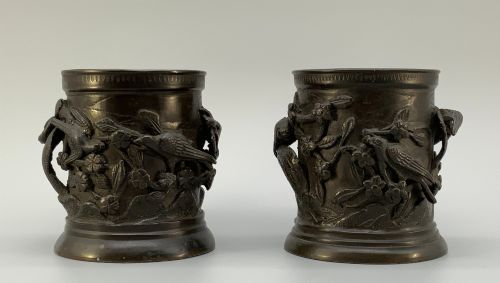
When searching for japanese patinated bronze vases, you encounter works originating largely from the nineteenth century and the Meiji period. These items range from modest stem vases and posy vessels to monumental garden temple vases and pairs adapted into table lamps.
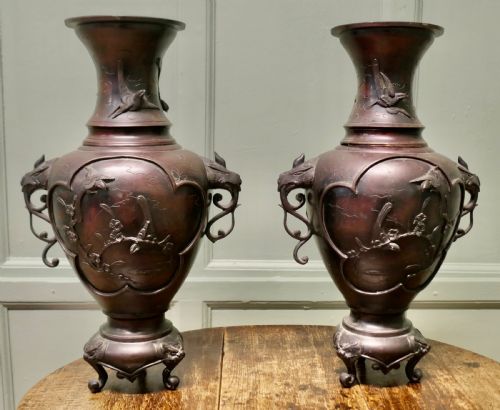
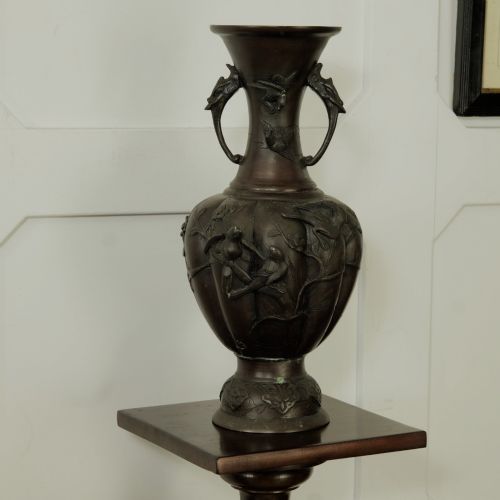
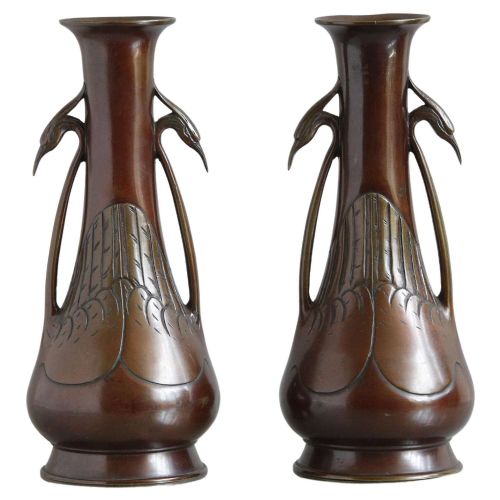
The forms span traditional baluster shapes, amphora profiles, and vessels with specific configurations such as mimikuchi mouths or handles shaped as egrets and elephants. Many of these pieces arrive in matched pairs, reflecting the symmetrical demands of Victorian and Meiji decorative schemes.
How They Were Made
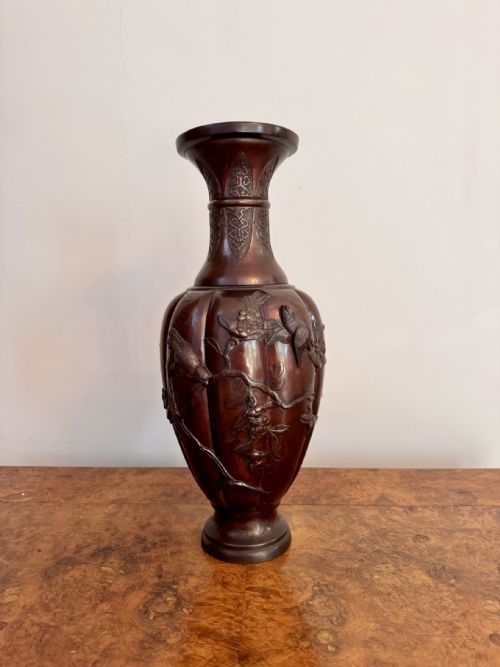
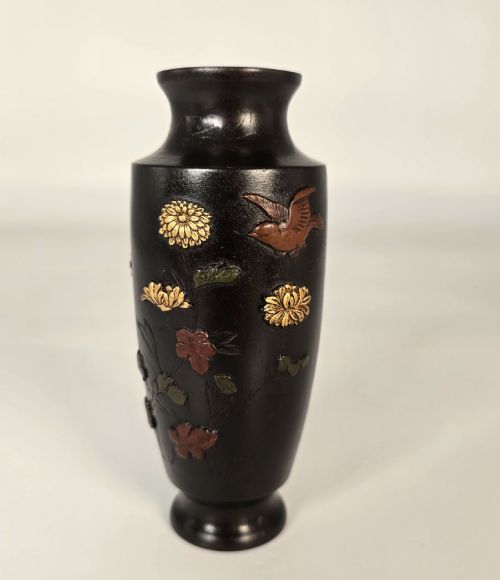
The construction relies primarily on cast bronze, often treated to achieve distinct dark, metallic, or warm surface patinas. Workshops utilised mixed metals and incorporated contrasting materials like gold inlay to articulate surface details such as birds, blossoms, and dragons.
Surface ornamentation is achieved through direct casting, applied sculptural elements like handles and dragons, and meticulous chasing by skilled artisans. Certain works bear signatures from specific regional centres, notably the Takaoka School.
Listings feature items dated across the nineteenth and early twentieth centuries, spanning the Victorian era and the Meiji period.
What Varies in Quality
The distinction between standard production and top-tier examples lies in the crispness of the casting and the depth of the patination. Finer specimens display sharply rendered motifs, such as feathered birds or scales on dragons, without surface pitting or muddy contours.
Scale and heft also separate the categories, with heavier, monumental pairs and those incorporating intricate mixed metal or gold inlay representing the upper tier of Meiji metalwork craftsmanship.
The Japanese Patinated Bronze Vases Glossary
- Patinated bronze
- Bronze treated with chemical solutions or heat to produce a stable, decorative surface colour. This finish protects the metal while adding visual depth.
- Meiji period
- The era in Japanese history running from 1868 to 1912, corresponding to the reign of Emperor Meiji. Much of the fine metalwork traded internationally dates from this time.
- Mixed metal
- A technique combining bronze with other metals such as copper, brass, or silver to create contrasting colour highlights within the design. It is often seen on finer Meiji vessels.
- Archaistic
- A style that consciously imitates ancient forms and decorative motifs. In Japanese metalwork, this refers to shapes drawn from early Chinese bronzes.
- Mimikuchi
- A specific vessel mouth configuration featuring ear-like handles or flanged openings. These forms derive from traditional East Asian ceramic and bronze shapes.
Japanese Patinated Bronze Vases: Frequently Asked Questions
How do I identify a Meiji period bronze vase?
Meiji period bronze vases generally date between 1868 and 1912. Look for naturalistic motifs like birds, blossoms, and dragons, alongside distinct patination and occasional artist signatures.
Heavier examples often display sophisticated mixed metal applications or gold inlay. The construction methods and regional school characteristics further help anchor them to this era.
Were these vases made as pairs?
Many Japanese bronze vases of this era were produced as balanced pairs for export and domestic display. Matched pairs frequently feature mirrored decorative elements, such as birds facing one another.
Single vessels also appear, often taking the form of larger standalone urns or garden pieces. Pairs are particularly common among baluster and amphora shapes.
What is patinated bronze?
Patinated bronze refers to metal that has undergone a controlled oxidation process using heat and chemicals. This treatment yields the dark, rich surfaces characteristic of antique Japanese metalwork.
The patina protects the underlying bronze while enhancing the visibility of chased details and inlaid metals.
Can these vases hold water?
While originally designed as decorative vessels, urns, or flower holders, many antique bronze vases retain watertight integrity. However, checking the interior for old corrosion or structural repairs is advisable before direct use with water.
Using a discrete inner container is a common precaution for protecting the historic interior surface.
How do I care for antique bronze?
Antique bronze requires minimal intervention to preserve its original surface and patina. Dusting with a soft, dry cloth is usually sufficient for routine maintenance.
Avoid commercial metal polishes or abrasive cleaners, as these strip away the historic patination and diminish the value of the piece.