




Japanese Meiji Cloisonne
Japanese meiji cloisonne brings together intricate wirework and vitreous enamels, offering collectors vibrant depictions of nature and myth crafted during a period of immense technical ambition.
Japanese Meiji Cloisonne
Japanese meiji cloisonne encompasses decorative vessels, chargers, and trays produced primarily between the late nineteenth and early twentieth centuries.
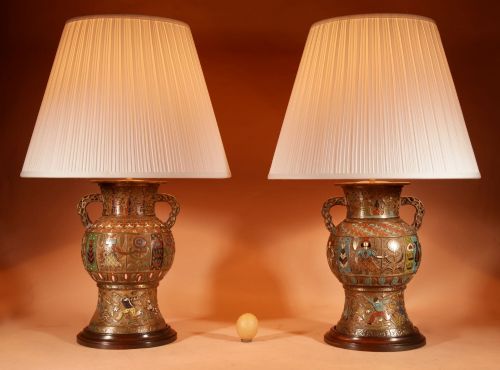
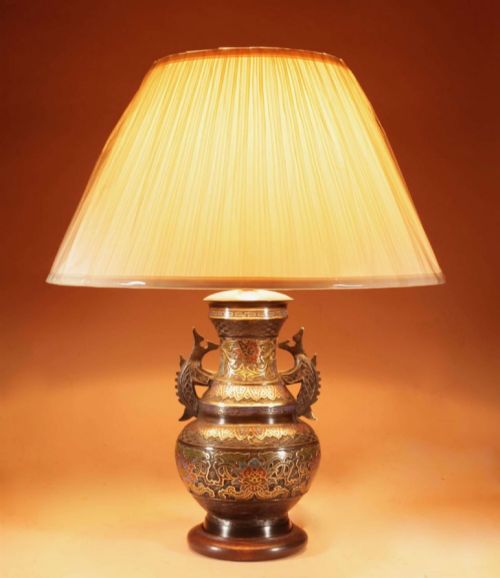
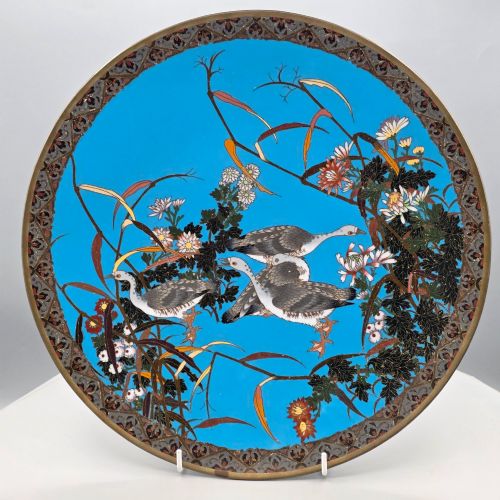
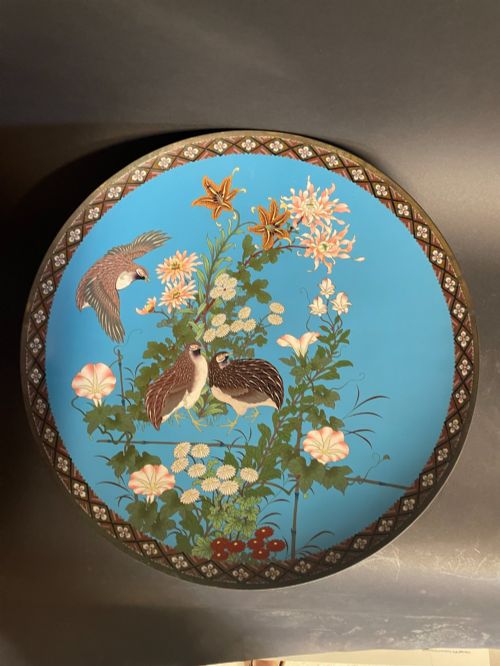
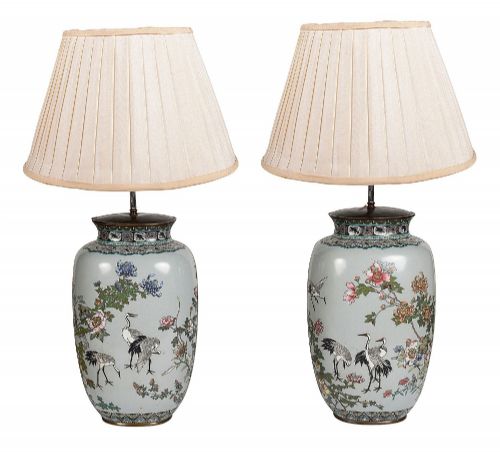
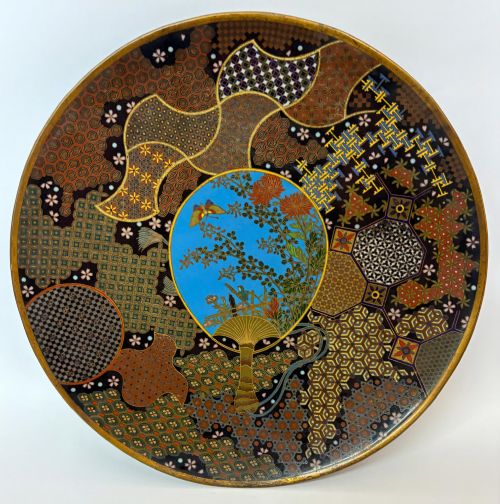
Vases, lidded jars, and broad decorative plates dominate the offerings, frequently displaying flora, fauna, or historical figures.
Production spans the Meiji period into the subsequent Taisho era, reflecting shifts in workshop output and international demand.
How They Were Made
Craftsmen applied thin metal wires, known as cloisons, onto copper or brass bases to form intricate compartments for coloured enamels.
The filled vessels underwent repeated firings and polishings to achieve a smooth, glossy finish where metal outlines enclose vibrant fields of colour.
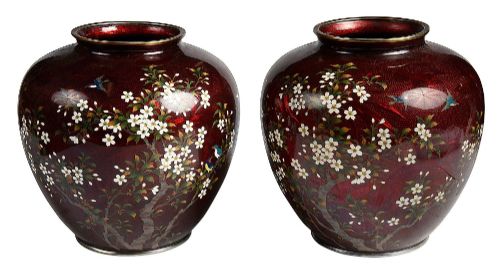
Certain specialised pieces utilise porcelain bodies or transparent red ginbari grounds over textured foils to create varied light effects.
Listings feature copper, brass, and bronze bases alongside unusual porcelain-bodied variations.
What Varies in Quality
Execution of the wirework defines the upper tier, where extremely fine lines form complex pictorial subjects without visible distortion.
Depth and clarity of the enamel pigments distinguish superior works from simpler production, alongside the precision of the final surface polish.
Signature marks from prominent makers or workshops indicate heightened ambition and skilled execution by master artisans.
Ando Jubei·Ota Toshiro
The Japanese Meiji Cloisonne Glossary
- Cloisonne
- Enamelwork in which coloured pastes are separated by thin metal wires soldered to a metal base. This technique allows for detailed pictorial designs across vases and chargers.
- Champleve
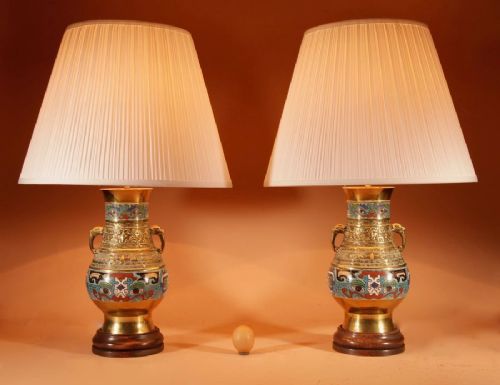
- Enamelwork where troughs or cells are hollowed directly into the bronze or brass base rather than formed by applied wires. It provides a heavier, more tactile surface.
- Ginbari
- A decorative method employing patterned reflective foil beneath translucent enamel, often red, to create textured visual depth. It is also known as basse-taille.
- Totai shippo
- Porcelain-cored cloisonne where enamel and wires are applied directly to a ceramic body instead of metal. This uncommon variation mimics traditional metal-based pieces.
- Shippo
- The Japanese term for cloisonne enamel, literally translating to seven treasures. Collectors use it to describe these traditional enamelled wares.
Japanese Meiji Cloisonne: Frequently Asked Questions
What is Japanese meiji cloisonne?
These pieces are enamelled metal objects created during the reign of the Meiji Emperor, celebrated for detailed wirework depicting birds, flowers, and landscapes.
They served primarily as decorative items for export and domestic display, showcasing the pinnacle of Japanese metalwork and ceramic adaptation.
How do I care for cloisonne?
Keep these items away from direct sunlight and sudden temperature changes to protect the delicate enamel and metal bodies from stress.
Dust them gently with a soft, dry cloth and avoid harsh cleaning agents or immersion in water.
How do I identify a Meiji piece?
Look for the characteristic fine copper or brass wire outlines, naturalistic motifs, and occasionally artist signatures or workshop marks on the base.
The weight of the copper or bronze core combined with the depth of the enamel provides clues to the manufacturing period.
What are champleve and ginbari?
Champleve involves sinking enamel into carved metal troughs rather than raised wire cells, creating a sturdy and distinctively textured surface.
Ginbari uses a patterned foil layer beneath translucent enamel to catch the light, adding remarkable dimension to the colour.