


Japanese Lidded Vase
When you handle a Japanese lidded vase, you are holding centuries of kilncraft designed to command a room with colour and narrative.

Japanese Lidded Vase
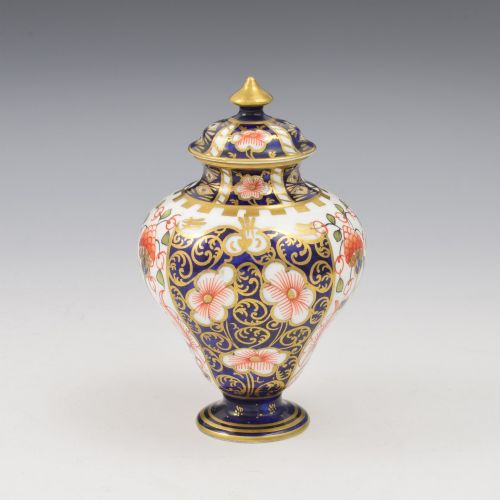
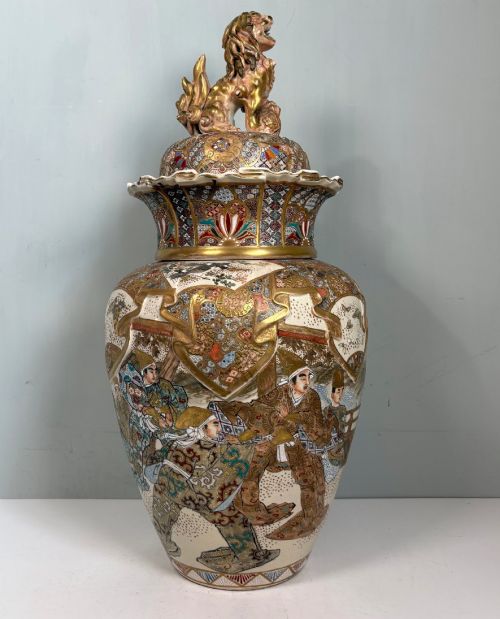
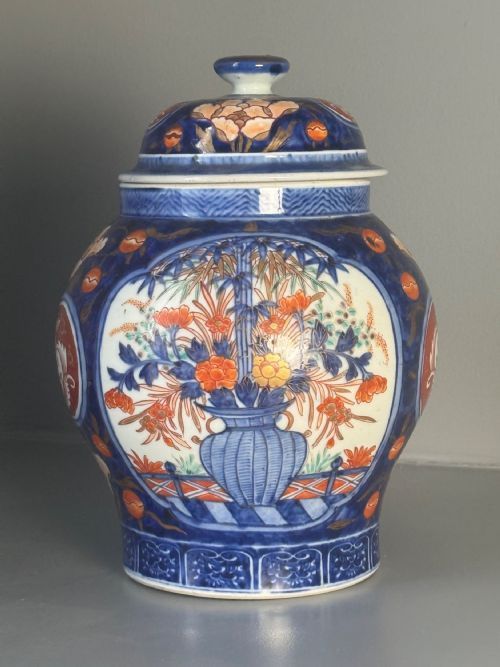
A Japanese lidded vase combines a vessel body with a matching cover, taking forms such as baluster jars, ginger jars, and tall palace urns. Most examples encountered here originate from the nineteenth century, particularly the Meiji period and the decades spanning the late Victorian era.
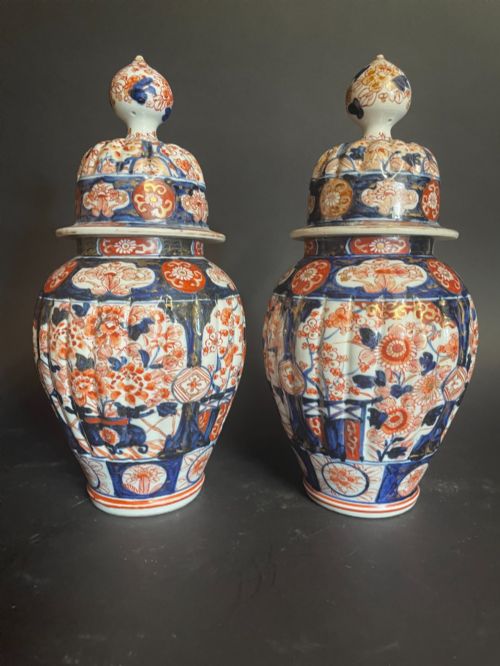
Makers utilised distinct regional traditions, most notably Arita kilns producing Imari porcelain, alongside Satsuma earthenware and Kutani wares. These covered vessels served primarily as decorative garnitures or centrepieces within European and Japanese interiors.
How They Were Made
Potters shaped high-fired porcelain and earthenware on the wheel or within moulds, occasionally building complex octagonal and lobed profiles by hand. Artisans then applied underglaze blue and rich overglaze enamel palettes, frequently enriched with gold leaf and gilding.
Some specialised workshops incorporated cloisonné wirework or mixed metal applications directly onto the ceramic or bronze armature before final firing.
Listings feature porcelain, earthenware, and bronze materials spanning the seventeenth century through to the Edwardian era.
What Varies in Quality
The distinction between ordinary production and superior work rests on the precision of the brushwork and the depth of the enamel palette. Finer pieces demonstrate meticulous control in the hand-painted iron red and cobalt blue pigments, often heightened with dense gold gilding that remains crisp.
Scale and ambition also dictate standing; large palace jars and well-matched pairs demand far greater technical mastery from the kiln than standard domestic table vessels.
Royal Crown Derby·Nogawa·Fukagawa·Samson
The Japanese Lidded Vase Glossary
- Imari
- A style of Japanese porcelain decorated in underglaze blue, iron red, and gold, named after the port from which these wares were shipped. This palette dominated export markets during the Edo and Meiji periods.
- Satsuma
- A type of Japanese earthenware characterised by a crackle-glaze ivory body and detailed polychrome enamel designs often finished with gilt. It became immensely popular in the West during the late nineteenth century.
- Ginger Jar
- A globular container featuring a wide mouth and a domed lid, originally designed for storing spices but frequently utilised purely for ornamental display.
- Meiji Period
- The era of Japanese history lasting from 1868 to 1912, marked by industrial modernisation and a surge in decorative arts produced for international trade.
- Baluster
- A vase profile featuring a rounded lower body that tapers towards a narrow neck, resembling the shape of an architectural baluster.
Japanese Lidded Vase: Frequently Asked Questions
What is a Japanese lidded vase?
A Japanese lidded vase is a ceramic or metal container comprising a main body and a removable cover, typically decorated with hand-painted motifs. These vessels range from compact ginger jars to monumental palace urns created for export and domestic display.
They reflect specific historical periods, carrying aesthetic traditions developed across centuries of East Asian kiln production.
How were they used historically?
These lidded vessels served primarily as decorative showpieces on mantelpieces, sideboards, and architectural brackets within wealthy homes. Some forms, such as ginger jars, originally held dry goods or spices before evolving into pure ornamental art.
Pairs and larger garnitures were arranged symmetrically to anchor interior decorative schemes during the Victorian and Edwardian eras.
How do I date a Japanese lidded vase?
Dating relies on examining the ceramic body, glaze characteristics, base markings, and painting style. Pieces from the Edo period differ significantly in palette and weight from the densely gilded output of the Meiji period.
Export records and stylistic shifts between blue-and-white Arita wares and later Satsuma earthenware also provide clear chronological markers.
How do I style them at home?
Placing a Japanese lidded vase in a modern interior works best when the piece acts as a strong focal point on a sturdy timber or stone surface. Single large jars or matched pairs command attention on side tables, mantels, or within open shelving units.
Their rich gilding and complex enamel patterns pair well with neutral backgrounds that allow the detailed brushwork to stand out.