
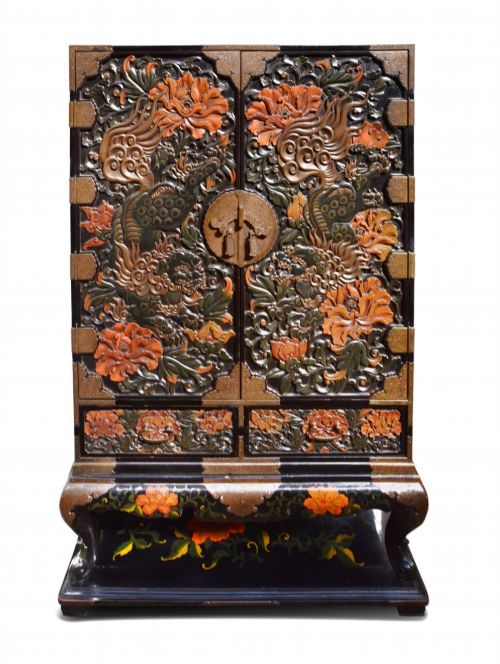


Japanese Lacquer Stand
A Japanese lacquer stand brings together deep historic craftsmanship and refined display, offering a distinct focal point for any interior.
Japanese Lacquer Stand
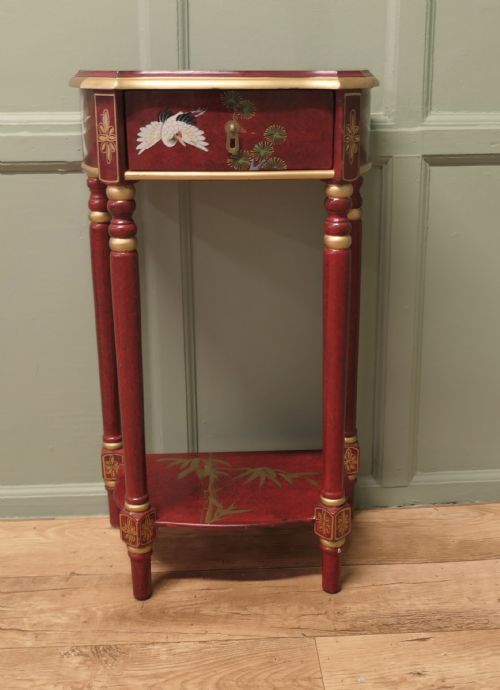
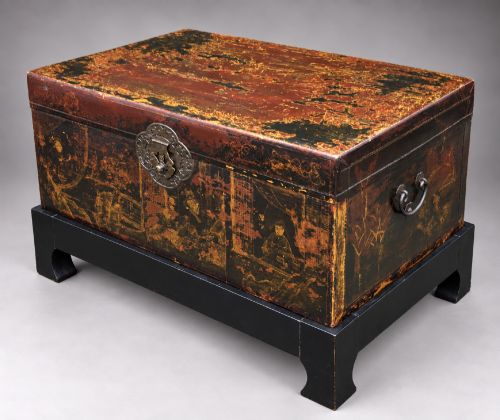
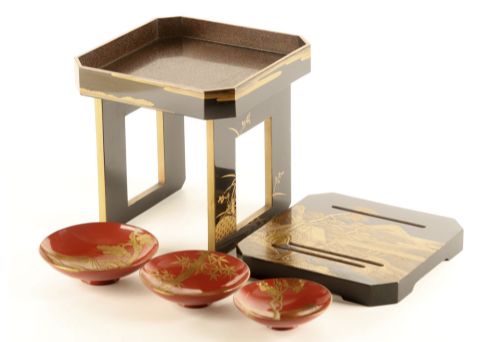
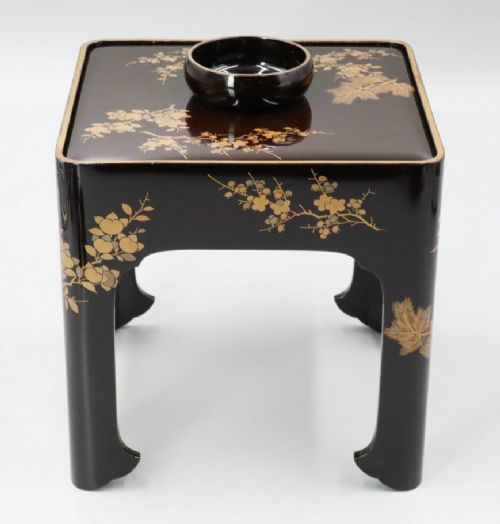
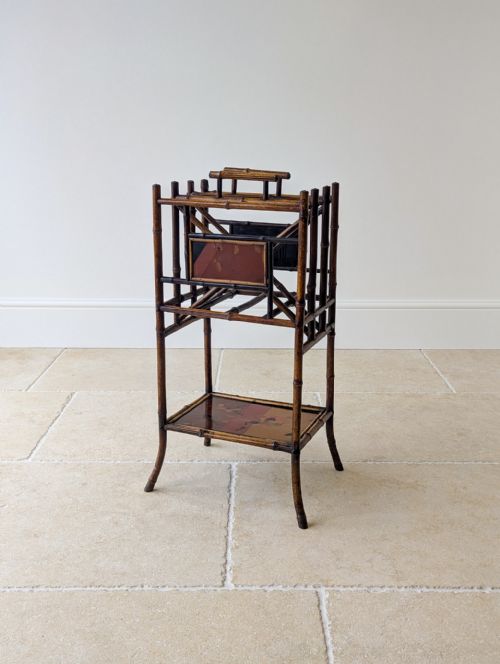
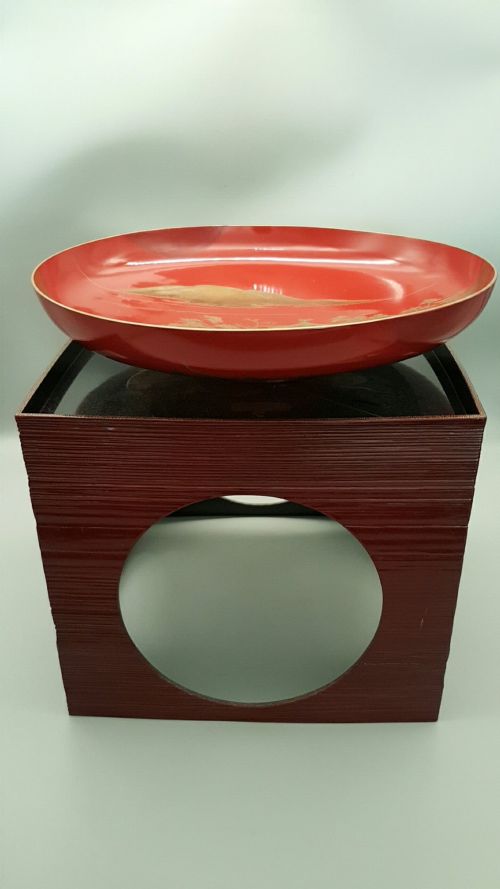
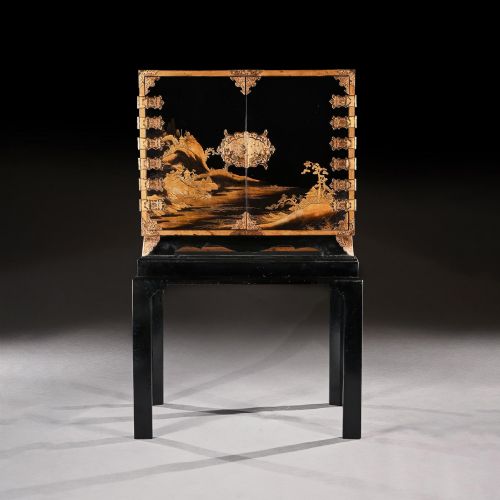
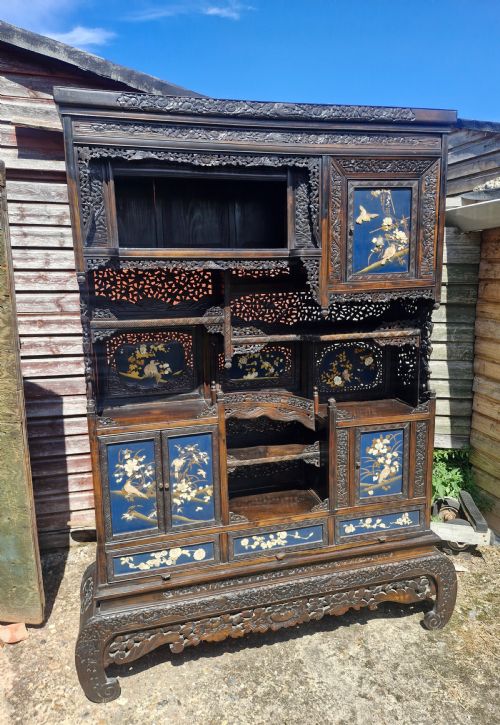
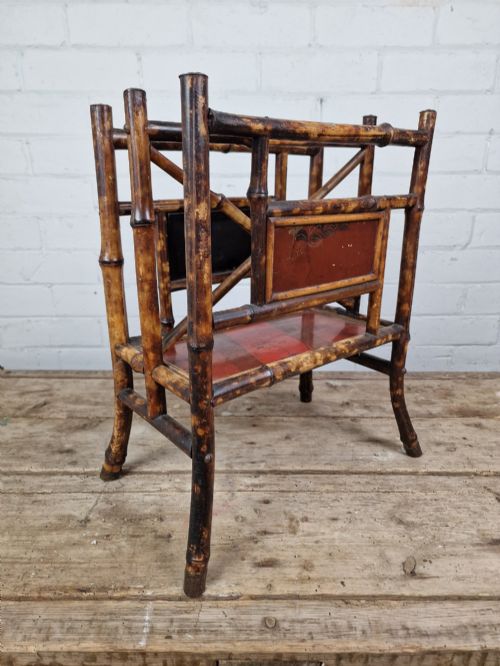
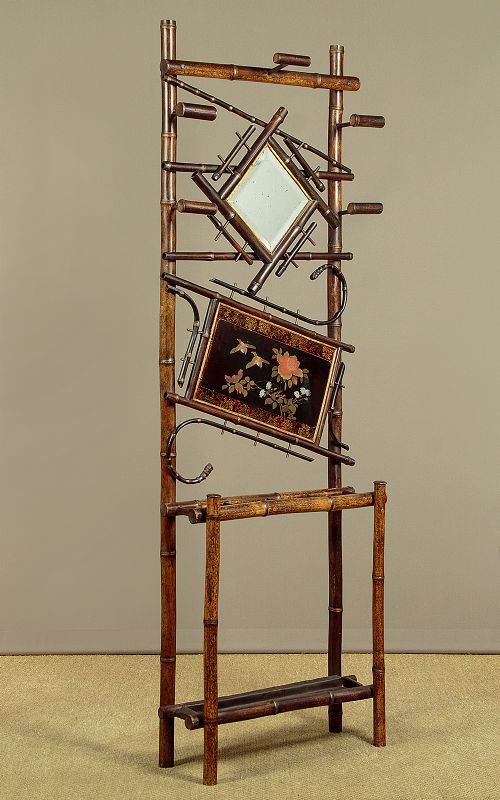
A Japanese lacquer stand encompasses various forms ranging from low sake tables and cup stands to larger cabinets mounted on stands, alongside related bamboo pieces and hall stands. These items emerge from distinct periods including the Edo era, the Meiji period, and the early twentieth century, reflecting both traditional Japanese craftsmanship and later export markets.
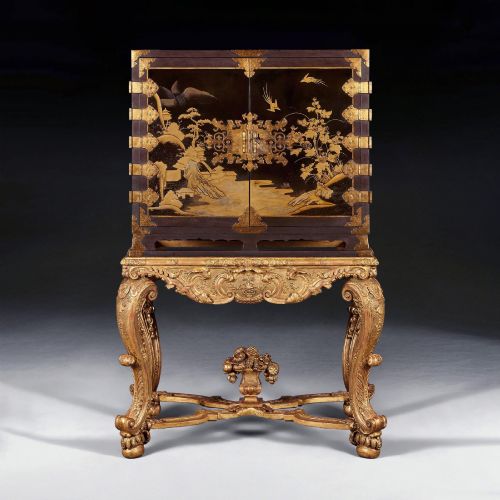
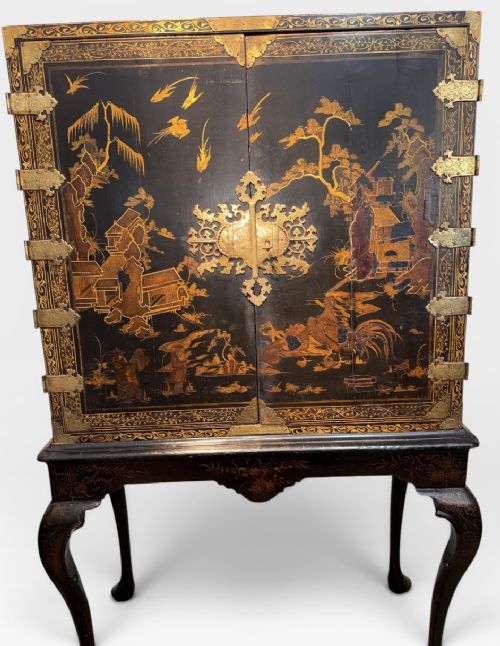
Buyers frequently encounter pieces that blend Japanese lacquerware with European furniture styling, such as seventeenth-century cabinets paired with French giltwood Regence stands or Victorian bamboo pieces incorporating lacquered panels. The selection spans compact display pieces, blanket boxes on stands, and specialised tea tables that demonstrate diverse decorative techniques.
Materials and Technique
Construction relies heavily on sturdy timbers and bamboo combined with meticulous layers of lacquer, often enhanced by gold leaf, brass fittings, and mother of pearl inlay. Artisans built structural elements from hardwoods, elm, or bamboo before applying protective and decorative surface coatings.
Decorative detailing incorporates traditional motifs through carving, painting, and specialised techniques like Shibayama inlay, where ivory, shell, and metal are embedded into the lacquered surface. Gold leaf application and cinnabar work further distinguish the intricate finishing processes recorded in these pieces.
Listings feature items spanning the seventeenth to the twentieth centuries, utilising lacquer, bamboo, hardwood, and gold leaf across diverse forms.
Factors of Quality
Quality rests upon the depth and preservation of the lacquer surface, the crispness of any carved detailing, and the structural integrity of the underlying wood or bamboo frame. Superior examples display smooth, even finishes with secure inlays and minimal surface degradation.
The sophistication of the design and the harmony between the lacquer element and its supporting stand also dictate standard variations. Pieces featuring intricate Shibayama work or cohesive period pairings demonstrate higher levels of artisan execution.
The Japanese Lacquer Stand Glossary
- Shibayama
- A Japanese decorative technique involving the inlay of precious materials such as mother-of-pearl, ivory, and shell into a lacquer ground. This method creates textured, multi-dimensional pictorial scenes on cabinets and plaques.
- Edo Period
- The period in Japanese history spanning from 1603 to 1868, characterised by economic growth and strict social order. Pieces from this era often exhibit traditional craftsmanship before the heavy influence of Western export markets.
- Meiji Period
- The era lasting from 1868 to 1912, marked by the opening of Japan to Western trade. Items from this time frequently demonstrate an intense focus on decorative arts for international buyers.
- Regence
- A French decorative style bridging the Baroque and Rococo periods, noted for curved lines and giltwood mounts. European furniture makers occasionally paired these stands with imported Asian lacquer cabinets.
- Chinoiserie
- A European stylistic tradition reflecting Chinese and broader East Asian artistic influences. This style appears on British and European furniture decorated with lacquered panels and painted motifs.
Japanese Lacquer Stand: Frequently Asked Questions
What is a Japanese lacquer stand used for?
These pieces served practical and decorative functions, from supporting ritual sake cups and serving tea to displaying precious objects within a room.
Over time, many were adapted into domestic settings as low tables, display cabinets, or hallway furniture to showcase fine craftsmanship.
How do you date a Japanese lacquer stand?
Dating relies on identifying stylistic markers from periods such as the Edo or Meiji eras, alongside complementary European stands if the piece is a hybrid creation.
Examination of the underlying materials, construction methods, and lacquer techniques helps narrow down the probable decade of manufacture.
How should I care for lacquer furniture?
Lacquer surfaces require protection from direct sunlight, extreme temperature fluctuations, and excessive moisture to prevent warping or cracking.
Dusting gently with a soft, dry cloth is usually sufficient for routine maintenance without the need for commercial polishes.
Why are some cabinets paired with European stands?
Wealthy European collectors often imported Asian lacquer panels and cabinets during earlier centuries and mounted them on locally made stands to suit Western interiors.
This practice combined exotic imported materials with contemporary European furniture design, creating distinct cross-cultural decorative objects.