
Meiji Gold Maki-e
Meiji gold maki-e objects bring intricate lacquerwork and metallic dust into daily spaces through boxes, cabinets, and ceremonial sets.
Meiji Gold Maki-e
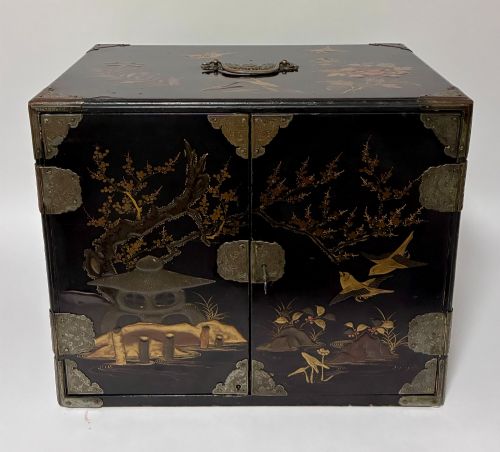
When searching for meiji gold maki-e, collectors encounter items spanning the late nineteenth century into the early twentieth century. These pieces encompass table cabinets, jewellery boxes, writing boxes, and sets of sake cups with stands.
The objects most frequently met on this page include lacquer table cabinets and sets of lacquer sake cups, alongside hair ornament sets and small keepsake cases. Such forms reflect the domestic and ceremonial arts produced during the Meiji and Taisho periods.
Origins trace to Japanese craftsmanship from the eighteen seventies through the nineteen twenties. Materials combine traditional lacquer techniques with metallic decorative elements.
How they were made
Wood serves as the primary foundation for cabinets, boxes, and stands, providing a stable base for repeated layers of sap. Urushi lacquer and standard lacquer are applied painstakingly over this wooden core to build a durable, glossy surface.
Gold leaf and gold lacquer supply the metallic detailing that defines the aesthetic, often applied using sprinkled maki-e techniques onto wet lacquer surfaces. Brass and porcelain occasionally appear in specific forms like vases or internal mounts.
A tiny keepsake case manages to cross paths with Victorian tastes while keeping its Japanese lacquer identity completely intact.
What varies in quality
The standard of execution in decorative motifs distinguishes finer items from simpler production pieces. Depth and precision in gold application determine the visual impact of landscapes and avian designs.
Structural complexity also separates standard domestic items from elaborate cabinetry. Multi-tiered cabinets and fitted writing boxes require advanced joinery alongside superior surface finishing.
The Meiji Gold Maki-e Glossary
- Maki-e
- Japanese lacquerware sprinkled with gold or silver powder from a makizutsu or brush while the lacquer is wet. This technique creates designs that sit flat or rise in relief above the surface.
- Urushi
- Natural lacquer derived from the sap of the Toxicodendron vernicifluum tree. It dries into a hard, moisture-resistant coating that forms the base of traditional Japanese lacquerware.
- Kodansu
- A small portable cabinet with multiple internal drawers used for storing documents or valuables. These miniature pieces showcase elaborate exterior lacquer decoration.
- Shodana
- A display cabinet featuring asymmetrical shelving and small cupboards. Such furniture pieces highlight advanced carpentry combined with decorative lacquer panels.
- Kushi and Kogai
- Traditional Japanese hair ornaments often decorated in matching lacquer styles. The kushi functions as a comb while the kogai serves as a decorative hair skewer.
Meiji Gold Maki-e: Frequently Asked Questions
What is maki-e lacquer?
Maki-e is a traditional Japanese decorative technique where metallic powders like gold or silver are sprinkled onto wet lacquer.
Artisans build up layers of sap and polish the surface to create intricate designs that catch the light.
How do I date these pieces?
Dating relies on stylistic markers from the Meiji and Taisho periods alongside material evidence. Nineteenth-century items often display distinct lacquer formulations compared to early twentieth-century examples.
Cabinet construction and motifs provide further clues to the decade of manufacture.
How were sake cup sets used?
Sets of lacquer sake cups with stands served ceremonial and celebratory functions in Japanese households. They were often brought out for special occasions and seasonal gatherings.
The accompanying stands kept the cups organised and displayed when not in active use.
How should I care for lacquer?
Lacquer requires stable environmental conditions away from direct sunlight and extreme humidity. Gentle dusting with a soft, dry cloth protects the delicate surface.
Avoid chemical cleaners or abrasive materials that can scratch the glossy finish.