










Japanese Imari
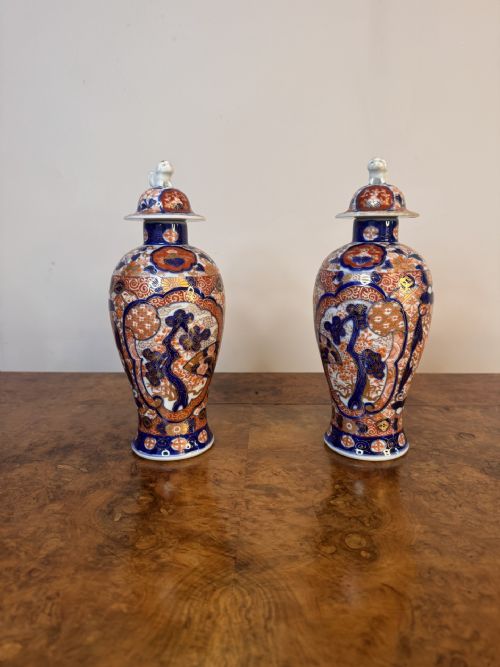
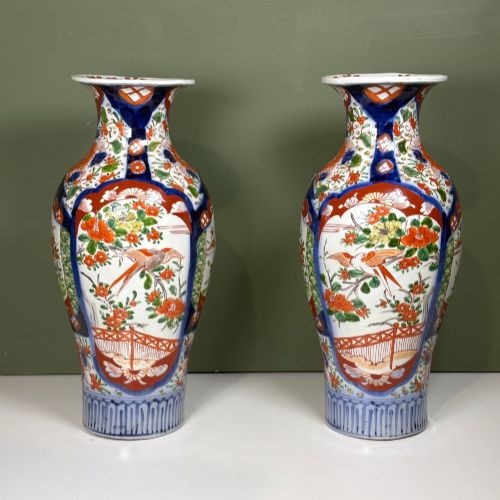
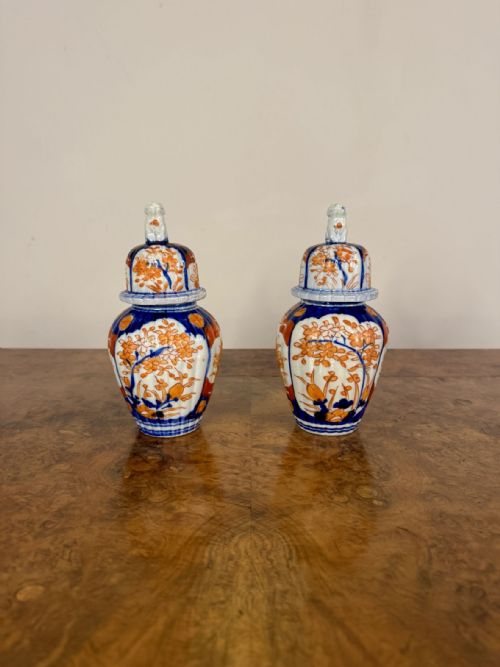
These japanese imari ceramics bring vibrant iron-red, cobalt blue and gold leaf decoration to a room, ranging from early export pieces to later nineteenth-century decorative wares.
Japanese Imari
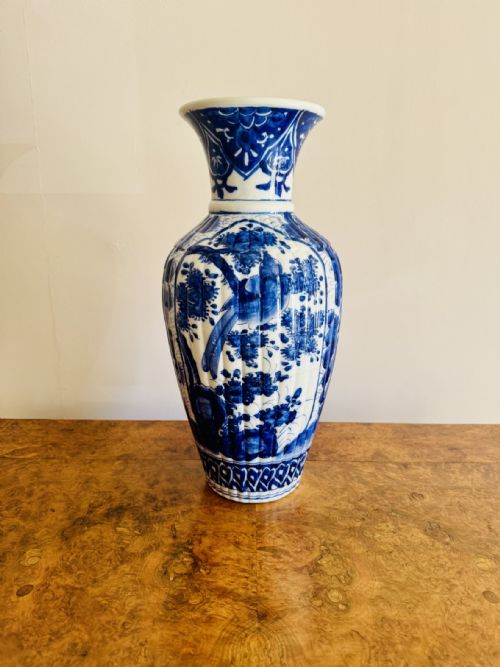
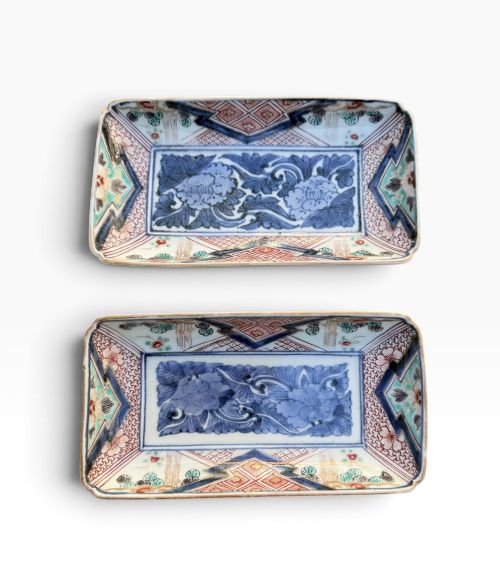
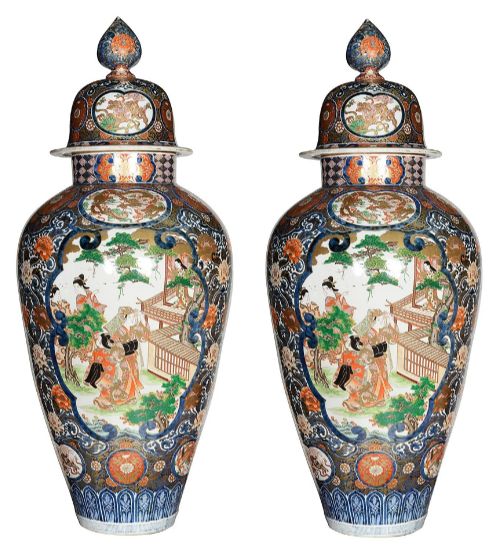
When searching for japanese imari, a buyer encounters a rich tradition of porcelain production spanning from the seventeenth century through to the twentieth century. The forms vary widely, from decorative plates, chargers and scalloped dishes to large lidded vases, floor-standing vessels and detailed dinner services.
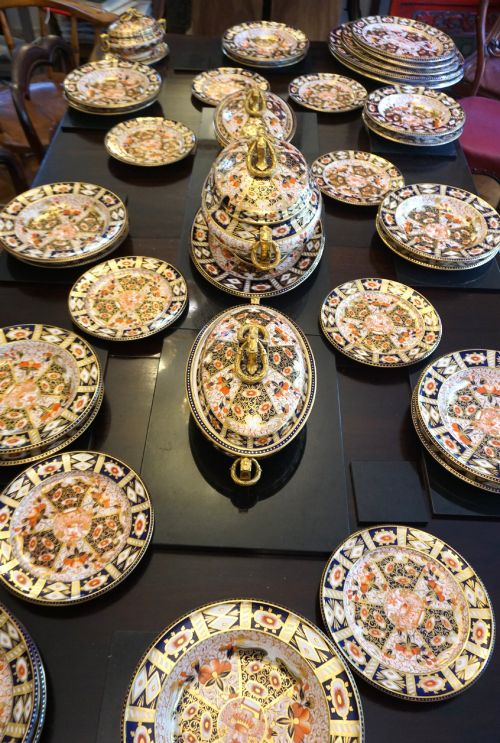
The pieces originating from Japan frequently date from the Edo and Meiji periods, whilst British interpretations from factories such as Royal Crown Derby and Davenport adapt the distinct palette. On this page, the selection leans heavily toward late nineteenth-century plates, chargers and vases alongside earlier porcelain jars.
Objects take numerous shapes, including hexagonal vessels, fish-shaped dishes and large pedestal bowls. Whether selecting a small cabinet plate or an imposing floor-standing vase, the visual weight comes from the dense contrasting pigments.
Materials and technique
Makers utilised high-fired porcelain and ironstone as the foundation for these works, shaping plates, bowls and vases by hand or on the wheel before applying underglaze blue pigments. This cobalt painting forms the stable blue foundation beneath the later enamel layers.
Overglaze enamels, predominantly iron red alongside supplementary colours, were painted meticulously onto the fired glaze surface. Artisans then applied gold leaf, gilt and gilding details to accentuate specific motifs before a final low-temperature firing fixed the polychrome design.
Japanese Imari Retail Price Guide 2026
Typical asking prices for japanese imari among the pieces listed under this phrase on Sellingantiques today, from the lower quarter to the upper quarter. They describe what is for sale here now, not the wider market.
Listings feature items spanning the seventeenth to the twentieth centuries, encompassing porcelain, enamel, gold leaf, glaze and gilt.
Assessing quality
Quality rests in the crispness of the hand-painted brushwork and the precision of the cobalt blue underglaze against the bright porcelain body. Superior pieces display intricate detailing in the enamel work and generous, well-preserved applications of gold leaf rather than flat or muddy colour blocks.
The weight, potting symmetry and clarity of the glaze surface differentiate standard decorative wares from exceptional examples. Furthermore, the complexity of the forms - such as lobed edges, pierced serving trays or large lidded floor vases - dictates the level of skill required by the potter.
The Japanese Imari Glossary
- Imari palette
- A distinct colour scheme combining underglaze cobalt blue, iron red and gold gilding. This palette originated in Japan and was later adopted by European potteries.
- Charger
- A large decorative plate intended for display on a wall or dresser rather than for practical dining use. These items often feature the most complex pictorial designs.
- Arita porcelain
- The ware produced in the town of Arita in Hizen province, forming the foundation of traditional Japanese export ceramics. These early pieces date back to the seventeenth and eighteenth centuries.
- Meiji period
- The era of Japanese history lasting from eighteen sixty-eight to nineteen twelve, associated with a surge in ornate decorative exports. Pieces from this time demonstrate great technical proficiency in enamelling.
- Baluster vase
- A vessel characterised by a curved body swelling near the base, resembling the architectural shape of a baluster. Many large examples include matching lids.
Japanese Imari: Frequently Asked Questions
How do I display japanese imari ceramics?
These decorative plates and chargers suit wall mounting or display on sturdy plate stands where their rich colours catch the light. Large vases and lidded jars anchor corners of a room or sit upon side tables.
Keep pieces away from direct sunlight to preserve the vibrancy of the iron-red enamels and gold leaf details. Ensure heavier floor-standing vessels rest on stable, level flooring.
What is the difference between Japanese and English imari?
Japanese examples originate from Arita and date across various historical periods like the Edo and Meiji eras, featuring traditional oriental motifs. English interpretations were produced by domestic firms such as Royal Crown Derby and Davenport during the eighteenth and nineteenth centuries.
Whilst both share the characteristic red, blue and gilt palette, the paste, potting techniques and specific floral or bird motifs reflect their respective places of manufacture.
How can I tell the age of a piece?
Dating relies on examining the potting style, the composition of the porcelain body and the characteristics of the painted decoration. Eighteenth-century examples often exhibit heavier potting and distinct iron-foot rims, whilst Meiji period wares show exceptionally refined brushwork.
British pieces frequently feature impressed factory marks, registration diamonds or specific pattern numbers on the underside. Comparing these factory stamps or stylistic traits helps narrow down the decade of production.