

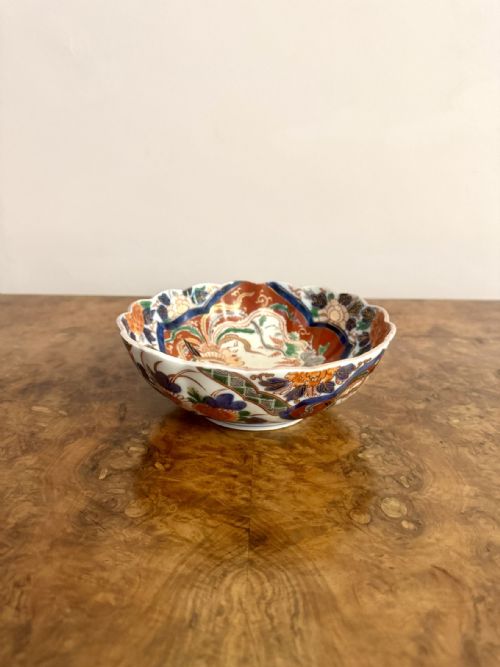
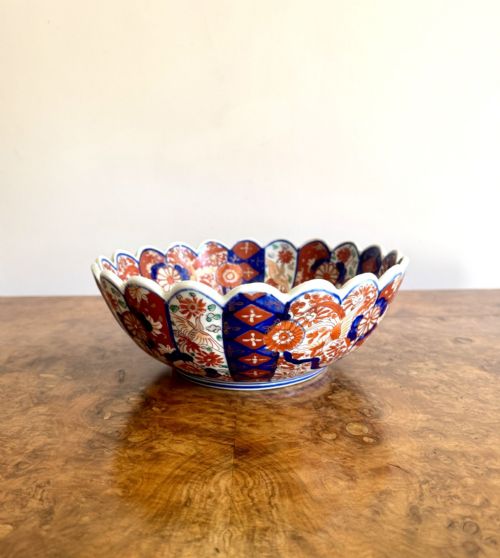


Japanese Imari Fruit Bowl
These japanese imari fruit bowl examples bring bold colour and intricate hand-painted detail straight to the table.
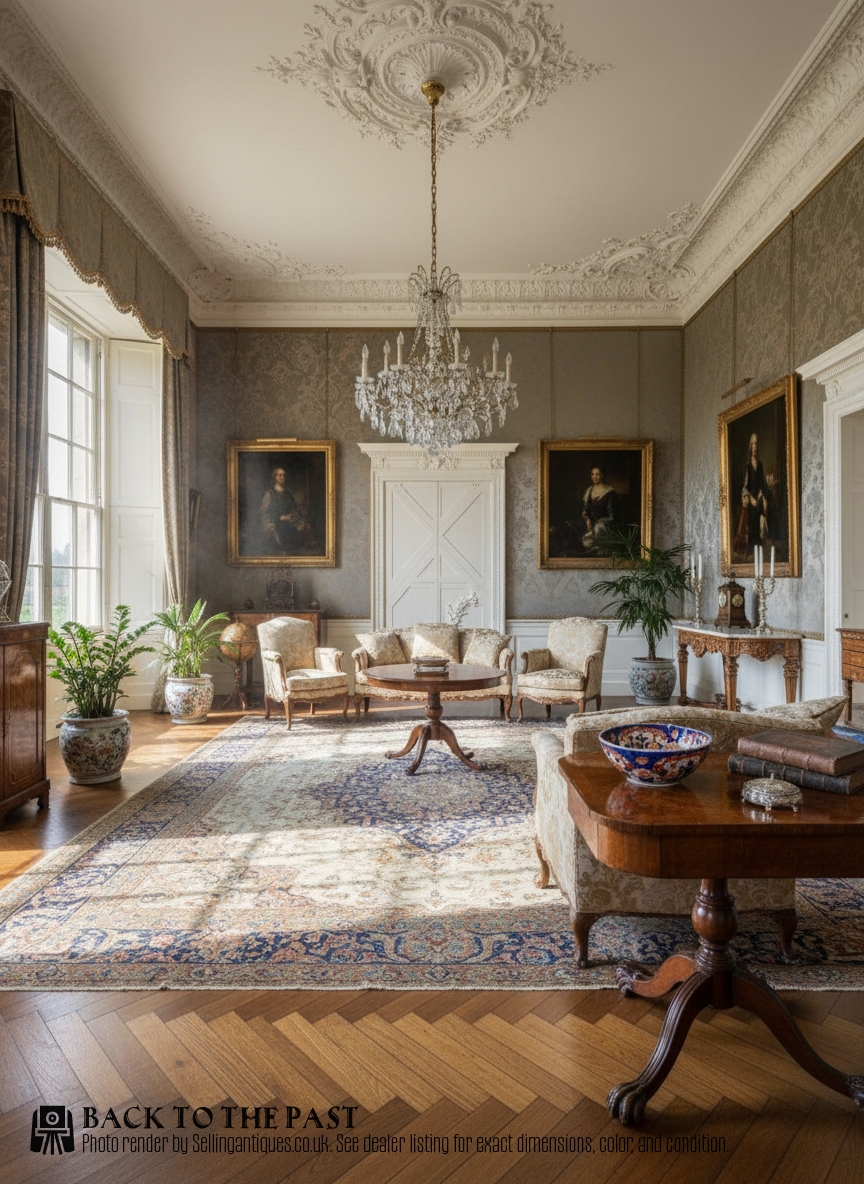
Japanese Imari Fruit Bowl
When you search for a japanese imari fruit bowl, you find decorative vessels shaped in distinct profiles such as scalloped and fluted edges. The listings show forms primarily spanning the nineteenth century, including the Meiji period and around nineteen hundred.
Most examples present traditional porcelain construction with characteristic cobalt blue and iron red painting, often heightened with gilding. These centrepieces combine utility with display, serving as striking focal points in a room.
How they were made
Potters shaped these vessels in porcelain before applying cobalt underglaze decoration by hand. Artisans then added enamel colours and gold leaf over the glaze to build up the rich palette seen across the pieces.
Firing in kilns set the underglaze blues, while subsequent lower-temperature firings fixed the enamels and gilding. This multi-stage process created the durable yet decorative surfaces recorded in the nineteenth-century listings.
Materials recorded on this page include enamel, gold leaf, glaze, gilt, and cobalt underglaze.
What varies in quality
The precision of the brushwork and the vibrancy of the cobalt underglaze distinguish finer pieces from simpler ones. Rich application of gold leaf and enamel also marks out superior examples.
Well-formed scallop and fluted edges demonstrate greater skill in the initial shaping of the porcelain. The crispness of the painted motifs shows the dexterity of the painter at the kiln.
The Japanese Imari Fruit Bowl Glossary
- Cobalt Underglaze
- A blue pigment applied to pottery before glazing and firing at high temperatures. It sits beneath the clear glossy surface.
- Meiji Period
- The era in Japanese history spanning from eighteen sixty-eight to nineteen twelve. Many pieces on this page originate from this time.
- Scallop Edge
- A decorative border formed of curved indentations resembling a scallop shell. This profile appears frequently on these bowls.
- Gilding
- The application of gold leaf or gold paint to the surface of the porcelain. It provides metallic accents to the painted designs.
Japanese Imari Fruit Bowl: Frequently Asked Questions
How do I use a Japanese Imari bowl?
These pieces serve well as decorative centrepieces on dining tables or sideboards. Their striking palette adds colour to a room without needing daily handling.
While originally intended for practical use, many owners now display them purely for their visual impact and historic craftsmanship.
How old are these bowls?
The listings on this page date primarily from the nineteenth century, specifically spanning from eighteen eighty to nineteen hundred. This includes pieces from the Meiji period.
Exact dating relies on stylistic traits, potting techniques, and traditional forms recorded in the titles.
How do I clean an antique bowl?
Dust gently with a soft, dry cloth to maintain the surface. Avoid harsh chemical cleaners that might damage the delicate enamel and gold leaf.
Submerging antique porcelain in water is generally unnecessary and risks wearing the historic pigments applied over the glaze.