



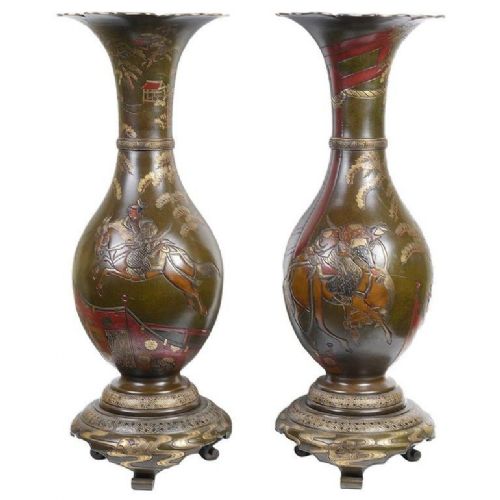
Japanese High Relief Vases
These japanese high relief vases bring striking sculptural depth and Meiji period craftsmanship directly to a room.
Japanese High Relief Vases
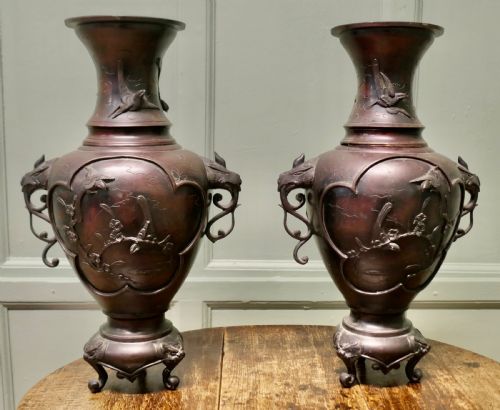
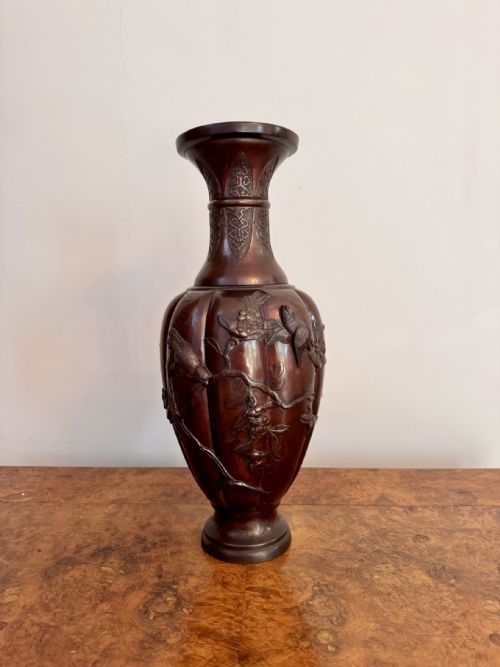
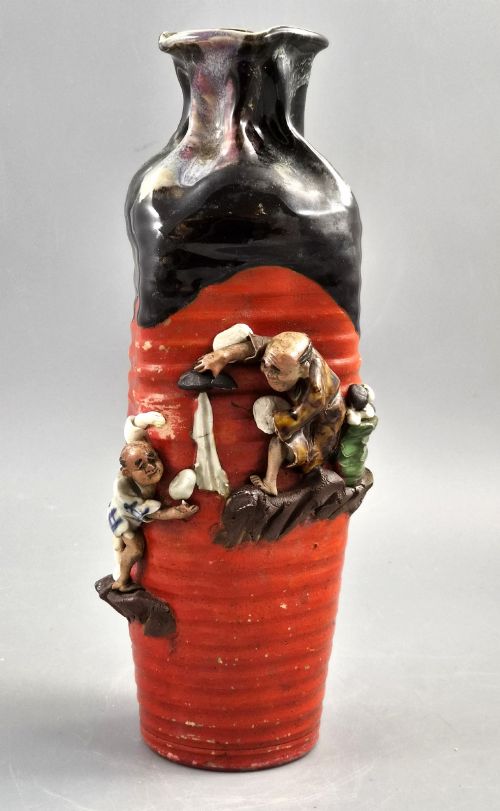
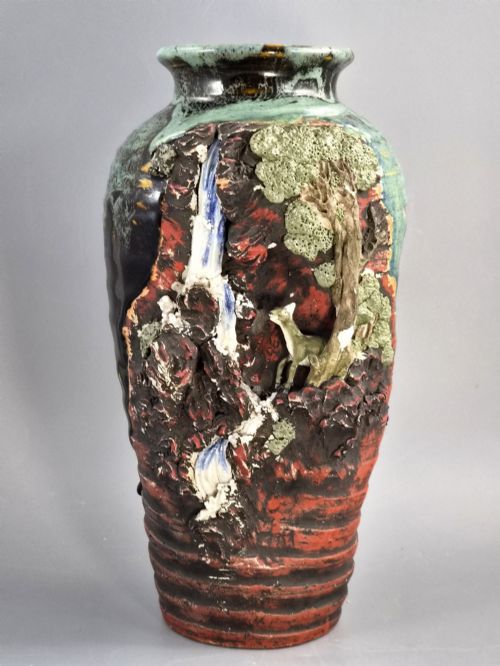
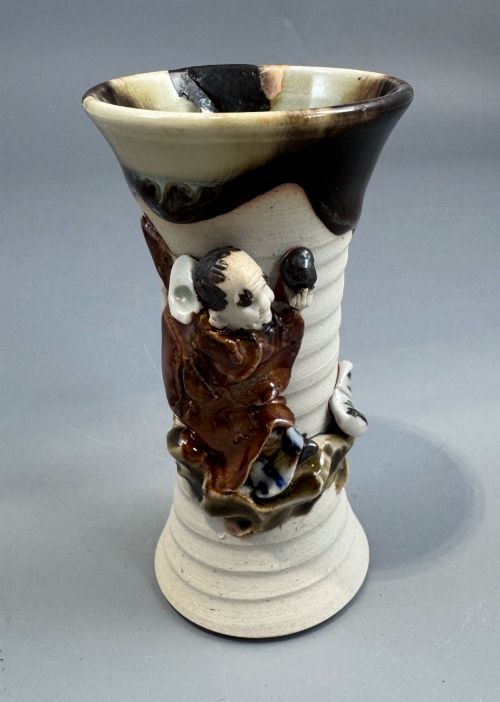
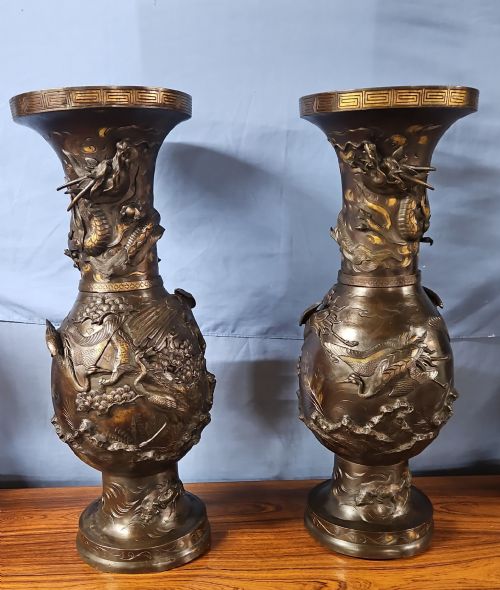
Japanese high relief vases are sculptural vessels featuring prominent raised figures, foliage, and landscapes that project dramatically from the body of the piece. When exploring japanese high relief vases, buyers frequently encounter substantial bronze and stoneware vessels originating from the Meiji period and the Victorian era. These objects range from compact posy vases to monumental pairs designed to command attention in a formal interior.
The selection centres heavily on cast bronze and ceramic forms adorned with birds, sages, and floral motifs. Pieces from the Meiji period dominate the offerings, often displaying meticulous surface detailing that reflects the decorative ambitions of late nineteenth and early twentieth century makers. Collectors find both single display pieces and balanced pairs spanning various heights and proportions.
How they were made
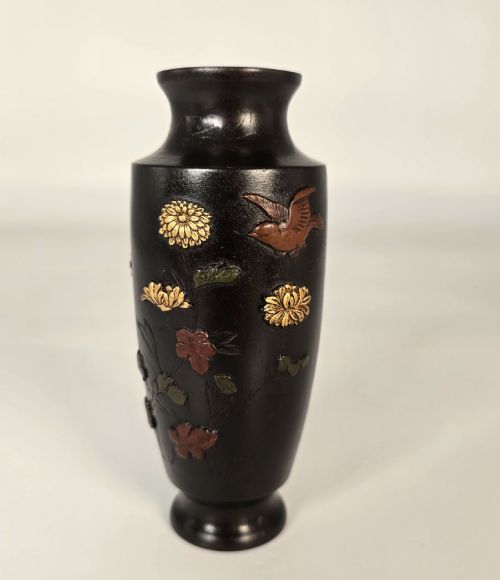
Metal vessels in this group rely on bronze, copper, and mixed metal casting techniques to achieve their substantial forms and raised decoration. Makers applied patination, enamel, and gold inlay directly to the bronze surfaces to create contrast and highlight the sculptural elements.
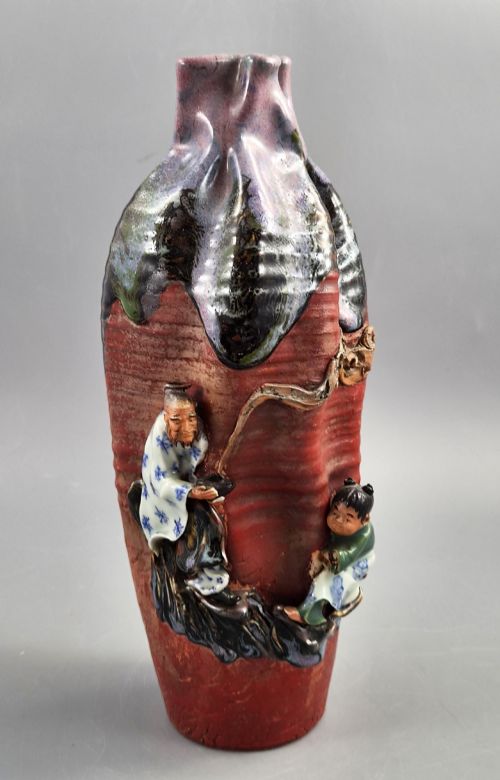
Ceramic examples utilise stoneware and terracotta bodies, frequently incorporating flambé glazes and applied figures. Potters modelled figures like sages and rakans separately before attaching them to the damp clay body prior to firing.
Listings feature bronze and stoneware pieces spanning the nineteenth century, the Meiji period, and the early twentieth century.
What varies in quality
Quality in these vessels rests on the precision of the casting and the crispness of the raised elements. Superior examples exhibit finely chiselled details on figures and foliage, where every feather and fold of fabric remains sharp and deliberate.
The integration of mixed metals and the depth of the patination further separate standard production from exceptional work. Finer pieces demonstrate careful attention to the reverse and base, maintaining decorative consistency across the entire surface of the vessel.
Ban ni·Inoue Ryōsai·Genryusai Seiya
The Japanese High Relief Vases Glossary
- Meiji Period
- The period of Japanese history running from 1868 to 1912, associated with intense artistic production and increased export to Western markets. Pieces from this era often combine traditional motifs with ambitious sculptural techniques.
- Sumida Gawa
- A style of Japanese pottery originating from the banks of the Sumida River, known for its heavy, dripping flambé glazes and highly modelled applied figures in high relief. These vessels have an organic, tactile quality.
- Patinated Bronze
- Bronze treated with chemical solutions or heat to alter the surface colour, ranging from deep browns to greens and blacks. This process accentuates the raised details of the design.
- Mixed Metal
- A technique involving the combination of different metals such as copper, bronze, and gold inlay within a single composition. It creates subtle colour variations across the raised surface.
- Flambé Glaze
- A rich, streaked ceramic glaze that achieves mottled and variegated colour effects during high-temperature firing. It frequently appears on Sumida Gawa stoneware vases.
Japanese High Relief Vases: Frequently Asked Questions
What are Japanese high relief vases?
These are decorative vessels created primarily during the Meiji period and the Victorian era, featuring prominent sculptural figures, animals, and landscapes that project outward from the body.
They are fashioned from materials such as bronze, mixed metals, and stoneware, often signed by notable makers and workshops.
Where should I display a bronze vase?
Bronze vessels with high relief decoration require a stable surface with good lighting to highlight the patination and three-dimensional details. Placing them on a sturdy console or pedestal allows the piece to be viewed from multiple angles.
Keep them away from direct heat sources to preserve the finish.
How do I identify a Meiji period piece?
Meiji period vases often display characteristic signatures, dense sculptural detailing, and a combination of traditional Japanese subjects with export-oriented scale. The materials typically include patinated bronze with mixed metal accents or distinctive stoneware.
Comparison with documented examples from makers like Genryusai Seiya aids attribution.