



Japanese Floral Motif Charger
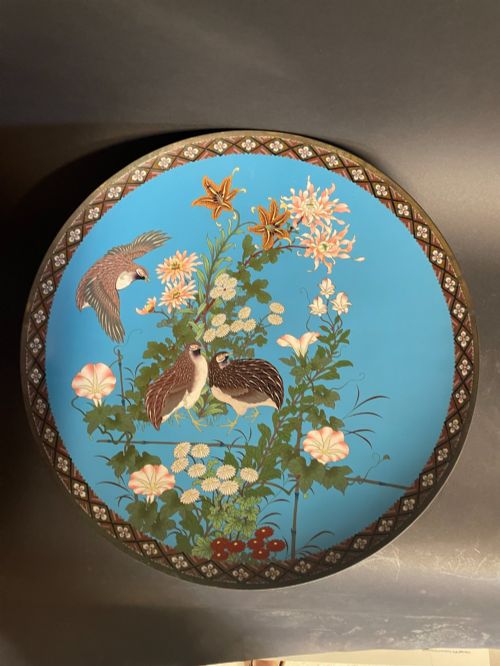
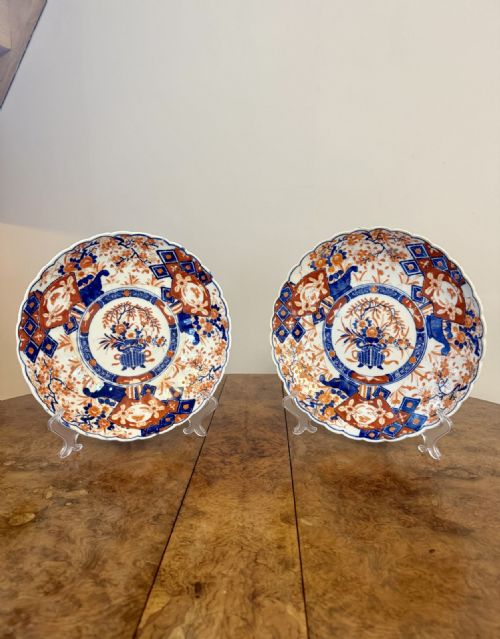
A Japanese floral motif charger brings complex colour and pattern to a wall or table, formed from porcelain, ceramic, or copper worked with enamel.
Japanese Floral Motif Charger
A japanese floral motif charger covers wide decorative plates, bowls, and dishes created across several periods. The selection here ranges from eighteenth century Edo period examples to nineteenth century Meiji pieces and early twentieth century works.
Most pieces met on this page belong to the Japanese Imari tradition or Kutani ware. Forms include scalloped edge bowls, shallow dishes, and large chargers featuring hand painted botanical and floral subjects.
Makers and workshops utilised distinct palettes of blue, white, and iron red alongside gold gilt. Buyers encounter both robust porcelain forms and metal cloisonne dishes constructed with copper or brass bases.
How they were made
Potters shaped high fired porcelain and ceramic bodies before applying underglaze blue and overglaze enamel colours. Artisans then added gold leaf and gold gilt highlights to enhance the floral motifs.
Cloisonne pieces required thin wire soldered to copper or brass plates to form cellular compartments. Craftsmen filled these partitions with coloured enamel pastes before firing and polishing the surface.
Listings span multiple materials including porcelain, ceramic, enamel, copper, brass, and gold leaf.
What varies in quality
Finesse of brushwork and precision in enamel application distinguish superior examples from standard production. Artisans who executed detailed floral subjects and crisp outlines achieved greater visual depth.
Complexity of form also dictates distinction, particularly in scalloped edges and unusual shapes that required skilled moulding. The integration of gold leaf and gold gilt adds refinement to the best bowls and chargers.
Shozo
The Japanese Floral Motif Charger Glossary
- Imari
- A traditional Japanese porcelain style characterised by underglaze blue, iron red, and gold accents. These wares were widely exported from the port of Imari.
- Cloisonne
- A metalwork technique where enamel is applied within wire compartments on a brass or copper base. The surface is subsequently fired and polished smooth.
- Kutani
- A style of Japanese coloured porcelain and ceramic ware known for intricate hand painted designs. Many pieces feature pictorial scenes alongside dense floral borders.
- Edo Period
- The historical period in Japan lasting from sixteen hundred and three to eighteen hundred and sixty eight. Wares from this era often display restrained forms and early stylistic roots.
- Meiji Period
- The era in Japanese history spanning from eighteen hundred and sixty eight to nineteen hundred and twelve. Production during this time catered heavily to international export markets.
Japanese Floral Motif Charger: Frequently Asked Questions
What is a charger?
A charger is a large decorative plate or dish traditionally used for display rather than for serving food at the dining table.
These pieces typically measure substantially wider than standard dinner plates and often feature elaborate painted or enamelled surfaces designed to catch the eye.
How do I date a Japanese plate?
Dating relies on stylistic markers, materials, and historical periods such as the Edo or Meiji eras. Examining the type of paste, glaze characteristics, and potting technique provides further chronological clues.
Inscribed signatures and marks can occasionally narrow down the origin and production period of specific ceramic wares.
How should I display a charger?
Chargers are commonly exhibited on walls using specialist plate hangers or showcased upright on sturdy display stands.
Because many examples feature delicate enamel or gold gilt details, placement should avoid direct, harsh sunlight to protect the pigments over time.
What is the difference between Imari and Kutani?
Imari ware typically relies on a distinct palette of underglaze blue, iron red, and gold applied to a porcelain body. The patterns often incorporate dense brocade and floral arrangements.
Kutani ware frequently employs a wider range of overglaze enamel colours with an emphasis on pictorial narratives alongside botanical subjects.