


Japanese Floral China Plate
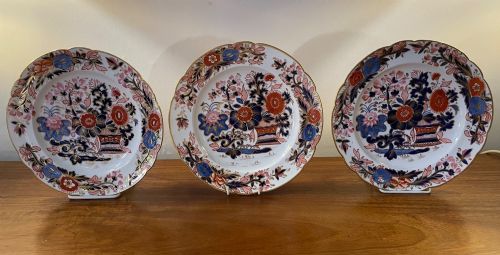
These japanese floral china plate examples bring together rich cobalt glaze, earthenware, and gold leaf in traditional imari palettes.
Japanese Floral China Plate
A japanese floral china plate combines decorative plates, charger plates, and cabinet plates into striking displays of ceramic artistry. Buyers encounter pieces stretching from the 1800 period through to 1900 and the Victorian era, showing how enduring these designs remain.
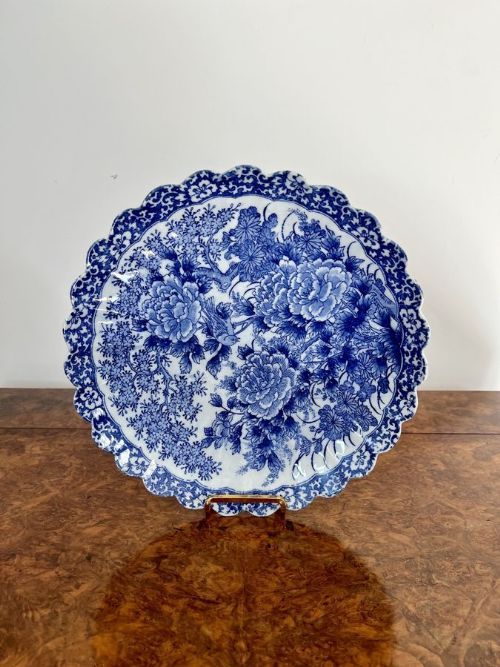
The styles seen on this page span Japanese Imari, Japanese Edo / Meiji, and Regency aesthetics. Most items meet the eye as blue and white imari scalloped edge plate designs or large fruit display platters.
Ceramic platter forms and charger plates dominate the selection, offering substantial surface area for intricate floral motifs. These objects reflect a rich cross-cultural appreciation for Eastern manufacturing techniques within British collections.
Materials and construction methods
Potters built each japanese floral china plate using durable porcelain and earthenware bodies shaped to form chargers and cabinet plates. The raw clay received careful shaping before enduring kiln firings to set the foundational ceramic structure.
Enamel colours, gold leaf, and gilding were applied over cobalt glaze to create the signature imari palette. Artisans combined metallic lustre with deep blue underglazes to define the floral and geometric patterns characteristic of these pieces.
Listings feature items spanning the 1800 period, 1900, the 19th Century, and the Victorian era, utilising porcelain, earthenware, enamel, and gold leaf.
Judging quality in japanese floral china plates
The distinction between standard examples and superior pieces rests on the precision of the cobalt glaze and the richness of the gilding. Skilled application of gold leaf and enamel creates depth that flatter, simpler painting methods fail to achieve.
Form and scale also separate the items, with large chargers and scalloped edge plate formats demanding greater technical mastery from the potter. Well-preserved surfaces where the enamel remains crisp indicate careful historical handling.
The Japanese Floral China Plate Glossary
- Imari palette
- A traditional decorative scheme utilising cobalt blue, iron red, and gold leaf on porcelain. This distinct colour combination defines the visual weight of these ceramics.
- Charger plate
- A large decorative plate utilised historically as a base for other courses or displayed upright for visual impact. These pieces offer expansive surfaces for complex floral patterns.
- Cabinet plate
- A ceramic item intended primarily for display in a cabinet or on a wall rather than for practical dining use. Such pieces often exhibit finer detail and more delicate gilding.
- Cobalt glaze
- A deep blue mineral pigment applied under the clear glaze before firing to produce rich, permanent tones. It forms the structural foundation of the imari colourway.
- Scalloped edge
- A decorative curved border moulding shaped to resemble flower petals or rhythmic waves. This shaping requires careful hand-finishing by the potter before glazing.
Japanese Floral China Plate: Frequently Asked Questions
Can these plates be hung on walls?
Displaying these items on walls requires specialised, padded wire hangers that distribute weight evenly across the ceramic rim. Ensure the mounting hardware is securely anchored to support the substantial weight of large chargers.
Keep displayed pieces away from direct sunlight and areas of high humidity to protect the enamel colours and gilding from degradation over time.
What defines the imari palette?
The imari palette relies on a combination of underglaze cobalt blue and iron red, frequently accented with generous applications of gold leaf. This vibrant mix creates high visual contrast across the porcelain surface.
Artisans layered these colours to produce rich floral and geometric compositions that catch the light. The style originated in Japan and heavily influenced European ceramic production.
How do I distinguish 19th-century pieces?
Nineteenth-century examples often exhibit heavier earthenware or porcelain bodies combined with hand-painted cobalt glaze and thick gilding. Inspect the foot rim and base for signs of age, kiln marks, and wear consistent with historic use.
Stylistic cues such as Japanese Edo or Meiji influences and Regency crossovers help narrow the timeframe. Comparing weight, glaze depth, and brushwork reveals clues about the manufacturing period.